2026 Vocational Training: High-Demand Trades with Job Growth
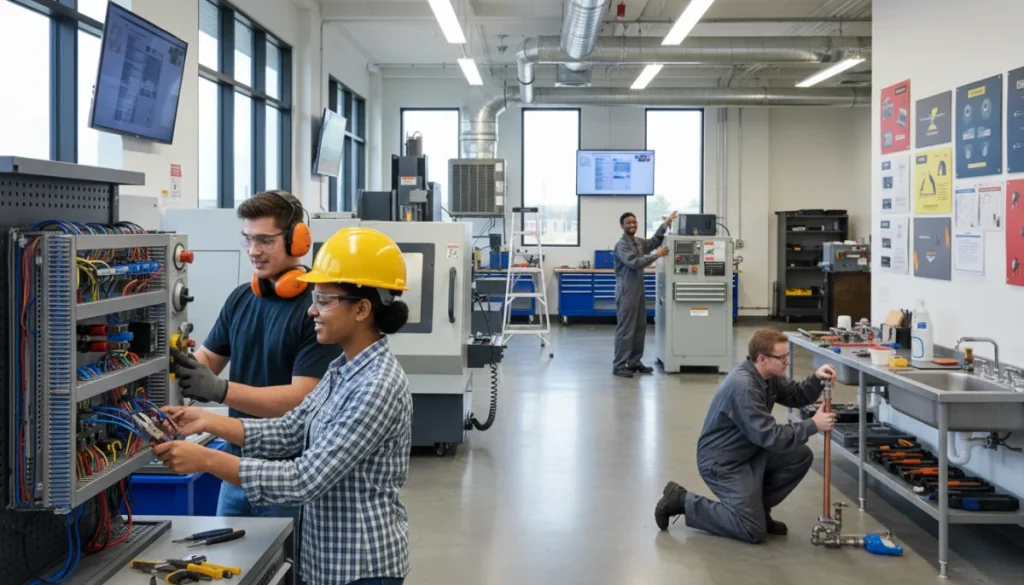
The 2026 landscape of vocational training highlights four high-demand trades with promising job growth, offering practical pathways to stable careers.
As we navigate towards 2026, understanding the shifts in the job market is crucial for aspiring professionals. The realm of vocational training 2026 is particularly dynamic, presenting abundant opportunities in trades that are not only essential but also experiencing significant growth. This article delves into four such high-demand trades, offering insights into their promising future.
The evolving role of vocational training in the modern economy
Vocational training has long been a cornerstone of workforce development, providing individuals with the practical skills needed to enter specific trades. In today’s rapidly evolving economy, its significance is amplified. As automation and technology reshape industries, the demand for skilled technicians and craftspeople capable of installing, maintaining, and repairing complex systems continues to surge. This shift underscores a critical need for accessible, high-quality vocational programs that can adapt to new technological requirements and industry standards.
The perception of vocational education has also evolved. Once seen as a secondary option, it is now widely recognized as a direct and efficient path to a stable, well-paying career, often without the burden of extensive student debt associated with traditional four-year degrees. Employers increasingly value the hands-on experience and specialized knowledge that vocational graduates bring to the table, making these programs an attractive alternative for many.
Bridging the skills gap
A persistent challenge in the U.S. labor market is the skills gap—a disconnect between the skills employers need and those possessed by the available workforce. Vocational training is uniquely positioned to address this by:
- Providing targeted, industry-specific training.
- Offering apprenticeships and on-the-job learning opportunities.
- Developing practical problem-solving abilities.
- Fostering adaptability to new technologies.
These programs ensure that graduates are not just theoretically knowledgeable but are also immediately productive upon entering the workforce. This direct alignment with industry needs makes vocational training an indispensable component of economic growth and individual career success.
Ultimately, the role of vocational training in the modern economy is to act as a vital bridge, connecting individuals to meaningful employment and ensuring industries have the skilled labor necessary to thrive. Its adaptability and focus on practical application make it an increasingly attractive and essential educational pathway for the future.
HVAC technicians: keeping comfort and efficiency in check
Heating, Ventilation, and Air Conditioning (HVAC) systems are fundamental to modern living and commerce, regulating indoor climates in homes, offices, and industrial facilities. The demand for skilled HVAC technicians is consistently high, driven by the continuous need for installation, maintenance, and repair of these complex systems. As climate change leads to more extreme weather events, the reliance on efficient HVAC systems only intensifies, ensuring comfortable and safe indoor environments.
Beyond traditional heating and cooling, HVAC technicians are increasingly involved with advanced technologies such as smart thermostats, energy-efficient heat pumps, and sophisticated air purification systems. This evolution requires continuous learning and adaptation, making it a dynamic and intellectually stimulating career path. The sector is also influenced by environmental regulations, pushing for more sustainable and eco-friendly solutions, which further expands the scope of an HVAC technician’s expertise.
Why HVAC is a growth area
Several factors contribute to the robust growth in the HVAC sector:
- Aging infrastructure: Many existing HVAC systems are old and require frequent repairs or complete replacement.
- New construction: Residential and commercial development consistently creates demand for new installations.
- Energy efficiency: A growing focus on reducing energy consumption drives upgrades to more efficient systems.
- Technological advancements: Integration of smart home technology and automation in HVAC systems necessitates specialized skills.
These drivers ensure a steady stream of work for qualified technicians. Moreover, the essential nature of HVAC services means the industry is relatively resilient to economic downturns, offering job stability and consistent opportunities for career progression.
Becoming an HVAC technician typically involves completing a vocational program or an apprenticeship, which provides hands-on training in electrical systems, refrigeration, and air distribution. Certifications, such as those from the EPA for handling refrigerants, are often required. The career offers a clear pathway from entry-level positions to supervisory roles, or even starting one’s own business, making it a highly rewarding trade.
Electricians: powering the future
Electricians are the backbone of our modern infrastructure, responsible for installing, maintaining, and repairing electrical power, communications, lighting, and control systems in homes, businesses, and factories. With the increasing electrification of society—from electric vehicles to smart grids and renewable energy sources—the role of electricians is more critical than ever. The demand for their expertise is projected to grow significantly as these technologies become more prevalent and integrated into daily life.
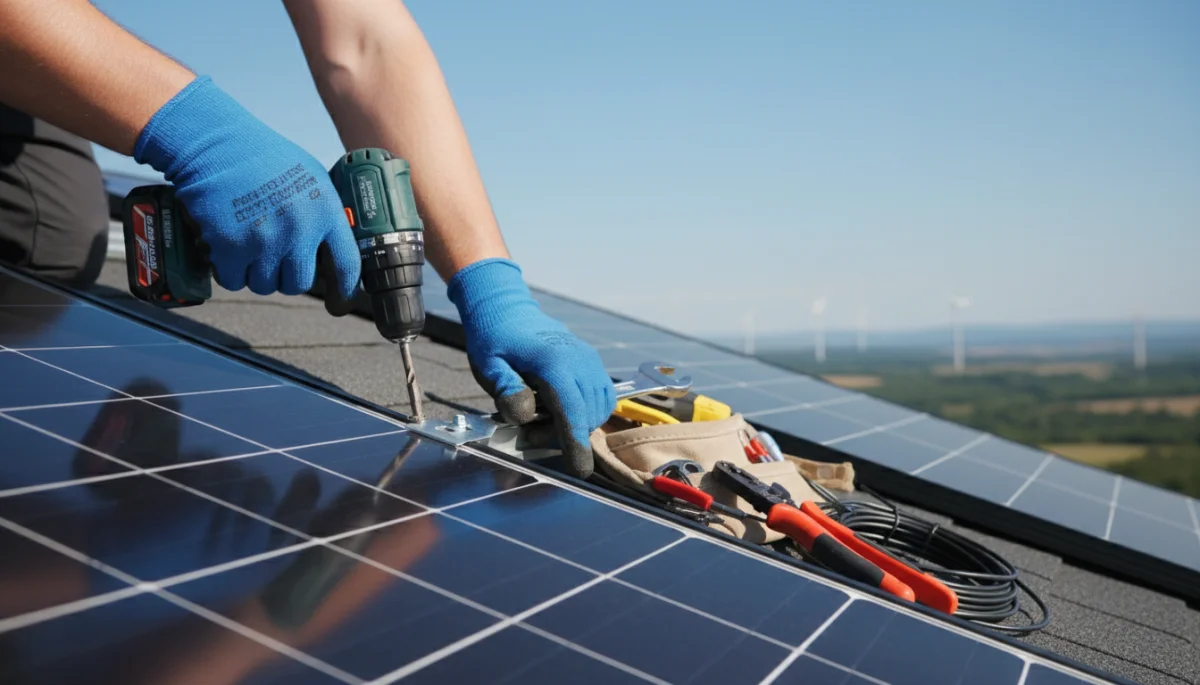
The work of an electrician is diverse, ranging from wiring new buildings to troubleshooting complex industrial machinery and installing solar panels. This variety ensures that no two days are exactly alike, providing a stimulating and challenging career. Safety is paramount in this profession, requiring a deep understanding of electrical codes and regulations to prevent hazards and ensure reliable power delivery.
Specialized electrical demands
The field of electrical work is experiencing growth in several specialized areas:
- Renewable energy systems: Installation and maintenance of solar panels and wind turbines.
- Smart home technology: Wiring and integrating automated systems for lighting, security, and climate control.
- Electric vehicle charging infrastructure: Setting up and maintaining charging stations for EVs.
- Industrial automation: Working with programmable logic controllers (PLCs) and robotics in manufacturing.
These specializations offer electricians opportunities to develop niche skills and command higher wages. Continuous education is essential to stay abreast of new technologies and evolving safety standards.
Training to become an electrician typically involves a combination of classroom instruction and extensive on-the-job training through an apprenticeship. Apprenticeships can last several years, providing comprehensive practical experience under the guidance of experienced journeymen. Upon completion, electricians usually need to pass a licensing exam, which varies by state. This rigorous training ensures high standards of competence and safety in a profession vital to our technological advancement.
Plumbers: essential for health and sanitation
Plumbers are indispensable to public health and safety, responsible for installing and repairing pipes, fittings, and fixtures that carry water, waste, and gases. Their work ensures access to clean water, proper sanitation, and efficient heating systems in residential, commercial, and industrial settings. As infrastructure ages and new construction continues, the demand for skilled plumbers remains constant and robust.
The complexity of modern plumbing systems extends beyond simple pipe fitting. Plumbers often deal with intricate networks that include water heaters, sewage systems, gas lines, and specialized fixtures. They must be adept at diagnosing problems, using various tools and techniques, and adhering to strict building codes and safety regulations. This requires a blend of technical skill, problem-solving ability, and a strong understanding of fluid dynamics and material science.
Modern plumbing challenges
The plumbing trade faces evolving demands, including:
- Water conservation: Installing low-flow fixtures and water-efficient appliances.
- Smart plumbing systems: Integrating leak detection and remote monitoring technologies.
- Sustainable materials: Working with new eco-friendly piping and insulation.
- Aging infrastructure: Repairing and replacing deteriorating municipal water and sewer lines.
These challenges highlight the need for plumbers to continuously update their skills and knowledge. The trade is not just about fixing leaks; it’s about contributing to environmental sustainability and public well-being through efficient and reliable water management.
Becoming a plumber typically involves completing a vocational program or an apprenticeship, which can last several years. Apprenticeships combine classroom instruction with extensive practical experience, working alongside experienced plumbers. Licensing requirements vary by state and usually involve passing an exam after completing the required training and hours of experience. This career path offers excellent job security, competitive wages, and the opportunity to run one’s own business.
Welding and fabrication: building the world around us
Welding and fabrication are critical processes in nearly every industry, from construction and manufacturing to aerospace and automotive. Welders join metal parts using various techniques, while fabricators cut, shape, and assemble metal components to create structures and products. These skilled tradespeople are essential for building and maintaining the physical infrastructure of our world, making their expertise consistently in high demand.
The field of welding is highly specialized, with various methods such as shielded metal arc welding (SMAW), gas metal arc welding (GMAW), and tungsten inert gas (TIG) welding, each suited for different materials and applications. Fabricators often work with blueprints and engineering specifications, translating designs into tangible structures. Both roles require precision, attention to detail, and a strong understanding of metallurgy and structural integrity.
Innovations in welding and fabrication
The welding and fabrication industries are continually evolving with technological advancements:
- Robotic welding: Automation for increased precision and speed in repetitive tasks.
- Advanced materials: Working with exotic metals and composites for specialized applications.
- 3D printing of metals: Emerging technologies for additive manufacturing of metal parts.
- Computer-aided design (CAD) and manufacturing (CAM): Integrating digital tools for design and production.
These innovations mean that modern welders and fabricators must be tech-savvy and capable of operating advanced machinery. The demand for these skills extends across diverse sectors, including renewable energy infrastructure, automotive manufacturing, and even artistic metalwork, offering a broad spectrum of career opportunities.
Training for welding and fabrication typically involves completing a vocational program or an apprenticeship. These programs provide hands-on experience with various welding techniques, blueprint reading, and safety protocols. Certifications from organizations like the American Welding Society (AWS) are highly valued and often required by employers, demonstrating a welder’s proficiency and adherence to industry standards. This career offers a tangible sense of accomplishment, as welders and fabricators literally build the world around us.
Navigating career pathways in skilled trades
Choosing a career in the skilled trades offers numerous advantages, including practical, hands-on work, strong job security, and competitive salaries. However, successfully navigating these career pathways requires careful planning and a commitment to continuous learning. Understanding the educational options, certification requirements, and potential for specialization is key to building a fulfilling and prosperous career in vocational fields.
Vocational schools, community colleges, and apprenticeship programs are the primary avenues for entering these trades. Each offers a distinct learning experience, with vocational schools focusing on accelerated, intensive training, while apprenticeships provide extensive on-the-job experience combined with classroom instruction. Deciding which path best suits individual learning styles and career goals is an important first step.
Key considerations for aspiring trade professionals
- Research local demand: Investigate which trades are most in-demand in your specific region.
- Explore training options: Compare vocational schools, community colleges, and union apprenticeships.
- Seek certifications: Obtain industry-recognized certifications to enhance employability and expertise.
- Network with professionals: Connect with experienced tradespeople to gain insights and opportunities.
- Commit to lifelong learning: The trades evolve; staying updated on new technologies and techniques is crucial.
By actively engaging with these considerations, individuals can make informed decisions about their career trajectory. The skilled trades are not static; they require ongoing professional development to adapt to new tools, materials, and regulations, ensuring long-term success and relevance in the job market.
Ultimately, a career in the skilled trades is a journey of continuous growth and application of practical knowledge. It’s a path that offers tangible results and a direct impact on society, providing essential services that keep our communities functioning and progressing. With the right training and a dedication to craftsmanship, individuals can achieve significant professional satisfaction and financial stability in these vital professions.
| High-Demand Trade | Key Growth Driver |
|---|---|
| HVAC Technicians | Aging infrastructure and energy efficiency demands. |
| Electricians | Electrification, renewable energy, and smart grids. |
| Plumbers | Infrastructure repair, new construction, and public health. |
| Welders/Fabricators | Industrial growth, construction, and advanced manufacturing. |
Frequently asked questions about vocational training
Vocational training focuses on practical skills for specific trades, leading to immediate employment. Unlike traditional college degrees, which emphasize academic and theoretical knowledge, vocational programs are career-specific, often shorter, and typically involve hands-on experience, preparing students directly for the workforce with less debt.
Benefits include high job demand, competitive salaries, job security, and the satisfaction of hands-on work. Many skilled trades require less formal education than a four-year degree, resulting in lower student loan debt and quicker entry into the workforce, often with opportunities for self-employment or business ownership.
Research accredited vocational schools, community colleges, and union apprenticeship programs in your area. Look for programs with strong industry connections, high job placement rates, and relevant certifications. Online reviews, career counselors, and industry associations can also provide valuable guidance and recommendations for quality training.
While no career is entirely recession-proof, many skilled trades, such as plumbing, electrical work, and HVAC, are considered essential services. This makes them relatively resilient to economic downturns compared to other sectors. The demand for maintenance and repair often remains stable even when new construction slows down, offering greater job security.
Income varies significantly by trade, experience, location, and specialization. However, many high-demand trades offer competitive wages, often exceeding those of some bachelor’s degree holders, especially for experienced and certified professionals. Opportunities for overtime and self-employment can further boost earning potential in these fields.
Conclusion
The 2026 landscape of vocational training clearly indicates robust opportunities in skilled trades. From HVAC technicians ensuring comfort and efficiency, to electricians powering our technological advancements, plumbers safeguarding public health, and welders and fabricators building our infrastructure, these professions are vital. Investing in vocational training offers a direct and rewarding path to a stable, prosperous future, underscoring the enduring value of practical skills in an ever-evolving economy. Embracing these high-demand trades is not just a career choice; it’s a strategic move towards personal and economic resilience.