Saving for College 2026: New 529 Plan Contribution Limits

Understanding the new 529 plan contribution limits for 2026 is crucial for families aiming to effectively save for college, as these changes directly influence tax-advantaged savings strategies and overall financial planning for higher education.
As 2026 approaches, families across the United States are keenly focused on securing their children’s educational futures. A cornerstone of this planning is understanding the evolving landscape of college savings, particularly the financial impact of new 529 plan contribution limits. These plans offer a powerful, tax-advantaged way to save for qualified education expenses, and staying informed about their parameters is essential for maximizing their benefits.
Understanding 529 Plans: A Foundation for College Savings
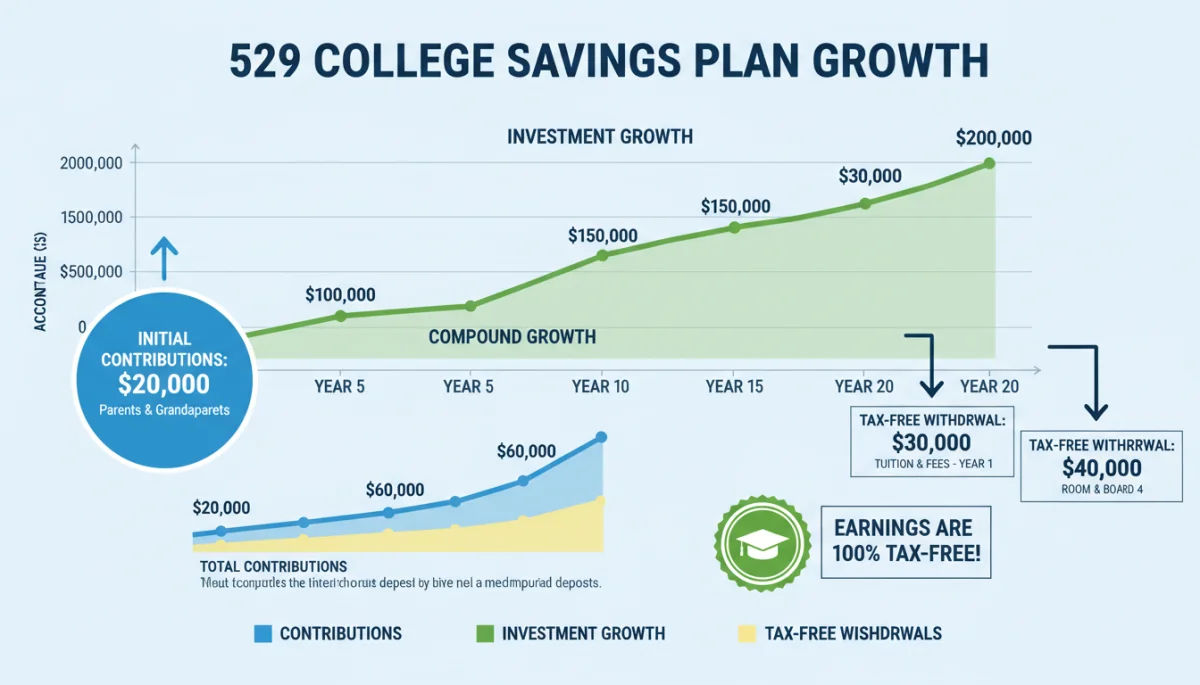
529 plans are state-sponsored investment vehicles designed to help families save for future education costs. They offer significant tax advantages, making them a popular choice for college savings. Contributions grow tax-deferred, and withdrawals for qualified educational expenses are entirely tax-free.
These plans come in two main types: prepaid tuition plans and education savings plans. Prepaid tuition plans allow you to lock in future tuition rates at eligible in-state public colleges, while education savings plans are investment accounts that can be used at virtually any accredited college or university, including some international institutions.
Key Benefits of 529 Plans
- Tax-Free Growth: Investments grow free from federal income tax.
- Tax-Free Withdrawals: Qualified withdrawals for education expenses are not subject to federal income tax.
- State Tax Benefits: Many states offer tax deductions or credits for contributions to their 529 plans.
- Flexibility: Funds can be used for a wide range of educational expenses, including tuition, fees, room and board, books, and even certain K-12 expenses.
Understanding the fundamental structure and benefits of 529 plans is the first step in leveraging them effectively. As we move closer to 2026, these advantages become even more critical in the face of rising college costs and changing economic conditions.
The Evolution of 529 Plan Contribution Limits for 2026
The Internal Revenue Service (IRS) periodically adjusts contribution limits for various tax-advantaged accounts, including 529 plans, to account for inflation and other economic factors. For 2026, these adjustments are particularly significant, reflecting a dynamic financial environment.
While there isn’t a federal limit on the total amount you can contribute to a 529 plan over its lifetime, there are state-specific limits that can be quite high, often exceeding $500,000 per beneficiary. However, the more immediate concern for many families revolves around the annual gift tax exclusion, which indirectly influences how much can be contributed without triggering gift tax implications.
Annual Gift Tax Exclusion and its Impact
The annual gift tax exclusion allows individuals to give a certain amount of money to any number of recipients each year without incurring gift tax or using up their lifetime gift tax exemption. For 2026, this exclusion amount is anticipated to see an increase from previous years, potentially offering more flexibility for large contributions.
It’s important to remember that contributions to a 529 plan are considered gifts to the beneficiary. Therefore, if your contribution exceeds the annual gift tax exclusion, you may need to file a gift tax return, though you likely won’t owe taxes unless you’ve exhausted your lifetime gift tax exemption. The ability to front-load five years’ worth of gifts into a 529 plan in a single year, known as the five-year election, also remains a powerful strategy, and its maximum amount will also be adjusted upwards in line with the new annual exclusion.

Strategic Implications of Increased Contribution Limits
The upward adjustment of 529 plan contribution limits in 2026 presents both opportunities and challenges for families. Strategically leveraging these increased limits can significantly enhance college savings efforts, but it also requires careful planning and consideration of individual financial circumstances.
For high-net-worth individuals, the higher annual gift tax exclusion, and consequently, the increased five-year election amount, means they can transfer more wealth into a 529 plan tax-free. This not only benefits the beneficiary but also helps reduce the donor’s taxable estate. For families with multiple children, this strategy can be replicated for each child, amplifying the overall impact.
Maximizing Your Contributions
- Front-Loading: Utilize the five-year election to contribute a lump sum, accelerating the tax-free growth period.
- Regular Contributions: Even smaller, consistent contributions over time can add up significantly due to compounding returns.
- Grandparent Contributions: Grandparents can also contribute to 529 plans, often utilizing their own gift tax exclusions, which can be a valuable estate planning tool.
However, it’s also important to consider the potential for overfunding. While 529 plans are flexible, non-qualified withdrawals are subject to income tax and a 10% penalty. Therefore, balancing aggressive savings with realistic projections of college costs is key to smart financial planning.
Impact on Financial Aid Eligibility and FAFSA Considerations
One of the most frequently asked questions about 529 plans relates to their impact on financial aid eligibility. For 2026, it’s crucial to understand how these assets are treated when applying for federal student aid through the Free Application for Federal Student Aid (FAFSA).
Generally, 529 plans owned by a dependent student or one of their parents are considered parental assets on the FAFSA. Parental assets are assessed at a much lower rate (a maximum of 5.64%) than student assets (assessed at 20%). This means that a 529 plan will have a relatively minor impact on a student’s eligibility for need-based financial aid compared to other types of savings.
Key FAFSA Considerations
Recent changes to the FAFSA, including the shift to the Student Aid Index (SAI) from the Expected Family Contribution (EFC), aim to simplify the application process and potentially expand eligibility for federal aid. It’s essential to stay updated on these reforms, as they can affect how 529 plan assets are calculated.
Furthermore, withdrawals from 529 plans that are used for qualified educational expenses do not count as income on the FAFSA. This is a significant advantage, as income is assessed at a much higher rate than assets. This favorable treatment makes 529 plans an attractive option for families concerned about preserving their financial aid eligibility.
Exploring Alternative Education Savings Strategies
While 529 plans are undoubtedly powerful tools, they are not the only option for saving for college. Depending on your financial situation, risk tolerance, and specific goals, exploring alternative or supplementary savings strategies can provide a more comprehensive approach to education funding.
One common alternative is a Coverdell Education Savings Account (ESA). Like 529 plans, Coverdell ESAs offer tax-free growth and withdrawals for qualified education expenses. However, they have lower annual contribution limits and income restrictions for contributors. They also offer more investment flexibility, allowing you to invest in individual stocks and bonds.
Other Savings Vehicles to Consider
Beyond dedicated education savings plans, other general investment accounts can serve a dual purpose. For instance, a Roth IRA, while primarily a retirement account, allows for tax-free withdrawals of contributions at any time and tax-free withdrawals of earnings after age 59½, or for qualified education expenses. This offers flexibility if your child decides not to pursue higher education, as the funds can then be used for retirement.
Taxable brokerage accounts also offer flexibility, with no contribution limits or restrictions on how the money is used. However, their earnings are subject to capital gains taxes. Combining different savings vehicles can provide a diversified approach, mitigating risks and maximizing potential returns while aligning with your overall financial plan.
Navigating Investment Choices within Your 529 Plan
Once you’ve decided to contribute to a 529 plan, the next crucial step is making informed investment choices within the plan. Most 529 plans offer a range of investment options, from conservative to aggressive, designed to suit different risk appetites and time horizons.
Common investment options include age-based portfolios, which automatically adjust their asset allocation to become more conservative as the beneficiary approaches college age. These are often a good choice for hands-off investors. Other options include static portfolios, which maintain a fixed asset allocation, and individual fund options, allowing for more customization.
Factors to Consider When Investing
- Risk Tolerance: How comfortable are you with market fluctuations?
- Time Horizon: How many years until your child needs the funds? Longer horizons allow for more aggressive investments.
- Diversification: Ensure your portfolio is spread across different asset classes to mitigate risk.
- Fees: Be mindful of management fees and expense ratios, as they can impact your overall returns.
Regularly reviewing and rebalancing your 529 plan investments is essential, especially as your child gets closer to college. Adjusting your strategy to reflect market conditions and your changing financial goals will help ensure your savings remain on track to meet future education costs effectively.
The Broader Economic Landscape and College Affordability
Saving for college in 2026 is not just about understanding 529 plan mechanics; it’s also about recognizing the broader economic landscape that shapes college affordability. Inflation, interest rates, and the overall job market all play significant roles in determining the true cost of higher education and the financial strategies families employ.
Rising inflation directly impacts college tuition, room and board, and other related expenses. While 529 plans offer tax-free growth, the rate of return on investments must ideally outpace inflation to maintain purchasing power. Similarly, interest rates affect student loan borrowing costs, making it even more imperative to save proactively to minimize reliance on loans.
Beyond 529 Plans: Holistic Financial Planning
A holistic approach to college affordability extends beyond just 529 plans. This includes exploring scholarships, grants, and work-study programs that can significantly reduce the net cost of attendance. Additionally, considering in-state public universities versus out-of-state or private institutions can yield substantial savings.
The economic outlook for 2026 suggests continued volatility, underscoring the importance of robust financial planning. Diversifying savings, maintaining an emergency fund, and regularly reviewing your budget are all critical components of ensuring your family is well-prepared for the financial demands of college, regardless of how the economic tides turn.
| Key Point | Brief Description |
|---|---|
| New Contribution Limits | IRS adjustments for 2026 will increase annual gift tax exclusion, impacting 529 plan contribution strategies. |
| Strategic Planning | Leveraging higher limits through front-loading or consistent contributions can maximize tax-free growth. |
| Financial Aid Impact | 529 plans are favorably treated as parental assets on FAFSA, minimally affecting aid eligibility. |
| Investment Choices | Selecting appropriate age-based or static portfolios within 529 plans is crucial for optimal growth. |
Frequently Asked Questions About 529 Plans in 2026
529 plans offer tax-free growth on investments and tax-free withdrawals for qualified educational expenses. Many states also provide tax deductions or credits for contributions, further enhancing their financial appeal for college savings.
Increased contribution limits, tied to the annual gift tax exclusion, allow families to contribute more money to 529 plans without triggering gift tax. This provides greater flexibility for aggressive college savings and estate planning.
529 plans owned by parents are considered parental assets on the FAFSA and are assessed at a low rate. This means they have a minimal impact on a student’s eligibility for need-based federal financial aid, making them a favorable savings option.
Yes, 529 plan funds can be used for a wide array of qualified educational expenses, including tuition, fees, books, supplies, equipment, room and board, and even certain K-12 private school tuition expenses.
You can change the beneficiary to another eligible family member. Alternatively, you can withdraw the funds, but non-qualified withdrawals are subject to income tax and a 10% penalty on earnings.
Conclusion
Saving for college in 2026 demands a proactive and informed approach, especially with the anticipated adjustments to 529 plan contribution limits. These plans remain an invaluable tool for families aiming to fund higher education, offering significant tax advantages and flexibility. By understanding the new limits, strategically planning contributions, and making informed investment choices, families can effectively navigate the complexities of college savings. Furthermore, integrating 529 plans with a broader financial strategy that considers financial aid implications and alternative savings vehicles will ensure a comprehensive and resilient approach to securing your child’s educational future in an ever-evolving economic landscape.