Survivor Benefits 2026: Eligibility & Application Guide

Survivor benefits in 2026 provide crucial financial support to eligible spouses, children, and parents of deceased workers, aiming to help families maintain economic stability after a loss.
Understanding survivor benefits in 2026 is more critical than ever for families navigating the complexities of loss and financial security. This comprehensive guide is designed to clarify who is eligible, how to apply, and what changes might be on the horizon, ensuring you have the knowledge to secure the support you deserve.
Understanding survivor benefits: what they are and why they matter
Survivor benefits, primarily administered through Social Security, offer a vital financial safety net for the families of deceased workers. These benefits are not merely an entitlement; they represent a lifeline, helping widowed spouses, dependent children, and sometimes even dependent parents, maintain a degree of financial stability after the loss of a loved one who contributed to Social Security.
The importance of these benefits cannot be overstated. They can cover essential living expenses, educational costs for children, and provide a sense of security during an incredibly difficult time. Knowing the specifics of these benefits, especially as we look towards 2026, allows families to plan more effectively and mitigate the financial impact of an unexpected death.
The foundation of survivor benefits
At its core, the Social Security survivor benefits program is designed to replace a portion of the deceased worker’s earnings. The amount received is based on the deceased’s average lifetime earnings, meaning those who earned more and contributed more to Social Security often leave higher benefits for their survivors.
- Financial Stability: Provides regular income to help cover daily living expenses.
- Educational Support: Can assist with the costs of raising and educating minor children.
- Peace of Mind: Offers a sense of security during a period of emotional distress.
- Protection for Dependents: Ensures that those reliant on the deceased’s income are not left without support.
Understanding the structure and intent behind survivor benefits is the first step toward navigating the application process. It’s about recognizing that these benefits are a testament to the deceased’s lifetime contributions and a critical resource for their surviving family members.
In essence, survivor benefits are a critical component of the Social Security system, designed to provide ongoing financial support to families after the death of a wage earner. These benefits play a significant role in helping families adjust to new financial realities, ensuring that the loss of a loved one does not also mean the loss of financial security.
Eligibility criteria for spouses in 2026
For spouses, understanding the eligibility requirements for survivor benefits in 2026 is paramount. The criteria are specific and can vary based on age, marital status, and other factors, making it essential to review them carefully to determine if you qualify for this crucial support.
The Social Security Administration (SSA) outlines clear guidelines for widowed spouses, ensuring that benefits are directed to those most in need. These guidelines are designed to account for various life circumstances, from traditional marriages to divorced spouses and those caring for dependent children.
Key conditions for widowed spouses
To be eligible for survivor benefits as a widowed spouse, several conditions must typically be met. These include age requirements, the duration of the marriage, and whether the spouse is caring for the deceased’s dependent children.
- Age Requirement: Generally, a widowed spouse must be at least 60 years old (50 if disabled) to receive benefits.
- Marriage Duration: The marriage must have lasted at least nine months, unless there are specific exceptions like accidental death.
- Caring for Children: A widowed spouse of any age can receive benefits if they are caring for the deceased’s child who is under age 16 or disabled and receiving benefits.
- Remarriage Rules: Remarriage before age 60 (or 50 if disabled) typically disqualifies a spouse from receiving benefits, though remarriage after these ages does not.
These rules are in place to ensure that benefits are distributed fairly and to those who were genuinely dependent on the deceased worker. It’s important to note that even divorced spouses can be eligible under certain conditions, provided the marriage lasted at least 10 years and other criteria are met.
The eligibility criteria for spouses are comprehensive, aiming to cover a broad range of situations while maintaining the integrity of the Social Security system. Spouses should thoroughly review these conditions and consider consulting with the SSA directly to confirm their specific eligibility in 2026.
Eligibility criteria for children in 2026
Children are often the most vulnerable survivors, and Social Security provides specific benefits to ensure their well-being after the loss of a parent. In 2026, the eligibility criteria for children will remain largely consistent, focusing on age, dependency, and the deceased parent’s work record.
These benefits are intended to help cover the costs of raising a child, including daily expenses and educational needs, until they reach adulthood. It’s a fundamental aspect of the Social Security program’s commitment to protecting families.
Who qualifies as a dependent child?
For Social Security purposes, a child can qualify for survivor benefits if they are unmarried and meet one of the following criteria. This includes biological children, adopted children, and, in some cases, stepchildren or grandchildren.
- Under 18: The child must be under the age of 18.
- Still in High School: If the child is a full-time student, benefits can continue until age 19.
- Disabled: The child must be age 18 or older and have a disability that started before age 22.
- Dependency: The child must have been dependent on the deceased worker.
The amount a child receives is a percentage of the deceased parent’s basic Social Security benefit. There is a family maximum benefit, which means if multiple family members are receiving benefits, the total amount may be capped. This ensures that the overall benefits paid out remain within reasonable limits.
The provisions for children are designed to provide continuous support during their formative years, acknowledging the financial void left by a deceased parent. Families should understand these criteria to ensure all eligible children receive the benefits they are entitled to.
Ultimately, survivor benefits for children in 2026 serve as a critical financial resource, helping to ensure that the children of deceased workers have the support they need to grow and thrive. Understanding these eligibility rules is key for securing these vital benefits.
The application process: step-by-step guide for 2026
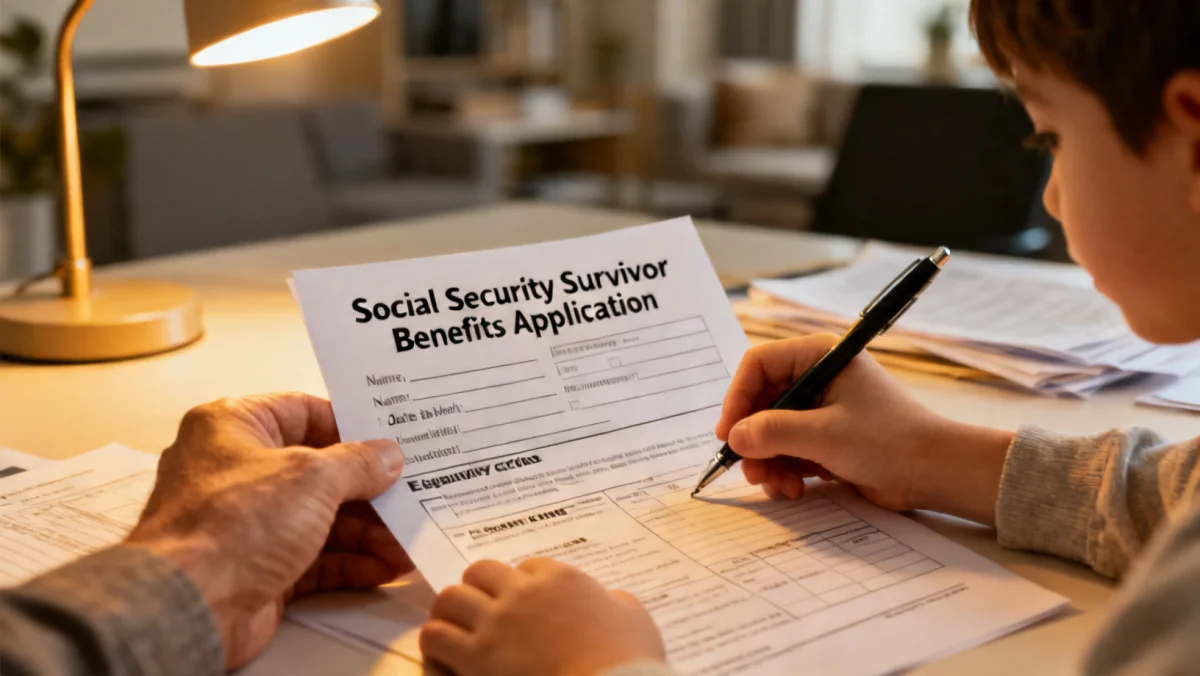
Applying for survivor benefits can seem daunting, especially during a time of grief. However, the Social Security Administration has a structured process to guide applicants. Knowing the steps involved and preparing the necessary documentation will significantly streamline your application in 2026.
The SSA aims to make the process as straightforward as possible, but it still requires careful attention to detail and the submission of accurate information. Being prepared can reduce delays and ensure you receive benefits promptly.
Essential documents and information needed
Before initiating the application, gather all relevant documents. This preparation is crucial as missing information can delay the processing of your claim. The required documents typically include proof of death, birth certificates, and marriage certificates.
- Proof of Death: Official death certificate.
- Birth Certificates: For the deceased and all applicants (spouse, children, etc.).
- Marriage Certificate: If applying as a widowed spouse.
- Social Security Numbers: For the deceased and all applicants.
- Bank Account Information: For direct deposit of benefits.
- Deceased’s W-2 Forms or Self-Employment Tax Returns: For the past year, to verify earnings.
Once you have all the necessary documents, you can begin the application. While some initial inquiries can be made online or by phone, the actual application for survivor benefits often requires an in-person visit to a local Social Security office. This allows for direct assistance and ensures all forms are correctly completed.
The application process is a critical phase in securing survivor benefits. By understanding each step and meticulously preparing the required documentation, applicants can navigate this period with greater ease and confidence, ultimately securing the financial support they are entitled to in 2026.
Potential changes and considerations for 2026
While the core structure of survivor benefits is expected to remain stable, it’s prudent to consider any potential adjustments or considerations that might arise in 2026. Social Security benefits are subject to periodic reviews and legislative changes, which could impact eligibility or benefit amounts.
Staying informed about these potential changes is crucial for anyone planning to apply or currently receiving benefits. While major overhauls are rare, minor adjustments can still have an impact on individual circumstances.
Staying updated on policy shifts
The Social Security Administration regularly provides updates on any policy changes, cost-of-living adjustments (COLAs), or legislative reforms that could affect benefits. It’s advisable to monitor their official website and subscribe to their newsletters for the most current information.
- Legislative Reviews: Congress occasionally reviews Social Security policies, which could lead to modifications.
- Cost-of-Living Adjustments (COLAs): Benefits are typically adjusted annually to keep pace with inflation.
- Economic Factors: Broader economic conditions can sometimes influence discussions around benefit adjustments.
- Official SSA Communications: The most reliable source for any changes will always be the Social Security Administration itself.
It is important for beneficiaries and potential applicants to be proactive in seeking information. While this article provides a guide based on current understanding, the landscape of social benefits can evolve. Consulting the SSA directly or a trusted financial advisor can provide personalized insights.
Being aware of potential changes ensures that individuals and families can adapt their financial planning accordingly. While significant changes to survivor benefits are not typically announced far in advance, vigilance and direct consultation with the SSA are the best ways to stay informed about any developments in 2026.
Maximizing your survivor benefits: tips and strategies
Once eligible, understanding how to maximize your survivor benefits can significantly impact your financial well-being. There are various strategies and considerations, especially for spouses, that can help optimize the amount received and ensure long-term financial stability.
These strategies often involve careful timing of applications, understanding the interplay between different types of benefits, and being aware of earnings limits that might affect benefit amounts.
Strategic claiming for spouses
For widowed spouses, the timing of when to claim survivor benefits can be a crucial decision. While benefits can begin as early as age 60 (or 50 if disabled), waiting until your full retirement age can result in a higher monthly payment.
- Delaying Application: For a widowed spouse, delaying claiming survivor benefits until your own full retirement age can result in a higher benefit amount if your own work record yields a higher benefit.
- Coordinating Benefits: If you are eligible for both survivor benefits and your own Social Security retirement benefits, you might be able to claim one first and switch to the other later to maximize your total lifetime benefits.
- Earnings Limit Awareness: If you are under full retirement age and working, there are earnings limits that can affect how much you receive in benefits. Understanding these limits is essential.
- Financial Planning: Integrating survivor benefits into your overall financial plan, possibly with the help of a financial advisor, can ensure long-term stability.
It’s important to remember that each individual’s situation is unique, and what works for one person may not be ideal for another. Therefore, seeking personalized advice from the Social Security Administration or a qualified financial planner is highly recommended to make the most informed decision.
Maximizing survivor benefits is about making informed choices based on individual circumstances and long-term financial goals. By carefully considering claiming strategies and understanding all applicable rules, beneficiaries can ensure they receive the greatest possible financial support in 2026.
Common pitfalls and how to avoid them
Navigating the survivor benefits system can present challenges, and certain common pitfalls can delay or even jeopardize your claim. Being aware of these potential issues and knowing how to avoid them is just as important as understanding the eligibility criteria and application process.
From incomplete documentation to missed deadlines, seemingly minor errors can have significant consequences. Proactive measures and careful attention to detail are your best defenses against these common problems.
Avoiding application delays and denials
One of the most frequent issues applicants face is submitting an incomplete application or failing to provide all required documents. This often leads to delays as the SSA requests additional information.
- Incomplete Documentation: Always double-check that all required documents, such as birth certificates, marriage certificates, and the death certificate, are included and accurate.
- Missed Deadlines: While there isn’t a strict deadline for applying for survivor benefits, delaying too long can mean missing out on some retroactive payments. Apply as soon as possible after the death.
- Incorrect Information: Ensure all information provided on the application is accurate and consistent with official records. Discrepancies can trigger reviews and delays.
- Lack of Communication: Respond promptly to any requests for additional information from the SSA. Ignoring these requests can lead to the denial of your claim.
- Not Understanding Rules: Misinterpreting eligibility rules, particularly regarding remarriage or earnings limits, can lead to unexpected reductions or disqualifications. Seek clarification from the SSA if unsure.
Additionally, it’s crucial to understand that the SSA may require additional information beyond the initial application. Being responsive and organized throughout the process can significantly reduce stress and improve the likelihood of a smooth approval.
By being vigilant and proactive, applicants can successfully navigate the complexities of the survivor benefits system. Avoiding these common pitfalls ensures a more efficient and positive outcome, securing the necessary financial support in 2026 without unnecessary complications.
| Key Point | Brief Description |
|---|---|
| Spouse Eligibility | Widowed spouses must meet age (60 or 50 if disabled) and marriage duration (9+ months) criteria, or care for dependent children. |
| Child Eligibility | Unmarried children under 18 (or 19 if in high school, or disabled before 22) qualify for benefits. |
| Application Process | Gather essential documents (death certificate, birth certificates, SSNs) and contact the SSA to apply. |
| Maximizing Benefits | Consider strategic claiming for spouses, coordinating with personal retirement benefits, and understanding earnings limits. |
Frequently asked questions about survivor benefits in 2026
A widowed spouse can typically start receiving survivor benefits as early as age 60. If the spouse is disabled, they may be eligible to receive benefits at age 50. Special rules apply if caring for the deceased’s child under 16.
Yes, a divorced spouse may be eligible for survivor benefits if the marriage lasted for at least 10 years, they are currently unmarried, and they are at least age 60 (or 50 if disabled). Other conditions may apply, so checking with the SSA is recommended.
Children typically receive survivor benefits until they turn 18. If they are still attending high school full-time, benefits can continue until age 19. Disabled children who became disabled before age 22 can receive benefits indefinitely.
Yes, if you are under your full retirement age and receiving survivor benefits, there is an annual earnings limit. If you earn over this limit, a portion of your benefits may be withheld. This limit changes annually, so check the SSA website for current figures.
Key documents include the deceased’s death certificate, birth certificates for all applicants, a marriage certificate (if applicable), and Social Security numbers for all parties. Having these ready streamlines the application process significantly.
Conclusion
Navigating the complexities of survivor benefits in 2026 requires understanding eligibility, the application process, and potential changes. This guide aims to equip spouses and children with the essential knowledge to secure the financial support they are entitled to during a challenging time. By being prepared and proactive, families can ensure a smoother process and maintain financial stability, honoring the contributions of their loved ones.