Unemployment Benefits 2026: Eligibility & State Variations

Securing unemployment benefits in 2026 demands a thorough understanding of evolving eligibility criteria and the diverse state-by-state regulations that dictate access to and the amount of financial assistance.
Navigating the landscape of employment can be challenging, and job loss, while often unexpected, is a reality many face. For those in the United States, understanding Unemployment Benefits in 2026 is more critical than ever. As the economy shifts and state regulations evolve, being informed about eligibility criteria, application processes, and the significant variations from one state to another can make a profound difference in maintaining financial stability during periods of unemployment. This comprehensive guide aims to demystify the complexities surrounding these vital support systems, providing clarity and actionable insights for anyone who might need to access them in the coming year.
The Foundation of Unemployment Benefits: What Are They?
Unemployment benefits, often referred to as unemployment insurance (UI), are a joint federal and state program designed to provide temporary financial assistance to eligible workers who lose their jobs through no fault of their own. These benefits serve as a critical safety net, helping individuals cover essential living expenses while they actively search for new employment. The overarching goal is to stabilize the economy by supporting consumer spending during periods of economic downturns or individual job displacement.
Historically, the program has adapted to various economic challenges, and 2026 is no exception. While the core principles remain, specific parameters are frequently updated to reflect current economic conditions and policy priorities. Understanding these fundamental aspects is the first step toward effectively utilizing the program when needed. It’s not just about receiving a check; it’s about understanding a system designed to bridge the gap between jobs.
Federal and State Partnership
The UI system operates as a partnership. The federal government establishes broad guidelines and provides funding for administrative costs, while individual states are responsible for administering their own programs. This division of responsibility leads to the significant variations we see across the country. Each state sets its own:
- Eligibility requirements
- Weekly benefit amounts
- Duration of benefits
- Application procedures and deadlines
This decentralized structure means that a worker’s experience with unemployment benefits can differ significantly depending on where they reside and were employed. Therefore, a national understanding must always be tempered with a localized focus on state-specific rules.
In essence, unemployment benefits are a temporary lifeline, not a permanent income source. They are funded primarily by taxes on employers, ensuring that the system is sustained by those who benefit most from a stable workforce. This structure underscores the program’s role as an insurance policy against unforeseen job loss, designed to provide short-term relief and encourage reemployment.
Key Eligibility Criteria for Unemployment Benefits in 2026
Determining eligibility for unemployment benefits is often the most critical hurdle for applicants. While specific rules vary by state, several core criteria are universally applied across the United States. These criteria are designed to ensure that benefits are directed to individuals who genuinely need and qualify for assistance, preventing misuse of the system.
Applicants must generally meet three primary conditions: monetary eligibility, reason for separation from employment, and ongoing availability and search for work. Each of these components is carefully assessed by state unemployment agencies to make a determination.
Monetary Eligibility: Earnings and Work History
To qualify for benefits, applicants must have earned a certain amount of wages during a specific period, known as the ‘base period,’ typically the first four of the last five completed calendar quarters before filing a claim. This ensures that only individuals with a recent attachment to the workforce can claim benefits. States have different formulas for calculating this, but common requirements include:
- Earning a minimum total amount during the base period.
- Earning wages in at least two quarters of the base period.
- Having sufficient earnings in the highest-earning quarter.
These monetary thresholds are crucial because they directly influence both eligibility and the potential weekly benefit amount. Without meeting these earnings requirements, an application will likely be denied, regardless of other factors.
Reason for Job Separation
A fundamental principle of unemployment insurance is that benefits are for those who lose their jobs through no fault of their own. This means that generally, individuals who voluntarily quit their jobs without good cause, or who are fired for misconduct, are ineligible for benefits. Each state defines ‘good cause’ and ‘misconduct’ differently, which can lead to complex determinations.
For example, ‘good cause’ for quitting might include unsafe working conditions, employer harassment, or a significant change in job duties or pay. ‘Misconduct’ typically involves violations of company policy, insubordination, or negligence. These distinctions are vital, and applicants must be prepared to provide detailed explanations and evidence regarding their separation from employment.
Availability and Search for Work
Once approved, recipients of unemployment benefits are generally required to be able to work, available for work, and actively seeking suitable employment. This isn’t a passive benefit; it demands ongoing engagement in the job market. Most states require beneficiaries to:
- Register with a state employment service.
- Make a specified number of job contacts each week.
- Keep a detailed record of job search activities.
Failure to meet these ongoing requirements can result in a loss of benefits. The goal is to support individuals in finding new employment, not to provide long-term income replacement. These conditions reinforce the temporary nature of the unemployment insurance program.
State-by-State Variations: A Complex Mosaic
While federal guidelines provide a framework, the true complexity of unemployment benefits in the United States lies in the significant state-by-state variations. What applies in California might be entirely different in Texas or New York. These differences encompass everything from benefit amounts and duration to specific eligibility nuances and application procedures. Understanding these localized rules is paramount for any applicant.
The decentralized nature of the UI system allows states to tailor programs to their unique economic conditions and workforce demographics. However, it also creates a challenging landscape for individuals who might move between states or are unfamiliar with their local regulations. It’s never safe to assume that rules from one state will apply universally.
Weekly Benefit Amounts (WBAs)
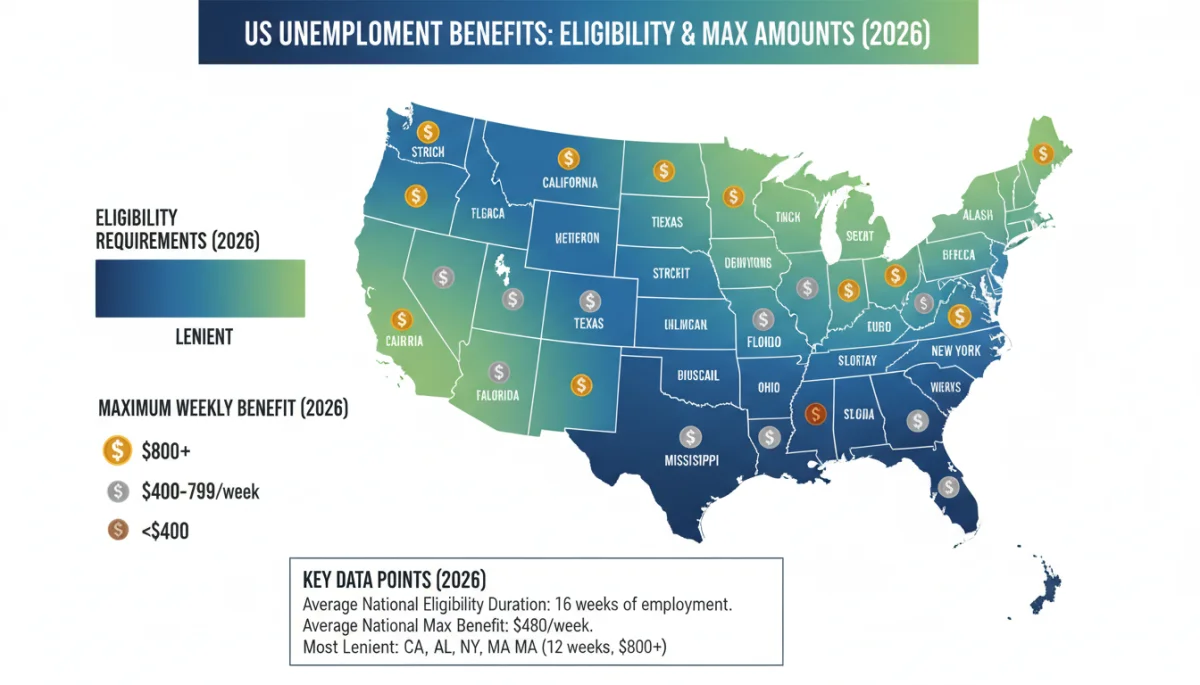
The amount of money an individual receives weekly varies considerably by state. Most states calculate the WBA based on a percentage of an individual’s average weekly wages during their base period, up to a maximum amount. These maximums can range from a few hundred dollars to over a thousand in some high-cost-of-living states.
For example, a state might offer 50% of an applicant’s average weekly wage, capped at $450 per week. Another state might offer a higher percentage or a higher cap. These differences significantly impact a recipient’s ability to cover their living expenses and highlight the importance of checking state-specific tables and calculators.
Duration of Benefits
The standard duration for unemployment benefits in most states is 26 weeks. However, some states offer fewer weeks, while others might provide more, especially during periods of high unemployment when extended benefits programs might be triggered. These extensions are often federally funded but administered by the states.
Understanding the potential duration is crucial for financial planning. While 26 weeks provides a substantial period of support, it’s not unlimited, and beneficiaries are expected to actively seek reemployment throughout this period. The end of benefits can be a significant financial cliff if a new job isn’t secured.
Specific State Requirements and Waivers
Beyond the basics, states often have unique requirements or may offer waivers under certain circumstances. For instance, some states might have specific rules for seasonal workers, self-employed individuals, or those undergoing training programs. During public health emergencies or natural disasters, states may also implement temporary changes to eligibility or work search requirements.
These specific rules can be complex and are often subject to change. Therefore, directly consulting the website of the relevant state’s unemployment agency is always the most reliable way to obtain accurate and up-to-date information. Relying on outdated information can lead to denied claims or missed opportunities.
The Application Process: Step-by-Step Guide for 2026
Applying for unemployment benefits can seem daunting, but breaking the process down into manageable steps makes it much clearer. While the exact procedures vary by state, a general roadmap applies across the board. Being prepared with the right information and understanding the typical flow can significantly expedite your claim and reduce potential frustrations in 2026.
The application typically begins online, though some states still offer phone or in-person options. Accuracy and completeness are paramount, as errors or omissions can cause delays or even denial of benefits. It’s advisable to gather all necessary documentation before starting the application.
Gathering Required Information
Before you begin the application, ensure you have the following information readily available:
- Your Social Security number.
- Driver’s license or state ID number.
- Mailing address and phone number.
- Employment history for the last 18-24 months, including employer names, addresses, phone numbers, dates of employment, and reason for separation.
- Gross earnings for the base period.
- Bank account and routing numbers for direct deposit (if preferred).
- Alien Registration Number (if not a U.S. citizen).
Having this information organized beforehand will make the online application process much smoother and faster, reducing the likelihood of mistakes that could delay your claim.
Submitting Your Claim
Most states encourage or require online applications through their respective Department of Labor or Employment Security websites. The online portals are designed to guide you through the process, though they can sometimes be lengthy. It’s important to read each question carefully and provide accurate responses.
After submitting, you will typically receive a confirmation and instructions on what to expect next. This might include information about weekly claim certifications, work search requirements, and how to appeal a decision if your claim is initially denied. Keep all correspondence from the unemployment agency, as it contains vital information.
Weekly Certifications and Work Search
Once your initial claim is approved, you will need to file weekly or bi-weekly certifications to continue receiving benefits. During these certifications, you will typically confirm that you are:
- Still unemployed.
- Able and available for work.
- Actively searching for work.
- Reporting any earnings from part-time work or other income.
Maintaining detailed records of your job search activities is essential, as states may audit these records. Failure to certify or meet work search requirements can lead to a suspension or termination of benefits. This ongoing engagement ensures the integrity of the program and encourages reemployment.
Understanding Denials and the Appeals Process
Receiving a denial for unemployment benefits can be disheartening, but it’s not necessarily the end of the road. Many denials occur due to misunderstandings, incomplete information, or disputes over the reason for job separation. Understanding why a claim might be denied and knowing your rights to appeal are crucial steps in navigating the unemployment system in 2026.
Every applicant has the right to appeal a denial, and the appeals process is designed to give individuals an opportunity to present their case and any supporting evidence. It’s a formal process that requires attention to detail and adherence to deadlines.
Common Reasons for Denial
Several factors frequently lead to the denial of unemployment claims. Being aware of these can help applicants proactively address potential issues or understand the basis of a denial:
- Voluntary Quit: If you left your job without ‘good cause’ as defined by your state.
- Misconduct Discharge: If you were fired for actions deemed to be misconduct.
- Insufficient Earnings: Not meeting the state’s monetary eligibility requirements during the base period.
- Not Able or Available for Work: If you are unable to work due to illness, injury, or other commitments, or not genuinely seeking employment.
- Failure to Provide Information: Not submitting required documents or responding to agency requests in a timely manner.
Each of these reasons is subject to state-specific interpretations, making the details of your separation or work history particularly important during the application review.
The Appeals Process
If your claim is denied, you will receive a written notice explaining the reason for the denial and instructions on how to file an appeal. It’s critical to act quickly, as there are strict deadlines for filing an appeal, typically 10 to 30 days from the date of the denial notice.
The appeals process generally involves several stages:
- Initial Appeal (Hearing): You will typically have a hearing, often by phone, before an impartial administrative law judge or hearing officer. Both you and your former employer will have the opportunity to present testimony and evidence.
- Board of Review: If you disagree with the hearing officer’s decision, you can usually appeal to a higher administrative body, such as a Board of Review. This stage often involves a review of the existing record rather than a new hearing.
- Judicial Review: As a final step, some states allow for an appeal to the state court system, though this is less common for unemployment claims.
Throughout the appeals process, it’s advisable to gather any relevant documentation, such as termination letters, payroll stubs, medical records, or job search logs, to support your case. Seeking legal advice or assistance from advocacy groups can also be beneficial.
Impact of Economic Trends and Policy Changes on Benefits in 2026
The landscape of unemployment benefits is not static; it is continually shaped by economic trends and policy changes at both federal and state levels. As we look towards 2026, understanding these dynamic forces is crucial for anticipating potential shifts in eligibility, benefit amounts, and the overall availability of support. Economic forecasts, legislative actions, and societal needs all play a role in evolving the UI system.
Recent years have demonstrated the system’s capacity for rapid adaptation in times of crisis, but also highlight the political and economic debates surrounding its structure and funding. These discussions will undoubtedly continue to influence unemployment benefits in 2026.
Economic Outlook and UI Triggers
The general economic health of the nation and individual states significantly impacts the unemployment insurance program. During periods of high unemployment, federal extended benefits programs can be triggered, providing additional weeks of support beyond the standard state limits. Conversely, a strong economy might lead to discussions about tightening eligibility or reducing benefit durations.
Economic indicators such as the unemployment rate, job creation numbers, and inflation rates are closely monitored by policymakers. These metrics inform decisions about UI funding, administrative resources, and the need for temporary expansions or adjustments to the program.
Potential Legislative Changes
Legislation at both the federal and state levels can introduce significant changes to unemployment benefits. In 2026, potential areas of legislative focus might include:
- Modernizing UI Infrastructure: Efforts to update antiquated state IT systems to improve efficiency and reduce fraud.
- Expanding Coverage: Discussions around extending UI coverage to gig workers, self-employed individuals, or those in non-traditional employment.
- Benefit Adequacy: Debates on whether current weekly benefit amounts are sufficient to meet basic living costs, especially in high-cost areas.
- Work Search Requirements: Adjustments to the intensity or nature of required job search activities.
These legislative discussions are often influenced by political priorities, advocacy groups, and the lessons learned from previous economic downturns. Staying informed about proposed bills and policy debates can provide insights into the future direction of unemployment benefits.
Technological Advancements and Fraud Prevention
The increasing reliance on digital platforms for application and administration also brings a focus on technological advancements and fraud prevention. States are continuously investing in more robust online systems, but also in sophisticated tools to detect and prevent fraudulent claims. This can impact the application process, leading to more stringent verification steps or new reporting requirements.
For applicants, this means ensuring the accuracy of all submitted information and being aware of potential scams targeting unemployment beneficiaries. The goal is to create a system that is both accessible to legitimate claimants and secure against illicit activities, a balance that is constantly being refined.
Maximizing Your Unemployment Benefits Experience
Successfully navigating the unemployment benefits system in 2026 goes beyond simply applying; it involves strategic planning, diligent record-keeping, and proactive engagement. Maximizing your benefits experience means understanding your responsibilities, utilizing available resources, and preparing for reemployment effectively. It’s about treating your job search as a full-time endeavor while receiving temporary support.
Being organized and informed can prevent delays, ensure continuous benefits, and ultimately lead to a quicker return to stable employment. This proactive approach is key to transforming a period of job loss into an opportunity for career growth.
Diligent Record-Keeping
Maintain meticulous records of everything related to your unemployment claim. This includes:
- Copies of your initial application and all subsequent weekly certifications.
- All correspondence from the unemployment agency (letters, emails, notices).
- Detailed logs of your job search activities, including dates, employer names, contact information, positions applied for, and results.
- Any appeals documents or hearing notices.
These records are invaluable if there are any discrepancies, questions, or if you need to appeal a decision. They provide a clear paper trail to support your claims and actions.
Utilizing State Resources
State unemployment agencies and workforce development boards often provide a wealth of free resources to help individuals find new employment. These can include:
- Job search assistance, including resume and cover letter workshops.
- Interview coaching and mock interviews.
- Access to job boards and employer networks.
- Career counseling and skills assessment tools.
- Training and retraining programs, sometimes with financial assistance.
Leveraging these resources can significantly enhance your job search effectiveness and potentially open doors to new career paths. They are designed to complement your unemployment benefits by accelerating your return to work.
Financial Planning During Unemployment
While unemployment benefits provide crucial temporary income, they rarely replace your full previous earnings. It’s essential to adjust your budget and financial planning to account for this reduced income. Consider:
- Creating a detailed budget to track income and expenses.
- Prioritizing essential spending and cutting discretionary costs.
- Exploring other forms of assistance if needed, such as food stamps or utility assistance programs.
- Understanding the tax implications of unemployment benefits, as they are generally taxable income.
Proactive financial management during unemployment can alleviate stress and ensure that the benefits you receive are used effectively to maintain stability until you secure new employment.
| Key Aspect | Brief Description |
|---|---|
| Eligibility Criteria | Must meet monetary earnings, be jobless through no fault, and be actively seeking work. |
| State Variations | Benefit amounts, duration, and specific rules differ significantly by state. |
| Application Process | Online application requires detailed employment history and weekly certifications. |
| Appeals | Right to appeal denials; strict deadlines and evidence required for hearings. |
Frequently Asked Questions About Unemployment Benefits in 2026
The base period is typically the first four of the last five completed calendar quarters before you file your claim. States use this period to review your earnings and work history to determine if you meet the monetary eligibility requirements for unemployment benefits.
Generally, no, unless you quit for ‘good cause’ as defined by your state’s laws. Good cause can include reasons like unsafe working conditions, employer harassment, or a significant reduction in pay. Voluntary quits without good cause usually lead to disqualification.
The standard duration for unemployment benefits in most states is 26 weeks. However, some states offer fewer weeks, and extended benefits may be available during periods of high unemployment, often triggered by specific economic conditions. Check your state’s current rules.
Yes, unemployment benefits are considered taxable income by the federal government and most states. You will receive a Form 1099-G detailing the amount of benefits received, which you must report on your tax return. You can usually elect to have taxes withheld from your weekly payments.
If your claim is denied, you have the right to appeal the decision. Your denial notice will provide instructions on how to file an appeal and the deadline. The appeals process typically involves a hearing where you can present your case and evidence.
Conclusion
Successfully navigating the complex world of Unemployment Benefits in 2026 requires diligence, an understanding of core eligibility, and a keen awareness of specific state-by-state variations. While the system provides a vital financial safety net, it demands active participation, accurate information, and a proactive approach to reemployment. By staying informed about the evolving criteria, understanding the application and appeals processes, and leveraging available resources, individuals can effectively utilize this critical support system during periods of job transition, ensuring a smoother path back to stable employment and financial security.