Online vs. In-Person Degrees: US 2025 Data Analysis
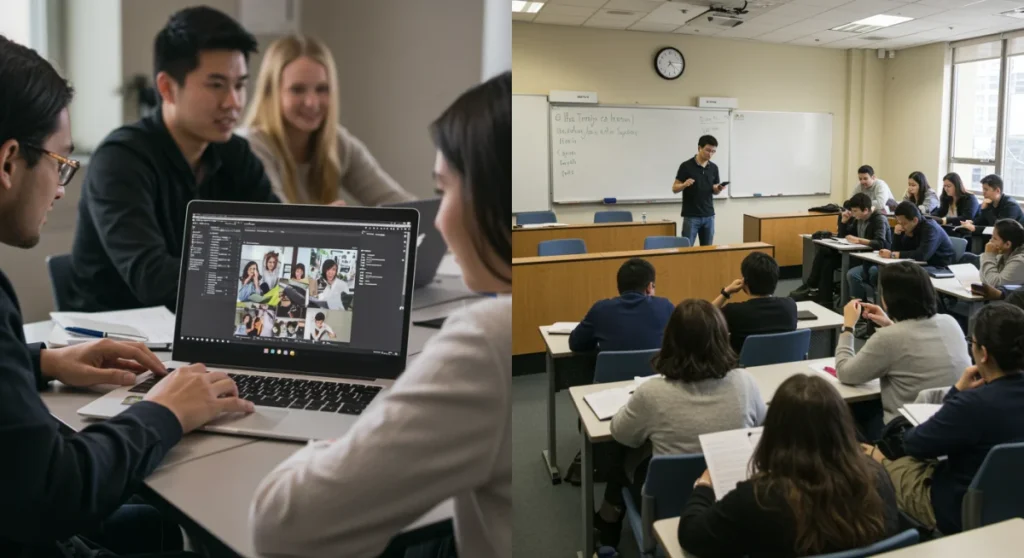
Comparing online and in-person degree programs in the US for 2025 reveals critical distinctions in pedagogical approaches, student experiences, and post-graduation success across various top fields, requiring careful consideration for prospective students.
Choosing between an online and an in-person degree program is a pivotal decision for aspiring students in the United States. The landscape of higher education is continuously evolving, and a comprehensive understanding of the nuances involved in comparing online vs in-person degrees is more crucial than ever.
The Evolving Landscape of US Higher Education
The academic world has undergone significant transformations, accelerated by technological advancements and shifting societal needs. In 2025, the options for pursuing a degree are more diverse, offering pathways that cater to various learning styles, schedules, and financial situations.
Both online and in-person modalities have distinct advantages and disadvantages, influencing everything from daily routines to long-term career trajectories. Understanding these differences is essential for making an informed choice that aligns with individual goals and aspirations.
Historical Context and Recent Growth
- Pre-Pandemic Trends: Online learning was already growing steadily, offering flexibility for working professionals and those in remote areas.
- Pandemic Acceleration: The global health crisis dramatically boosted online enrollment, forcing institutions to adapt rapidly.
- Post-Pandemic Normalization: While some students returned to campuses, online learning maintained significant traction, becoming a permanent fixture.
The growth of online education has been particularly notable in fields requiring continuous professional development or those with a high demand for specialized skills. Institutions have invested heavily in robust digital infrastructures, improving the quality and accessibility of virtual learning experiences. This evolution has redefined what it means to attend college, moving beyond traditional campus boundaries.
This section establishes the foundation for understanding the current educational climate, highlighting how both online and in-person options have become integral parts of the higher education system in the US. The choice is no longer about one being inherently superior, but rather about which model best fits a student’s personal and academic profile.
Flexibility and Accessibility: A Primary Differentiator
One of the most frequently cited benefits of online degree programs is the unparalleled flexibility they offer. This aspect is particularly attractive to non-traditional students, including those balancing work, family, or other commitments.
In contrast, in-person programs typically adhere to a more structured schedule with fixed class times and campus attendance requirements. While this structure can provide routine and direct engagement, it may not be feasible for everyone.
Scheduling and Location Independence
- Online Degrees: Students can often complete coursework at their own pace, from any location with an internet connection, allowing for greater autonomy over their schedules.
- In-Person Degrees: Requires physical presence on campus, often at specific times, which can limit options for those with geographical or time constraints.
The ability to learn from anywhere has opened doors for individuals who previously found higher education inaccessible. For instance, military personnel, stay-at-home parents, or those in rural areas can now pursue degrees from top universities without relocating. This geographical freedom is a significant advantage that online learning provides, fostering a more inclusive educational environment.
However, this flexibility also demands a high degree of self-discipline and time management. Without the external structure of fixed class times, online students must be proactive in managing their studies and meeting deadlines. In-person programs, by their very nature, often provide a built-in support system through regular interactions with peers and faculty, which can be beneficial for some learners.
Ultimately, the choice between online and in-person flexibility depends on a student’s individual circumstances, learning preferences, and ability to self-regulate their academic journey. Both models offer distinct benefits that cater to different lifestyles and educational needs.
Cost and Financial Considerations for Students
The financial implications of pursuing higher education are a major factor for most students and their families. When comparing online vs in-person degrees, the cost can vary significantly, encompassing tuition, fees, living expenses, and potential income loss.
While online programs may initially seem more affordable due to the absence of campus housing or commuting costs, a closer look reveals a more nuanced financial picture. In-person programs, despite higher direct costs, often provide access to resources and opportunities that can offer long-term value.
Tuition and Associated Fees
- Online Programs: Often have lower tuition rates, especially for out-of-state students, and significantly reduce or eliminate costs like campus activity fees, housing, and transportation.
- In-Person Programs: Typically involve higher tuition, mandatory campus fees, and substantial living expenses if residing near campus.
Many online programs are designed to be cost-effective, appealing to budget-conscious students. The reduction in ancillary expenses can make a significant difference in the overall financial burden. However, it’s crucial to examine the specific tuition structure, as some online programs from prestigious institutions may still carry a considerable price tag. Additionally, technology fees for online learning platforms are common.
For in-person degrees, the costs extend beyond tuition. Room and board, meal plans, and daily commuting expenses can add up quickly. While scholarships and financial aid are available for both modalities, the sheer volume of expenses associated with on-campus living can make in-person education a more substantial investment. However, the direct networking opportunities and access to state-of-the-art facilities in a physical setting might justify the higher cost for some.
Students must meticulously compare financial aid packages, potential income during study, and the long-term return on investment for both online and in-person options. A thorough financial analysis is critical to make a sustainable educational choice.
Learning Environment and Student Experience
The learning environment profoundly impacts a student’s engagement, motivation, and overall academic success. Online and in-person degree programs offer vastly different experiences, each with its own set of advantages and challenges regarding interaction, support, and campus life.
In-person learning provides a traditional collegiate experience rich with social interactions and immediate access to campus resources. Online learning, while often more independent, has evolved to foster virtual communities and diverse digital resources.
Interaction and Community Building
- Online Programs: Rely on virtual discussions, forums, and video conferencing. Community building often requires proactive effort from students and instructors.
- In-Person Programs: Offer direct, face-to-face interactions with peers and professors, leading to spontaneous collaborations and a strong sense of campus community.
The social aspect of college is a significant draw for many pursuing an in-person degree. Living on campus, joining clubs, attending events, and engaging in casual conversations with classmates and faculty contribute to a holistic educational experience. These interactions can lead to lifelong friendships, professional networks, and a deeper sense of belonging.
Online programs, conversely, require students to be more intentional about building connections. While virtual platforms facilitate group projects and discussions, the absence of physical proximity means students must actively seek out opportunities for engagement. Many online programs now incorporate synchronous sessions, virtual study groups, and online social events to mitigate feelings of isolation and foster a sense of community among geographically dispersed learners.
The effectiveness of either environment largely depends on individual learning styles and preferences. Some thrive in the independent, self-paced nature of online learning, while others require the structured, interactive environment of a physical classroom to excel. Evaluating personal needs is key to choosing the optimal learning setting.
Career Outcomes and Employer Perceptions in 2025
A crucial aspect of any degree program is its impact on future career prospects. In 2025, employer perceptions of online versus in-person degrees have become more sophisticated, moving beyond initial skepticism to a more nuanced appreciation of both modalities, especially when supported by data-backed analysis.
The emphasis has shifted from the mode of delivery to the quality of the program, the skills acquired, and the reputation of the awarding institution. However, subtle differences in networking opportunities and practical experience can still influence career trajectories.
Employability and Skill Development
- Online Graduates: Often demonstrate strong self-discipline, time management, and technological proficiency, which are highly valued in modern workplaces.
- In-Person Graduates: May benefit from more direct access to internships, campus career services, and in-person networking events, potentially leading to more immediate job placement.
Employers increasingly recognize the rigor and quality of accredited online programs. For many fields, particularly those in technology, business, and healthcare, the demand for skilled professionals outweighs any lingering biases against online credentials. The practical experience gained through projects, simulations, and virtual internships in online programs is often as valuable as traditional in-person experiences.
However, some fields still place a high premium on traditional networking and hands-on laboratory or clinical experience, which might be more readily available in an in-person setting. For example, certain engineering disciplines or medical professions may require extensive physical lab work or patient interaction that is difficult to replicate entirely online. Campus career fairs and alumni networks also provide direct avenues for job seeking that online students might need to seek out more proactively.
Ultimately, a degree’s value is determined by the knowledge and skills it imparts, regardless of the delivery method. Students should research employer perceptions within their target industries and choose a program that offers robust career services and opportunities for practical application.
Data-Backed Analysis of 10 Top Fields
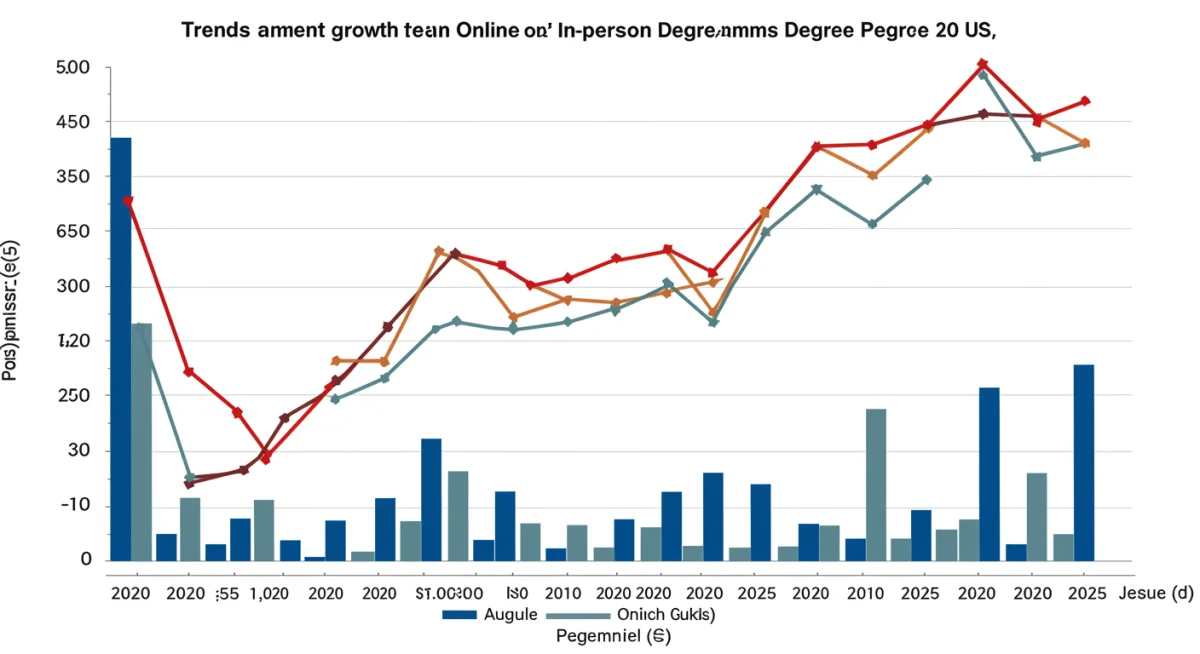
To provide a comprehensive understanding for students comparing online vs in-person degrees, we present a 2025 data-backed analysis across 10 top fields in the US. This analysis considers enrollment trends, perceived employer value, and typical career outcomes for both modalities.
The data highlights that while some fields show a clear preference or advantage for one mode of learning, many are converging, with both online and in-person options delivering comparable results, especially when program quality is high.
Key Findings Across Diverse Disciplines
- Computer Science & IT: Strong growth in online programs, with employers valuing practical skills over delivery mode. Online graduates often find competitive roles.
- Business Administration (MBA): Hybrid and fully online MBA programs are highly popular, offering flexibility for working professionals. Employer acceptance is high for accredited programs.
- Nursing & Healthcare: While clinical components require in-person presence, many theoretical courses are successfully delivered online. Online RN-to-BSN programs are particularly robust.
- Education: Online teaching degrees are highly effective, preparing educators for diverse learning environments. Demand for online K-12 teachers also supports this trend.
- Psychology: Both online and in-person programs are strong, with online options often preferred for undergraduate and master’s degrees for flexibility.
- Engineering: More traditionally in-person due to lab requirements, but online master’s programs are gaining traction, especially for specialized fields.
- Marketing & Communications: Online programs are very effective, leveraging digital tools. Graduates find roles in digital marketing, PR, and content creation.
- Data Science & Analytics: High demand drives significant growth in online offerings. Employers highly value the analytical skills, regardless of learning mode.
- Criminal Justice: Online programs are popular among those already working in law enforcement or related fields, offering career advancement.
- Graphic Design & Digital Arts: Online platforms are well-suited for portfolio development and project-based learning. In-person offers studio environments.
The data suggests that for most of these fields, the key to success lies not in the mode of delivery itself, but in the quality of the curriculum, the faculty’s expertise, and the student’s personal commitment and proactive engagement. Accredited online programs from reputable institutions are increasingly seen as equivalent to their in-person counterparts in terms of academic rigor and career preparation.
Prospective students should delve into specific program statistics, alumni success rates, and employer feedback within their chosen field to make the most informed decision. The landscape is dynamic, and continuous research is vital.
| Key Point | Brief Description |
|---|---|
| Flexibility & Accessibility | Online excels in scheduling and location independence; in-person offers structured routine. |
| Cost Considerations | Online typically reduces living and commuting expenses; in-person has higher direct costs but campus resources. |
| Learning Environment | Online fosters virtual communities; in-person offers direct interaction and campus life. |
| Career Outcomes | Employer perceptions are increasingly positive for accredited online programs; focus on skills and quality. |
Frequently Asked Questions About Degree Programs
Yes, increasingly so. In 2025, employers prioritize the quality of the program, the institution’s accreditation, and the skills acquired, rather than solely the delivery method. Many online graduates demonstrate valuable traits like self-discipline and tech proficiency.
Online programs often have lower tuition, especially for out-of-state students, and significantly reduce living expenses, commuting, and campus fees. In-person degrees typically incur higher tuition, room and board, and other campus-related costs.
Online learning offers flexibility and self-paced study, relying on virtual interactions. In-person provides structured schedules, direct face-to-face engagement with peers and faculty, and access to traditional campus facilities and social life.
Fields like Computer Science, Business Administration (MBA), Nursing, Education, and Data Science have experienced significant growth in online degree popularity, driven by demand for flexibility and specialized skills.
Consider your learning style, personal schedule, financial situation, career goals, and the specific requirements of your chosen field. Research program accreditation, faculty expertise, and alumni success rates for both modalities.
Conclusion
The decision to pursue an online or in-person degree in the US in 2025 is a complex one, influenced by a myriad of personal, academic, and professional factors. Our data-backed analysis across 10 top fields illustrates that both modalities offer viable and valuable pathways to higher education and career success. The traditional distinctions between the two are blurring, with online programs gaining significant credibility and acceptance among employers. Ultimately, the most effective choice hinges on an individual’s unique circumstances, learning preferences, and long-term aspirations. Prospective students are encouraged to conduct thorough research, evaluate program specifics, and consider how each option aligns with their personal and professional journey to make an informed decision that paves the way for a successful future.