6-Month Roadmap: Micro-Credential in Growing US Industry by Mid-2025

Earning a micro-credential in a growing US industry by mid-2025 provides a strategic advantage for career advancement, allowing professionals to acquire specialized, in-demand skills efficiently within a focused six-month timeframe.
Are you looking to make a significant career move or enhance your existing skill set without committing to a multi-year degree program? The concept of a micro-credential US industry pathway offers a compelling solution, providing targeted, verifiable skills in high-demand sectors. This article will guide you through a comprehensive 6-month roadmap to achieving a valuable micro-credential in a burgeoning US industry by mid-2025, positioning you for accelerated professional growth.
Understanding the Micro-Credential Landscape and Its Value
Micro-credentials are an increasingly vital component of the modern US job market, offering focused, verifiable proof of specific skills. They stand apart from traditional degrees by providing targeted education in a shorter timeframe, making them ideal for professionals seeking to upskill or reskill quickly. These credentials are often issued by universities, industry associations, or specialized training providers, and they are designed to meet the immediate needs of employers in fast-evolving sectors.
The value of a micro-credential lies in its direct applicability to industry demands. Unlike broader academic programs, micro-credentials focus on practical competencies that can be immediately deployed in a professional setting. This makes them highly attractive to employers who need skilled workers to fill specific roles, and to individuals who want to demonstrate proficiency in a particular area without extensive academic commitment. By mid-2025, the recognition and demand for these credentials are projected to grow even further, solidifying their place as a key tool for career advancement.
Why Micro-Credentials Matter Now
In today’s dynamic employment landscape, continuous learning is not just an advantage, but a necessity. Micro-credentials offer a flexible and efficient way to stay competitive. They address the skills gap prevalent in many industries, providing a clear path for individuals to gain expertise in niche areas.
- Agility: Adapt quickly to new technologies and industry trends.
- Relevance: Acquire skills directly aligned with current job market needs.
- Affordability: Generally less expensive than traditional degree programs.
- Stackability: Many micro-credentials can be combined to form larger qualifications.
Ultimately, understanding the landscape of micro-credentials means recognizing their power as a catalyst for career acceleration. They are not merely certificates; they are strategic investments in one’s professional future, designed to yield tangible results in a compressed timeline. This makes them a perfect fit for a 6-month roadmap aimed at significant career enhancement.
Identifying High-Growth US Industries for Mid-2025
Selecting the right industry is perhaps the most critical step in your 6-month micro-credential journey. Focusing on sectors with robust growth projections ensures that your newly acquired skills will be in high demand and offer long-term career viability. By mid-2025, several US industries are expected to experience significant expansion, driven by technological advancements, demographic shifts, and evolving consumer needs.
Researching these industries involves looking at labor market reports, economic forecasts, and analyses from reputable sources like the Bureau of Labor Statistics (BLS), industry associations, and leading economic consultancies. The goal is to identify sectors that are not only growing but also actively seeking specific, specialized skills that can be acquired through micro-credentials. This forward-thinking approach maximizes the return on your investment of time and effort.
Key Sectors to Consider
Several industries are poised for substantial growth and present excellent opportunities for micro-credential holders. These sectors are characterized by innovation and a constant need for upskilled professionals.
- Technology: Areas like cybersecurity, artificial intelligence, data science, and cloud computing continue to expand rapidly.
- Healthcare: Digital health, health informatics, medical coding, and specialized therapy roles are consistently in demand.
- Renewable Energy: With increasing focus on sustainability, solar, wind, and energy efficiency technologies are creating numerous new jobs.
- Advanced Manufacturing: Robotics, automation, and smart factory technologies require a new breed of skilled technicians and engineers.
Beyond these broad categories, it’s essential to drill down into specific roles and skill sets within each. For instance, within cybersecurity, a micro-credential in ethical hacking or cloud security might be more impactful than a general IT certificate. By pinpointing these specific areas, you can tailor your micro-credential choice to maximize its impact on your career trajectory, ensuring you align with the most promising opportunities by mid-2025.
Selecting the Right Micro-Credential Program
Once you’ve identified a promising industry, the next crucial step is selecting the micro-credential program that best aligns with your career goals and learning style. Not all programs are created equal, and a thorough evaluation is essential to ensure you invest your time and resources wisely. This involves scrutinizing program content, provider reputation, and the practical outcomes associated with completion.
Prioritize programs that offer hands-on experience, project-based learning, and direct connections to industry professionals. A strong micro-credential program will not only teach you the necessary skills but also prepare you for real-world application, making you a more attractive candidate to employers. Remember, the 6-month timeframe is ambitious, so the program’s structure and support system are paramount to your success.
Factors for Program Evaluation
Choosing the right program requires careful consideration of several key elements. These factors will directly influence your learning experience and the value of your credential.
- Curriculum Relevance: Does the program teach skills directly applicable to in-demand jobs in your chosen industry?
- Provider Accreditation: Is the issuing institution reputable and recognized by employers?
- Learning Format: Does it offer flexibility (online, hybrid) that fits your schedule? Look for asynchronous options for busy professionals.
- Cost and Time Commitment: Does the investment align with your budget and the 6-month goal?
- Career Support: Are there job placement services, networking opportunities, or mentorship programs?
Furthermore, look for programs that clearly articulate the specific competencies you will gain upon completion and how those align with industry standards or certifications. Reading reviews from past participants and reaching out to alumni can also provide invaluable insights into a program’s effectiveness. The right micro-credential program serves as the backbone of your 6-month roadmap, providing the structure and knowledge necessary to achieve your career objectives by mid-2025.
Structuring Your 6-Month Learning Schedule
With your industry and micro-credential program chosen, the next challenge is to design an executable 6-month learning schedule. This requires discipline, effective time management, and a realistic understanding of your capacity. A well-structured plan breaks down the learning process into manageable chunks, ensuring consistent progress without burnout. The goal is steady accumulation of knowledge and skills, culminating in the successful completion of your micro-credential by mid-2025.
Begin by mapping out the program’s modules or courses over the six-month period. Allocate specific blocks of time each week for studying, completing assignments, and engaging with course material. It’s important to be flexible, but consistency is key. Treat your learning schedule with the same seriousness as you would a work commitment. This dedicated approach will keep you on track and motivated throughout the accelerated learning process.
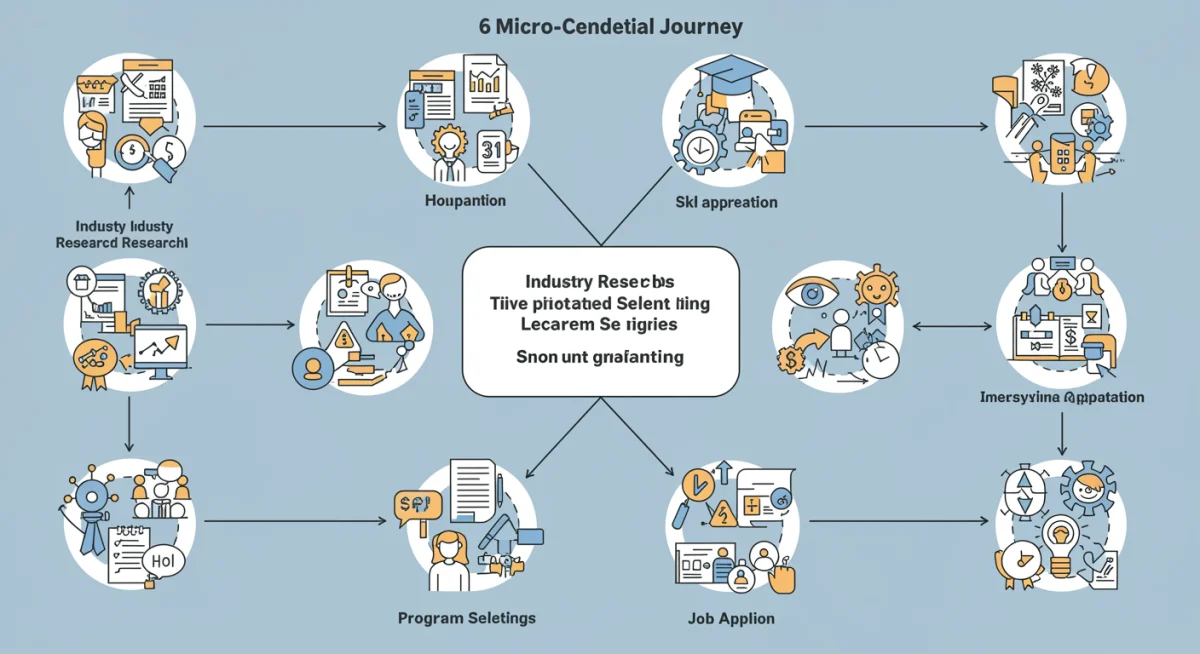
Weekly and Monthly Milestones
Breaking down the larger goal into smaller, achievable milestones can significantly boost your progress and morale. Set clear objectives for each week and month, allowing you to track your advancement and make adjustments as needed.
- Months 1-2: Foundation Building: Focus on core concepts, terminology, and initial skill acquisition. Aim to complete the introductory modules.
- Months 3-4: Deep Dive and Application: Engage with more complex topics, start applying concepts through projects, and seek feedback.
- Months 5-6: Specialization and Completion: Refine advanced skills, complete final projects or exams, and prepare for credentialing.
Incorporate regular review sessions into your schedule to reinforce learning and identify areas requiring additional attention. Don’t hesitate to leverage instructor support, online forums, and study groups. Accountability partners can also play a significant role in maintaining momentum. By meticulously structuring your 6-month learning schedule, you create a clear, actionable path towards earning your micro-credential and enhancing your career prospects by mid-2025.
Leveraging Networking and Practical Application
Earning a micro-credential is only half the battle; the other half involves effectively leveraging it for career advancement. This means actively engaging in networking and seeking opportunities for practical application of your newly acquired skills. Theoretical knowledge gains significant power when coupled with real-world experience and professional connections. Your 6-month roadmap should integrate these elements from the outset, not just as an afterthought.
Networking isn’t just about finding a job; it’s about building relationships, gaining insights, and staying abreast of industry developments. Attend virtual and in-person industry events, join professional organizations, and connect with peers and mentors on platforms like LinkedIn. These interactions can open doors to internships, freelance projects, or even full-time positions that directly utilize your micro-credential skills, accelerating your integration into the target industry by mid-2025.
Integrating Practice and Connections
To maximize the impact of your micro-credential, proactive engagement with your chosen field is essential. This goes beyond classroom learning and into doing.
- Project Work: Seek out opportunities to apply your skills through personal projects, volunteer work, or even within your current role. Building a portfolio demonstrates practical competence.
- Informational Interviews: Connect with professionals in your target industry to learn about their experiences and gain advice.
- Mentorship: Find a mentor who can guide you through the industry landscape and provide valuable career insights.
- Online Communities: Participate in forums and groups relevant to your micro-credential’s focus to share knowledge and connect with others.
Remember, the goal is not just to get the credential, but to become a valuable contributor to your chosen industry. By actively networking and applying your skills, you transform your micro-credential from a piece of paper into a tangible asset that can drive your career forward. This integrated approach ensures that you are not just credentialed, but also connected and experienced, ready to make an immediate impact by mid-2025.
Sustaining Momentum and Future-Proofing Your Career
Completing your 6-month micro-credential journey is a significant achievement, but it’s crucial to recognize that learning is a continuous process, especially in rapidly evolving industries. Sustaining the momentum gained and actively planning for future skill development are vital steps to truly future-proof your career. The initial micro-credential is a powerful stepping stone, but it should be viewed as part of a larger, ongoing commitment to professional growth and adaptability.
After earning your micro-credential, immediately update your resume, LinkedIn profile, and professional portfolio to reflect your new skills and qualifications. Begin actively applying for positions or seeking internal opportunities that align with your enhanced capabilities. The job market in mid-2025 will reward those who can clearly articulate their value and demonstrate relevant, up-to-date expertise.
Strategies for Long-Term Growth
To ensure your career remains robust and relevant, consider these long-term strategies:
- Continuous Learning: Identify the next set of skills or micro-credentials that will complement your current expertise.
- Industry Engagement: Stay connected with professional organizations, subscribe to industry publications, and attend conferences to keep abreast of new trends.
- Mentorship & Coaching: Continue to seek guidance from experienced professionals and consider mentoring others as you gain expertise.
- Skill Specialization: As you gain experience, consider specializing further within your chosen field, becoming an expert in a niche area.
By adopting a mindset of lifelong learning and strategic career planning, your initial 6-month investment in a micro-credential will yield dividends far beyond mid-2025. It positions you not just for a single job opportunity, but for a sustained trajectory of growth and relevance in the dynamic US job market. Your proactive approach to skill development will be your greatest asset.
| Key Stage | Brief Description |
|---|---|
| Research & Selection | Identify high-growth US industries and suitable micro-credential programs. |
| Structured Learning | Develop a 6-month schedule, focusing on consistent progress and skill acquisition. |
| Application & Networking | Apply new skills through projects and build professional connections. |
| Career Integration | Update credentials and plan for continuous learning and career growth. |
Frequently Asked Questions About Micro-Credentials
A micro-credential is a certification of specific skills or competencies, usually acquired through a short, focused learning program. Unlike traditional degrees, they are highly targeted and designed to meet immediate industry needs, making them excellent for rapid upskilling or reskilling in a specific area.
The time to earn a micro-credential varies, but many programs are designed for completion within a few weeks to several months. Our 6-month roadmap focuses on intensive programs that can be completed by mid-2025, providing a quick path to specialized skills.
Yes, recognition is growing significantly. Many US employers highly value micro-credentials, especially when they come from reputable institutions and align with in-demand skills in growing industries. They demonstrate a proactive approach to skill development and direct relevance to job roles.
Benefits include faster completion times, lower costs, and direct applicability of skills to specific job roles. Micro-credentials allow for agile career adjustments and targeted skill acquisition, making them ideal for professionals seeking to quickly enhance their marketability in evolving industries.
Start by researching high-growth industries and identifying skills in demand. Then, evaluate programs based on curriculum relevance, provider reputation, learning format, and career support. Aligning your choice with future job market needs is key to maximizing its impact.
Conclusion
Embarking on a 6-month journey to earn a micro-credential in a growing US industry by mid-2025 is a strategic and highly effective way to accelerate your career. This roadmap, from identifying high-demand sectors and selecting the right program to structuring your learning and actively networking, provides a clear pathway to acquiring specialized skills that are immediately valuable. In a rapidly changing job market, the agility and targeted expertise offered by micro-credentials are not just an advantage, but a necessity for sustained professional growth and relevance. Your commitment to this focused learning path will undoubtedly unlock new opportunities and cement your position as a valuable asset in your chosen field.