2026 Student Loan Interest Rate Forecast: What Borrowers Need to Know
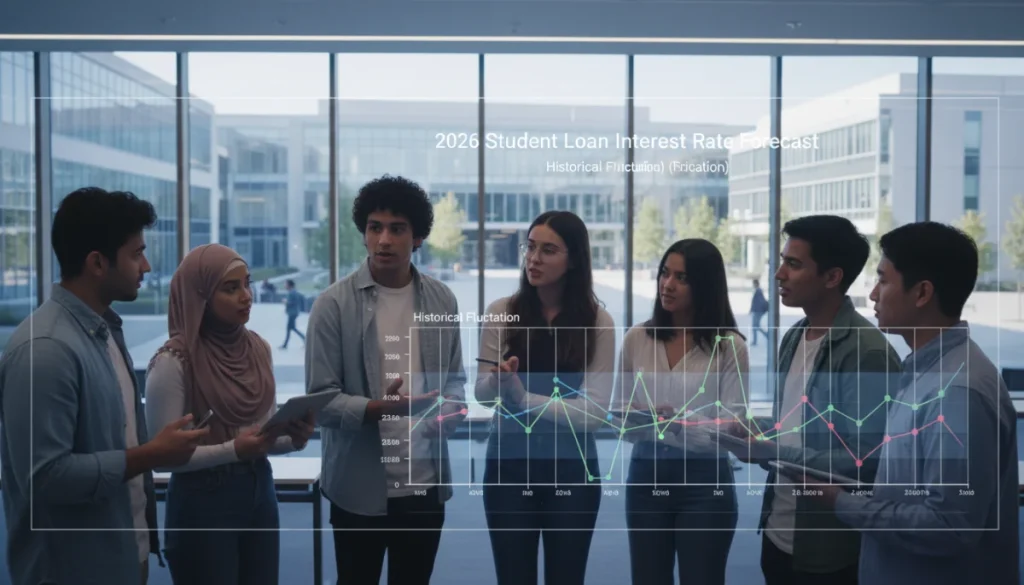
Understanding the 2026 student loan interest rate forecast is essential for borrowers to proactively manage their educational debt and financial planning.
For millions of Americans, student loans represent a significant financial commitment. As we look ahead, 2026 student loan interest rates are a critical concern, directly impacting monthly payments and overall debt burden. Navigating these changes requires foresight and a clear understanding of the factors at play, preparing borrowers for what lies ahead.
The Current Landscape of Student Loans in the US
Before diving into future predictions, it’s vital to grasp the current state of student loans in the United States. The student loan system is complex, encompassing both federal and private loans, each with distinct interest rate mechanisms. Federal loan rates are set by Congress, while private loan rates are determined by lenders based on market conditions and borrower creditworthiness. This distinction is paramount when discussing future forecasts, as their trajectories can diverge significantly.
Recent years have seen considerable shifts, from pandemic-era payment pauses and 0% interest rates to the resumption of payments and the introduction of new repayment plans. These policy changes have had a profound impact on borrowers, shaping their financial outlook and their approach to debt management. The volatility observed in recent years underscores the need for vigilance and adaptability as new economic realities emerge.
Federal vs. Private Loan Rate Structures
- Federal Loan Rates: Typically fixed for the life of the loan, set annually by Congress based on the 10-year Treasury note auction.
- Private Loan Rates: Can be fixed or variable, influenced by the prime rate or LIBOR (soon SOFR), and borrower’s credit score.
- Impact of Policy: Federal rates are more susceptible to legislative changes and government intervention.
Understanding these foundational elements is the first step in preparing for any future adjustments. The interplay between federal policy, market dynamics, and individual financial situations creates a multifaceted environment that borrowers must constantly monitor.
Key Economic Indicators Influencing 2026 Rates
Predicting interest rates, especially two years out, involves analyzing a constellation of economic indicators. These macroeconomic forces exert significant pressure on borrowing costs across the board, and student loans are no exception. The Federal Reserve’s monetary policy, inflation rates, and the overall health of the job market are among the most influential factors that will shape 2026 student loan interest rates.
The Federal Reserve plays a pivotal role. Its decisions on the federal funds rate indirectly affect other interest rates throughout the economy, including those for student loans. When the Fed raises rates to combat inflation, borrowing costs generally increase. Conversely, rate cuts can lead to lower borrowing expenses. Therefore, tracking the Fed’s stance on inflation and economic growth is crucial for any forecast.
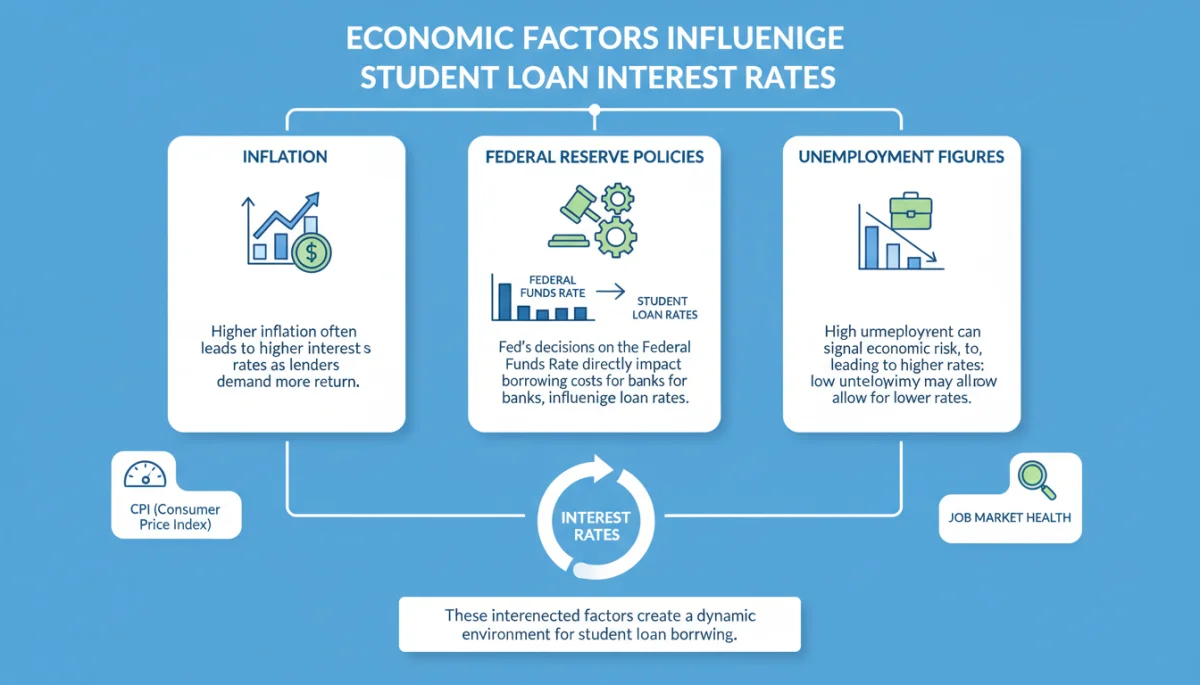
Inflation is another major driver. Higher inflation often prompts the Fed to raise interest rates, making money more expensive to borrow. The relationship is direct: if inflationary pressures persist, we can expect upward pressure on student loan rates. Conversely, a cooling economy with subdued inflation might lead to more stable or even declining rates.
Primary Economic Drivers
- Federal Reserve Policy: Decisions on the federal funds rate directly impact the cost of borrowing for lenders.
- Inflation Trends: Sustained inflation typically leads to higher interest rates as a countermeasure.
- Unemployment Rates: A strong job market can indicate economic growth, potentially leading to rate hikes.
- Treasury Yields: Federal student loan rates are tied to the 10-year Treasury note yield, making its performance a direct indicator.
These indicators do not operate in isolation; they interact in complex ways, creating a dynamic economic environment that requires careful observation. Borrowers should pay attention to economic news and analyses that discuss these factors.
Federal Student Loan Rate Predictions for 2026
Forecasting federal student loan rates for 2026 requires an understanding of how these rates are determined. Federal student loan interest rates are typically set each year for loans disbursed between July 1st and June 30th of the following year. They are statutorily capped and linked to the high yield of the 10-year Treasury note auction held in May. This direct link provides a clearer, though not absolute, predictive pathway for federal rates.
Given the current economic trajectory, most analysts anticipate a period of relative stability, possibly with minor fluctuations. The expectation is that the Federal Reserve will have achieved its inflation targets, allowing for a more predictable interest rate environment. However, unforeseen global events or significant domestic policy shifts could alter this outlook. The emphasis remains on a balanced approach to monetary policy, aiming for both price stability and maximum employment.
Potential Scenarios for Federal Rates
- Baseline Scenario: Modest increases or stabilization, assuming inflation is under control and economic growth is steady.
- Optimistic Scenario: Slight decreases if the economy slows more than expected, leading the Fed to cut rates.
- Pessimistic Scenario: Larger increases if inflation proves more stubborn, forcing the Fed to maintain a hawkish stance.
It’s important to remember that federal loan rates are fixed once disbursed, meaning the rate you receive for a loan in 2026 will remain the same for its lifetime. This predictability offers a layer of security for borrowers, but also underscores the importance of understanding the rate environment at the time of borrowing.
Private Student Loan Rate Forecasts for 2026
Private student loan interest rates operate under a different set of rules, making their forecast slightly more nuanced. Unlike federal loans, private loan rates are not set by Congress but by individual lenders, influenced by broader market rates like the prime rate or the Secured Overnight Financing Rate (SOFR). They can be fixed or variable, with variable rates being particularly sensitive to market shifts.
The trajectory of private loan rates for 2026 will largely mirror the overall economic environment and the Federal Reserve’s actions. If the Fed continues to ease monetary policy or maintains a neutral stance, we might see private fixed rates stabilize or even decrease slightly. Variable rates, however, will continue to fluctuate with their underlying benchmarks, presenting both opportunities and risks for borrowers.
Lenders also consider the borrower’s creditworthiness. A strong credit score and a stable income can help secure lower private loan rates, regardless of the prevailing market conditions. This emphasizes the importance of building and maintaining good financial health for those considering private student loans in 2026.
Considerations for Private Loan Borrowers
- Credit Score Impact: A higher credit score almost always translates to better private loan rates.
- Fixed vs. Variable: Fixed rates offer predictability, while variable rates can be lower initially but carry future risk.
- Lender Competition: A competitive lending market can sometimes drive down rates as institutions vie for borrowers.
Borrowers considering private loans should shop around, compare offers from multiple lenders, and carefully evaluate the terms and conditions, especially regarding variable rates and potential future increases. Understanding these dynamics is key to making informed borrowing decisions.
Strategies for Borrowers to Prepare for 2026
Regardless of the exact direction 2026 student loan interest rates take, borrowers can adopt several proactive strategies to mitigate potential impacts and optimize their financial situation. Preparation is not just about bracing for higher rates; it’s also about positioning oneself to take advantage of favorable conditions.
For current borrowers, one key strategy is to review existing loan terms. If you have variable-rate private loans, consider refinancing to a fixed-rate loan if current rates are favorable. This can lock in your interest rate and provide payment stability. Similarly, exploring federal loan consolidation options might simplify payments and potentially offer access to different repayment plans.
Proactive Steps for Student Loan Management
- Refinancing Evaluation: Assess if refinancing private loans to fixed rates makes sense given current market conditions.
- Federal Loan Consolidation: Consider consolidating federal loans to simplify payments and potentially access new repayment plans.
- Income-Driven Repayment (IDR) Plans: Explore IDR options for federal loans to adjust payments based on income and family size.
- Aggressive Principal Payments: If financially feasible, making extra payments towards the principal can reduce total interest paid over the loan’s life.
Prospective borrowers should also prioritize maximizing federal loan options before turning to private loans. Federal loans often come with more borrower protections, flexible repayment plans, and sometimes lower fixed interest rates. Understanding the differences and prioritizing wisely can save significant money and stress in the long run.
Impact of Government Policy and Legislative Changes
Government policy and legislative changes have historically played a significant role in shaping the student loan landscape, and 2026 will likely be no different. Future legislation could introduce new loan programs, modify existing interest rate formulas, or even provide additional relief measures. These political dynamics add another layer of complexity to predicting 2026 student loan interest rates.
For example, discussions around simplifying federal student aid applications, expanding Pell Grants, or even broader student loan forgiveness initiatives could all indirectly or directly influence the interest rate environment. Borrowers should stay informed about any proposed legislation or policy debates that could affect their loans. Advocacy groups and non-profit organizations often provide valuable insights into these developments.
Moreover, the political climate surrounding higher education funding and student debt relief can shift rapidly. Election cycles and changes in administrative priorities can introduce new variables that are difficult to predict far in advance. Therefore, maintaining an awareness of the political discourse surrounding student loans is an essential part of a comprehensive preparedness strategy.
Potential Policy Influences
- New Federal Aid Programs: Introduction of new grants or subsidies could reduce the reliance on loans.
- Interest Rate Formula Reforms: Congress could alter how federal loan interest rates are calculated, potentially leading to lower rates.
- Loan Forgiveness Initiatives: Broader forgiveness programs, if enacted, could change the overall perception and management of student debt.
The fluid nature of policy means that borrowers must remain agile and ready to adapt their strategies based on any significant legislative shifts. This proactive monitoring can help them navigate potential changes effectively.
Long-Term Outlook and Financial Planning
Beyond the immediate forecast for 2026 student loan interest rates, it’s crucial for borrowers to consider the long-term outlook and integrate student loan management into their broader financial planning. Student loans are often a multi-decade commitment, and a holistic approach to financial health is essential for sustained success.
This includes not only managing student loan payments but also building an emergency fund, saving for retirement, and investing wisely. The goal is to minimize the drag of student loan interest on overall financial progress. Understanding how interest accrues and exploring options like making extra payments or refinancing when opportune can significantly reduce the total cost of borrowing over time.
Furthermore, continuously educating oneself about personal finance and economic trends will empower borrowers to make informed decisions. The financial landscape is ever-evolving, and staying updated ensures that strategies remain relevant and effective. Engaging with financial advisors or credit counselors can also provide personalized guidance tailored to individual circumstances.
Components of Long-Term Financial Planning
- Budgeting and Cash Flow Management: Ensure student loan payments fit comfortably within your monthly budget.
- Emergency Fund: Build a safety net to cover unexpected expenses without defaulting on loans.
- Retirement Savings: Don’t neglect retirement planning; balance loan payments with future savings goals.
- Debt-to-Income Ratio: Monitor this ratio, as it impacts eligibility for other loans (e.g., mortgages).
By taking a comprehensive approach to financial planning, borrowers can not only manage their student loans effectively in 2026 but also build a strong foundation for their financial future.
| Key Aspect | Brief Description |
|---|---|
| Economic Factors | Federal Reserve policy, inflation, and Treasury yields heavily influence 2026 rates. |
| Federal Loan Rates | Expected to remain relatively stable, tied to the 10-year Treasury note. |
| Private Loan Rates | More sensitive to market benchmarks and borrower creditworthiness; can be fixed or variable. |
| Borrower Strategies | Consider refinancing, IDR plans, and making extra principal payments. |
Frequently Asked Questions About 2026 Student Loan Rates
Federal student loan interest rates for 2026 are typically set by Congress each spring, based on the results of the 10-year Treasury note auction held in May. These rates are then fixed for the life of the loan for disbursements made between July 1st and June 30th of the following year.
The direction of private student loan rates in 2026 depends heavily on the overall economic environment, particularly the Federal Reserve’s monetary policy and benchmarks like SOFR. While forecasts suggest potential stabilization, variable rates will still fluctuate, and fixed rates will reflect market conditions at the time of borrowing.
To prepare for 2026, consider reviewing your current loan terms. If you have variable-rate private loans, explore refinancing to a fixed rate. For federal loans, investigate Income-Driven Repayment (IDR) plans or consolidation options. Building an emergency fund and making extra principal payments are also wise strategies.
Inflation significantly impacts interest rates. When inflation is high, the Federal Reserve often raises its benchmark rates to cool the economy. This, in turn, tends to push up borrowing costs across the board, including for student loans, as lenders seek to maintain profitability and purchasing power.
Yes, government policies and legislative actions can certainly influence student loan rates. Congress could introduce new laws affecting federal loan rate calculations, expand aid programs, or implement debt relief initiatives. Staying informed about political discussions related to higher education finance is crucial for borrowers.
Conclusion
The journey of understanding the 2026 student loan interest rate forecast is multifaceted, involving economic indicators, federal policy, and individual financial decisions. While precise predictions remain elusive due to the dynamic nature of global and domestic economies, a proactive and informed approach empowers borrowers. By staying abreast of key economic trends, understanding the differences between federal and private loan mechanisms, and implementing sound financial strategies, borrowers can navigate the evolving landscape of student loan debt effectively. Preparation today ensures better financial resilience tomorrow, allowing individuals to manage their educational investments with greater confidence and control.