Student Loan Repayment in 2026: Federal Program Updates & Impact

The landscape of federal student loan repayment in 2026 is set for significant changes, with new program updates poised to reshape borrowers’ financial obligations and strategies across the United States.
Navigating the complexities of federal student aid can be challenging, but understanding the shifts in student loan repayment in 2026 is paramount for millions of Americans. As new policies and program adjustments come into effect, borrowers must prepare for how these changes will influence their financial futures and repayment strategies.
Understanding the Evolving Federal Student Loan Landscape
The federal student loan system is a dynamic entity, frequently adjusted to address economic shifts, policy priorities, and borrower needs. For 2026, several key legislative and administrative changes are anticipated to impact how loans are repaid, potentially altering monthly payments, interest accrual, and even forgiveness pathways.
These updates are not merely minor tweaks; they represent a significant re-evaluation of the government’s approach to higher education financing. Borrowers who remain informed will be better positioned to adapt and make optimal decisions regarding their outstanding debts.
Key Legislative Changes and Their Implications
Recent legislative efforts have focused on streamlining repayment options and providing more accessible pathways to financial relief. While specific details are still emerging, the overarching goal appears to be a more equitable and manageable system for all borrowers.
- Simplification of Income-Driven Repayment (IDR) Plans: Efforts to consolidate and simplify the existing IDR plans are expected to reduce confusion and make these beneficial programs more accessible.
- Adjustments to Interest Accrual: Potential changes to how interest accrues, especially for borrowers in certain repayment statuses, could significantly reduce the total cost of loans over time.
- Enhanced Forgiveness Pathways: Reforms to Public Service Loan Forgiveness (PSLF) and other targeted forgiveness programs are likely, aiming to broaden eligibility and expedite relief for qualified individuals.
These legislative movements underscore a commitment to addressing the growing burden of student debt, offering a glimmer of hope for many struggling borrowers. Staying updated on these developments is crucial for effective financial planning.
In conclusion, the federal student loan landscape is undergoing substantial transformation, with 2026 serving as a pivotal year for new policies. Borrowers should proactively monitor these changes to understand their potential impact on repayment obligations and explore available options.
Analyzing the Impact of Revised Income-Driven Repayment Plans
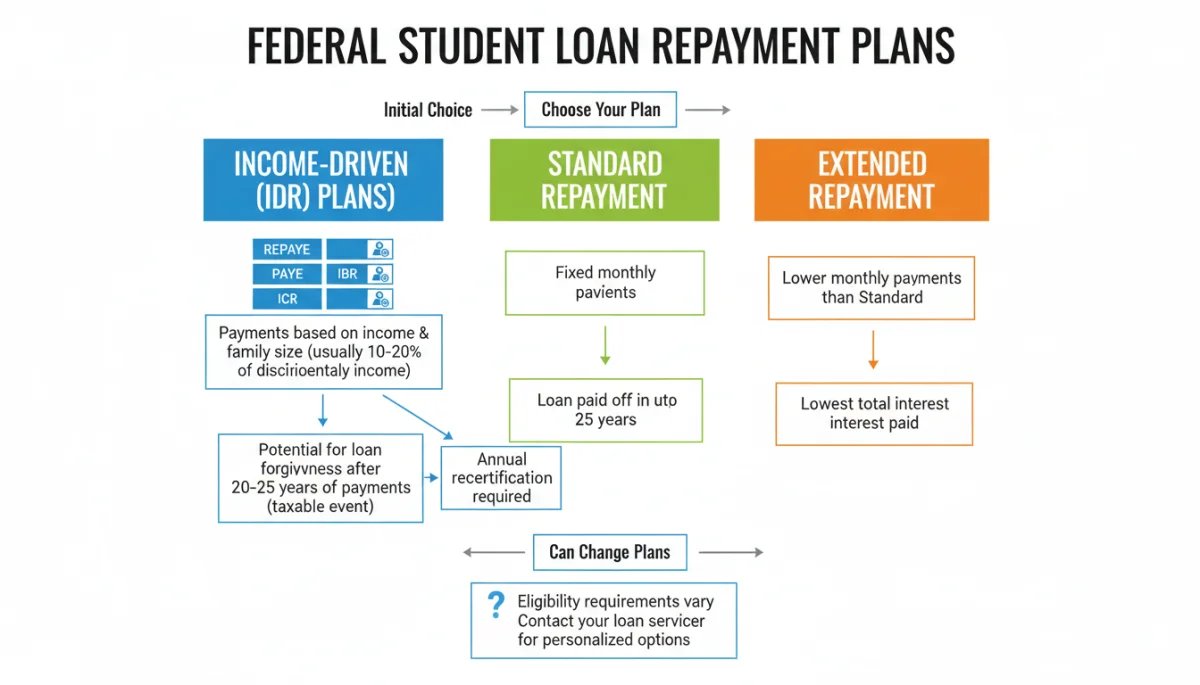
Income-Driven Repayment (IDR) plans have long been a lifeline for borrowers struggling with high student loan payments, tying monthly costs to discretionary income. However, their complexity has often been a barrier. For 2026, significant revisions are expected to make these plans more borrower-friendly and effective.
The aim is to create a more straightforward system that reduces the administrative burden on both borrowers and servicers, ultimately leading to higher enrollment and better outcomes for those who need it most.
Streamlining IDR Options
Currently, multiple IDR plans exist, each with slightly different terms, eligibility requirements, and repayment schedules. This can lead to confusion and incorrect plan selection. The anticipated changes will likely consolidate these into fewer, more intuitive options.
For instance, there’s a strong push to simplify how discretionary income is calculated, potentially increasing the amount of income protected from repayment calculations. This could result in lower monthly payments for a significant portion of borrowers.
- Lower Discretionary Income Calculation: A higher percentage of the federal poverty line might be excluded from the discretionary income calculation, reducing monthly payments.
- Faster Path to Forgiveness: Some proposals suggest shortening the repayment period required for forgiveness under certain IDR plans, particularly for borrowers with lower original loan balances.
- Automatic Enrollment Features: Future updates might include mechanisms for automatic enrollment or re-enrollment into IDR plans, preventing lapses in coverage due to missed paperwork.
These changes are designed to provide a clearer, more accessible path to managing student loan debt, ensuring that payments are genuinely affordable based on a borrower’s current financial situation. Understanding these revised IDR plans will be critical for anyone seeking long-term relief.
The anticipated revisions to Income-Driven Repayment plans in 2026 promise a more streamlined and beneficial experience for borrowers. These updates aim to simplify the process, reduce monthly burdens, and accelerate paths to loan forgiveness, making debt management more attainable.
Navigating Interest Accrual and Capitalization Changes
Interest is a significant factor in the overall cost of student loans, and its accrual and capitalization policies can dramatically affect a borrower’s total debt. For 2026, federal programs are expected to introduce changes aimed at mitigating the compounding effect of interest, offering much-needed relief to many borrowers.
These adjustments are particularly relevant for those in deferment, forbearance, or certain IDR plans where interest can accrue and capitalize, leading to a larger principal balance.
Reforms to Interest Capitalization
Interest capitalization occurs when unpaid interest is added to the principal balance of a loan, increasing the amount on which future interest is calculated. This can cause a loan balance to grow significantly, even if payments are being made.
The proposed changes for 2026 may limit the circumstances under which interest can capitalize, or even eliminate it entirely in certain situations. This would prevent loan balances from spiraling out of control for borrowers experiencing financial hardship.
- Reduced Capitalization Events: Fewer instances where unpaid interest is added to the principal, particularly after periods of deferment or forbearance.
- Interest Subsidies for IDR Plans: Expanded subsidies for unpaid interest on certain IDR plans, ensuring that a borrower’s balance doesn’t grow if their payment doesn’t cover all accrued interest.
- Transparency in Interest Calculations: Greater clarity and simplified explanations of how interest is calculated and applied to loan balances, empowering borrowers with better understanding.
By addressing these critical aspects of interest accrual and capitalization, federal programs aim to make student loan debt more manageable and prevent borrowers from feeling trapped by ever-growing balances. These reforms could have a profound positive impact on long-term financial well-being.
In summary, the expected changes to interest accrual and capitalization in 2026 are designed to alleviate the burden of growing loan balances. By limiting capitalization and providing interest subsidies, these reforms aim to make student loan repayment fairer and more predictable for borrowers.
Public Service Loan Forgiveness (PSLF) and Other Forgiveness Pathways
Public Service Loan Forgiveness (PSLF) has been a beacon of hope for individuals dedicating their careers to public service, but it has also been plagued by complex rules and low approval rates. For 2026, federal programs are anticipated to refine PSLF and other forgiveness pathways, making them more accessible and effective.
The goal is to ensure that those who commit to serving their communities are not unduly burdened by student debt, thereby encouraging more individuals to pursue vital public service roles.
These reforms are expected to build upon recent temporary waivers and adjustments that have already expanded eligibility and simplified the application process for PSLF.
Enhancements to PSLF Eligibility and Process
One of the primary areas of focus for PSLF reform is likely to be the eligibility criteria for qualifying employment and types of loans. Historically, specific loan types and employment statuses have caused confusion and led to rejections.
Future changes may broaden the definition of qualifying employment or allow for more loan types to count towards PSLF, ensuring that more public servants can benefit from the program. The application and certification process may also become more automated and less prone to errors.
- Broader Definition of Qualifying Employment: Expanding what counts as public service to include a wider range of non-profit and government roles.
- Simplified Loan Consolidation: Easier pathways for borrowers with non-Direct Loans to consolidate into Direct Loans to become eligible for PSLF.
- Automatic Payment Tracking: Implementation of systems that automatically track qualifying payments, reducing the burden on borrowers to maintain meticulous records.
Beyond PSLF, other targeted forgiveness programs, such as those for teachers or healthcare professionals, may also see enhancements. These could include increased forgiveness amounts or reduced service requirements, further incentivizing careers in high-need areas.
In essence, the anticipated changes to PSLF and other forgiveness pathways in 2026 aim to create a more transparent, equitable, and efficient system. These reforms are critical for supporting public servants and ensuring that student debt does not deter individuals from contributing to the common good.
Strategic Planning for Borrowers: Adapting to New Rules
With the federal student loan landscape shifting significantly in 2026, borrowers must engage in strategic planning to adapt to the new rules and optimize their repayment approach. Proactive engagement with these changes can lead to substantial financial benefits and a clearer path to debt freedom.
Ignoring these updates could result in missed opportunities for lower payments, faster forgiveness, or reduced overall loan costs. Informed decisions are key to navigating this evolving environment successfully.
Steps for Effective Loan Management in 2026
Borrowers should start by reviewing their current loan portfolio and understanding the specifics of each loan. This includes identifying whether loans are federal or private, their interest rates, and their current repayment status.
Once armed with this information, comparing it against the new federal program updates becomes a more manageable task. Consider consulting with a financial advisor specializing in student loans to gain personalized insights.
- Review Loan Details: Understand your current loan types, balances, and interest rates.
- Monitor Official Announcements: Stay informed through official Department of Education communications and reliable financial news sources.
- Re-evaluate Repayment Plans: Assess if your current repayment plan is still the most beneficial under the new rules, especially concerning IDR options.
- Consider Consolidation: Explore federal loan consolidation if it opens up new benefits or forgiveness pathways.
Beyond these immediate steps, borrowers should also focus on building a strong emergency fund and managing other debts. A holistic financial strategy will provide a robust buffer against unexpected challenges and complement their student loan repayment efforts.
Ultimately, strategic planning for student loan repayment in 2026 involves staying informed, re-evaluating current strategies, and proactively engaging with available resources. This approach will empower borrowers to make the most of the new federal program updates.
Potential Financial Impact on Different Borrower Groups
The federal student loan program updates in 2026 will not affect all borrowers equally. The financial impact will vary significantly depending on factors such as loan type, income level, original loan balance, and career path. Understanding these differential impacts is crucial for assessing individual financial outlooks.
While some borrower groups may experience substantial relief, others might find themselves needing to adjust their strategies to a lesser degree. The changes are largely aimed at supporting those with lower incomes or in public service roles.
Winners and Losers of the New Policies
Borrowers with lower incomes or those pursuing careers in public service are likely to be among the primary beneficiaries of the anticipated changes. Simplified IDR plans and enhanced PSLF pathways could lead to significantly reduced monthly payments and faster loan forgiveness.
Conversely, borrowers with higher incomes or those with older, fixed-rate loans who are not eligible for IDR or forgiveness programs might see less direct benefit from these specific federal updates, though general economic conditions could still play a role in their financial situation.
- Lower-Income Borrowers: Expected to benefit most from reduced discretionary income calculations and potentially lower monthly IDR payments.
- Public Service Workers: Will likely see improved access to PSLF and quicker paths to loan forgiveness.
- Borrowers with Smaller Balances: May benefit from accelerated forgiveness timelines under revised IDR plans.
- Higher-Income Borrowers: Might experience less direct impact from IDR and forgiveness reforms, potentially needing to focus on aggressive standard repayment strategies.
It’s also important to consider the broader economic context of 2026. Inflation rates, job market stability, and interest rate trends will all interact with these federal program changes to shape the true financial impact on borrowers. A comprehensive view is essential.
In conclusion, the 2026 federal student loan program updates will have a varied financial impact, largely favoring lower-income and public service borrowers through more accessible IDR plans and enhanced forgiveness. All borrowers should assess how these changes align with their personal financial circumstances.
Resources and Support for Student Loan Borrowers in 2026
As the federal student loan landscape evolves in 2026, access to reliable resources and support services will be more critical than ever for borrowers. Understanding where to find accurate information and professional guidance can make a significant difference in navigating the new repayment environment successfully.
The Department of Education and various non-profit organizations are expected to ramp up their outreach and support efforts to help borrowers understand and adapt to the upcoming changes.
Official and Unofficial Support Channels
The primary source for official information regarding federal student loan programs is the U.S. Department of Education’s Federal Student Aid (FSA) website. This platform will host updated details on new policies, repayment options, and application processes.
In addition to official channels, several reputable non-profit organizations offer free or low-cost counseling and resources. These organizations often provide unbiased advice and can help borrowers understand complex regulations and choose the best repayment strategy.
- Federal Student Aid (FSA) Website: The official hub for all federal student loan information, including program details, application forms, and borrower account access.
- Loan Servicer Websites: Your specific loan servicer (e.g., Nelnet, MOHELA) will provide account-specific information, payment options, and direct support.
- Non-Profit Credit Counseling Agencies: Organizations like the National Foundation for Credit Counseling (NFCC) offer certified counselors who can provide personalized advice.
- Educational Webinars and Workshops: Many organizations and educational institutions will likely host events to explain the new changes and offer guidance.
It is crucial to be wary of scams or predatory services that promise quick fixes or charge exorbitant fees for information that is freely available. Always verify the legitimacy of any organization offering student loan assistance.
To summarize, borrowers in 2026 have access to a wealth of resources and support, from official government websites to reputable non-profit agencies. Leveraging these tools will be essential for making informed decisions and effectively managing student loan repayment under the new federal program updates.
| Key Aspect | Brief Description |
|---|---|
| IDR Plan Revisions | Expected simplification and lower monthly payments for many borrowers through updated discretionary income calculations. |
| Interest Capitalization | Anticipated limits or elimination of interest capitalization events to prevent ballooning loan balances. |
| PSLF Enhancements | Broader eligibility and streamlined processes for Public Service Loan Forgiveness, benefiting more public servants. |
| Borrower Strategy | Proactive review of loan details, monitoring official updates, and re-evaluating repayment plans are crucial. |
Frequently Asked Questions About 2026 Student Loan Changes
The most significant changes expected involve the simplification of Income-Driven Repayment (IDR) plans, reforms to interest accrual and capitalization, and enhancements to Public Service Loan Forgiveness (PSLF). These updates aim to make repayment more manageable and accessible for a broader range of borrowers.
Revised IDR plans are likely to lower monthly payments for many borrowers by adjusting how discretionary income is calculated, potentially protecting a larger portion of your income. This could result in more affordable payments tailored to your current financial situation.
Anticipated changes for 2026 aim to significantly limit or, in some cases, eliminate interest capitalization events. This reform is designed to prevent your loan balance from growing excessively due to unpaid interest being added to the principal, offering considerable relief.
Public service workers, including those in government and non-profit sectors, are expected to benefit most from PSLF updates. These changes aim to broaden eligibility, simplify the application process, and provide clearer pathways to loan forgiveness for individuals dedicated to serving their communities.
The most reliable source for official information is the U.S. Department of Education’s Federal Student Aid (FSA) website. Your specific loan servicer’s website will also provide account-specific details and updates relevant to your loans. Always seek information from credible sources.
Conclusion
The federal student loan repayment landscape in 2026 is poised for significant and impactful changes, designed to offer greater flexibility, affordability, and clearer paths to forgiveness for millions of borrowers. From streamlined Income-Driven Repayment plans to reforms in interest accrual and enhanced Public Service Loan Forgiveness, these updates reflect a concerted effort to alleviate the burden of student debt. Borrowers are strongly encouraged to stay informed through official channels, proactively assess their financial situations, and adapt their repayment strategies to leverage these new opportunities. Strategic planning and informed decision-making will be key to navigating this evolving environment successfully and achieving long-term financial well-being.