10 Innovative Teaching Methodologies for US Classrooms in 2025
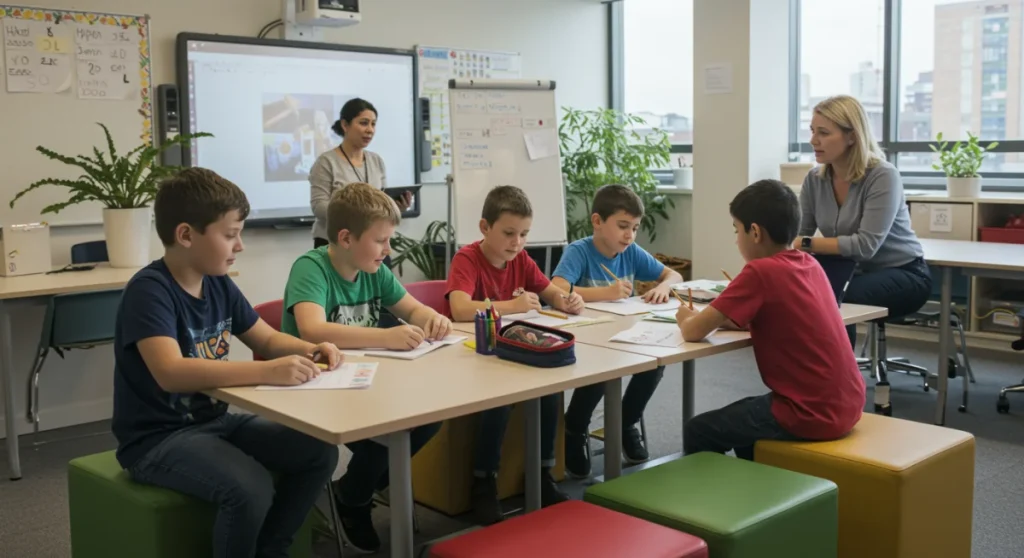
Ten innovative teaching methodologies are poised to reshape US classrooms by 2025, focusing on personalized learning, technology integration, and skill development to prepare students for future challenges and opportunities.
The educational landscape in the United States is on the cusp of a profound transformation. As we look towards 2025, a wave of innovative teaching methodologies is not merely emerging but gaining significant traction, promising to redefine how students learn and teachers teach. These approaches move beyond traditional models, emphasizing engagement, personalization, and the development of critical skills essential for the 21st century. What can we expect to see as these forward-thinking strategies become commonplace?
Personalized Learning Paths
Personalized learning is rapidly becoming a cornerstone of modern education, moving away from the one-size-fits-all approach. This methodology tailors the learning experience to each student’s individual needs, interests, and learning style, ensuring that every student can progress at their own pace and achieve mastery.
The emphasis is on student agency, allowing learners to have a say in what and how they learn. Technology plays a crucial role here, with adaptive software and AI-driven platforms assessing student performance and recommending customized content. This not only makes learning more effective but also more engaging and relevant to the individual.
Adaptive learning platforms
Adaptive learning platforms utilize artificial intelligence to adjust the curriculum and content difficulty in real-time based on a student’s responses. This ensures that students are continuously challenged but not overwhelmed, optimizing their learning trajectory.
- Individualized pace and content delivery
- Real-time feedback and progress tracking
- Identification of knowledge gaps and strengths
- Customized recommendations for further study
Student-driven projects
Moving beyond rote memorization, personalized learning often incorporates student-driven projects. These projects allow students to explore topics of personal interest, apply their knowledge in practical ways, and develop problem-solving skills. The teacher acts as a facilitator, guiding students through the process rather than dictating every step.
The ultimate goal of personalized learning is to create self-directed, motivated learners who are equipped to navigate a rapidly changing world. By focusing on individual growth and tailoring instruction, educators can unlock each student’s full potential, making education a truly transformative experience.
Project-Based Learning (PBL)
Project-Based Learning (PBL) is not a new concept, but its adoption is accelerating as educators recognize its immense potential to foster deep understanding and real-world skills. In a PBL environment, students work on extended projects that require them to investigate and respond to authentic, engaging, and complex questions or problems. This methodology emphasizes collaboration, critical thinking, and creativity.
Instead of passively receiving information, students actively construct knowledge by tackling challenges that mirror real-world scenarios. This hands-on approach makes learning more meaningful and memorable. Teachers facilitate the process, providing guidance and resources while encouraging students to take ownership of their learning journey.
Developing essential skills
PBL naturally cultivates a range of essential 21st-century skills that are highly valued in today’s workforce. Students learn to collaborate effectively, communicate their ideas clearly, think critically to solve problems, and adapt to unforeseen challenges. These skills are often difficult to develop through traditional lecture-based instruction.
- Collaboration and teamwork
- Critical thinking and problem-solving
- Communication and presentation skills
- Creativity and innovation
Authentic engagement
The authentic nature of PBL projects significantly boosts student engagement. When students see a direct connection between their learning and real-world applications, their motivation to learn increases. This method often involves community partners, experts, or public presentations, adding another layer of relevance and accountability.
PBL transforms the classroom into a dynamic workshop where students are not just learning facts but actively applying them to create solutions and generate new knowledge. This approach prepares students not just for tests, but for life, equipping them with the confidence and capabilities to tackle complex issues.
Gamification in Education
Gamification involves applying game-design elements and game principles in non-game contexts, specifically in education. This innovative approach leverages students’ natural inclination towards play and competition to enhance engagement, motivation, and learning outcomes. By introducing elements like points, badges, leaderboards, and levels, educators can transform mundane tasks into exciting challenges.
The core idea behind gamification is to make learning an enjoyable and interactive experience. It taps into intrinsic motivators, encouraging students to persevere through difficulties, celebrate achievements, and strive for continuous improvement. This method can be applied across various subjects and age groups, from elementary school to higher education.
Boosting motivation and participation
One of the primary benefits of gamification is its ability to significantly boost student motivation. The prospect of earning rewards, progressing through levels, and competing with peers can make even the most challenging subjects more appealing. This increased motivation often translates into higher participation rates and a more positive attitude towards learning.
Gamified learning environments provide immediate feedback, allowing students to understand their progress and areas for improvement instantly. This instant gratification and clear progression path are powerful motivators that keep students engaged and focused on their learning goals. It fosters a growth mindset, where mistakes are seen as opportunities for learning rather than failures.
Moreover, gamification can simplify complex concepts by breaking them down into manageable, game-like tasks. This stepwise progression helps students build foundational knowledge before moving on to more advanced topics. The element of fun inherent in games reduces anxiety around learning, making the classroom a less intimidating and more inviting space.
Ultimately, gamification in education is about creating an immersive and rewarding learning journey. By strategically integrating game elements, educators can foster a love for learning, develop problem-solving skills, and encourage students to take an active role in their educational development.
Inquiry-Based Learning
Inquiry-based learning is a dynamic teaching approach where students are actively involved in the discovery process. Instead of being presented with facts, students are encouraged to ask questions, investigate phenomena, and construct their own understanding of concepts. This method shifts the focus from simply memorizing information to developing critical thinking and research skills.
The process typically begins with a compelling question or problem that sparks curiosity. Students then engage in various activities such as research, experimentation, and discussion to find answers. The teacher acts as a guide, providing support and resources, but the direction of learning is largely student-driven. This approach aligns well with the constructivist theory of learning, where learners build knowledge through active engagement.
Fostering critical thinking
One of the key advantages of inquiry-based learning is its effectiveness in fostering critical thinking skills. Students learn to analyze information, evaluate sources, synthesize diverse ideas, and form reasoned conclusions. This goes beyond surface-level understanding, encouraging a deeper engagement with the subject matter.
- Question formulation and refinement
- Evidence collection and analysis
- Argument construction and evaluation
- Problem-solving strategies
Promoting independent learning
By empowering students to pursue their own questions, inquiry-based learning cultivates independence and self-reliance. Students develop the ability to identify what they need to learn, how to find information, and how to assess its validity. These are invaluable skills for lifelong learning and navigating an information-rich world.
This methodology not only helps students acquire knowledge but also teaches them how to learn, which is arguably more important in a rapidly evolving knowledge economy. It cultivates a sense of intellectual curiosity and empowers students to become proactive learners, capable of tackling complex challenges independently.
Blended Learning Models
Blended learning combines traditional face-to-face instruction with online learning experiences, offering a flexible and integrated approach to education. This model leverages the best aspects of both environments, providing students with the structure and personal interaction of a classroom setting alongside the adaptability and rich resources of digital platforms. The goal is to optimize learning outcomes by providing diverse pathways to knowledge acquisition.
In a blended learning environment, students might engage with online modules and resources at home, freeing up classroom time for collaborative projects, in-depth discussions, and personalized teacher support. This approach allows for greater differentiation, as online components can be tailored to individual student needs, while in-person sessions can focus on higher-order thinking and social-emotional development.
Flexibility and accessibility
Blended learning significantly enhances flexibility and accessibility. Students can often review materials at their own pace, revisit complex topics, and access resources outside of traditional school hours. This is particularly beneficial for students with diverse learning needs or those who require additional support.
Enhanced engagement through technology
By integrating technology, blended learning can make educational content more dynamic and engaging. Interactive simulations, multimedia presentations, and online collaboration tools can capture student attention in ways that traditional methods might not. This digital integration also prepares students for a world where digital literacy is paramount.
The strategic combination of online and offline learning experiences in blended models creates a richer, more adaptable educational environment. It empowers educators to cater to a wider range of learning styles and paces, ultimately leading to more effective and equitable learning opportunities for all students.
Social-Emotional Learning (SEL) Integration
While not a teaching methodology in the traditional sense, the deliberate integration of Social-Emotional Learning (SEL) into the curriculum is gaining significant traction as a vital component of holistic education. SEL focuses on developing students’ self-awareness, self-management, social awareness, relationship skills, and responsible decision-making. These competencies are crucial for academic success, personal well-being, and future civic engagement.
Recognizing that emotional intelligence is as important as cognitive ability, schools are increasingly embedding SEL practices across all subjects and daily routines. This involves teaching students how to understand and manage their emotions, set and achieve positive goals, feel and show empathy for others, establish and maintain positive relationships, and make responsible choices. The benefits extend far beyond the classroom, impacting students’ overall life trajectories.
Building resilient individuals
SEL helps students develop resilience, enabling them to cope with stress, overcome challenges, and bounce back from setbacks. By teaching emotional regulation and problem-solving strategies, schools can equip students with the tools they need to navigate life’s complexities more effectively. This fosters a sense of agency and self-efficacy.
Creating a positive school climate
When SEL is prioritized, it contributes to a more positive and inclusive school climate. Students learn to respect differences, resolve conflicts constructively, and support one another. This creates a safer and more welcoming environment where all students feel valued and can thrive academically and socially.
- Improved conflict resolution skills
- Increased empathy and understanding
- Stronger peer relationships
- Reduced behavioral issues
The integration of SEL into educational practices acknowledges that learning is not just about academics; it’s about nurturing well-rounded individuals. By focusing on social and emotional development, schools are preparing students to be not only intelligent but also compassionate, responsible, and capable citizens.
Competency-Based Education (CBE)
Competency-Based Education (CBE) represents a fundamental shift from time-based learning to mastery-based progression. Instead of advancing based on seat time or age, students in a CBE model move forward once they have demonstrated proficiency in specific learning objectives or competencies. This ensures that every student has a solid grasp of foundational knowledge and skills before moving to more advanced topics.
This methodology is highly personalized, allowing students to learn at their own pace and focus on areas where they need more support. It provides clear learning targets and transparent criteria for success, empowering students to take greater ownership of their educational journey. Teachers serve as coaches and mentors, guiding students through their learning paths and providing targeted feedback.
Focus on mastery
The core principle of CBE is mastery. Students are not simply graded on their performance but are expected to achieve a high level of understanding before progressing. This eliminates the possibility of students falling behind due to gaps in their knowledge, as they receive the necessary support and time to master each concept.
Relevant skill development
CBE often emphasizes the development of practical, real-world competencies that are directly applicable to future careers and life challenges. This makes learning more relevant and prepares students for success beyond the academic realm. The focus is on what students can actually do, rather than just what they know.
By prioritizing mastery and individual pacing, Competency-Based Education offers a powerful alternative to traditional models. It ensures that students acquire a deep and lasting understanding of the subject matter, equipping them with the confidence and skills to excel in their future endeavors.
| Methodology | Key Benefit |
|---|---|
| Personalized Learning | Tailors education to individual student needs and pace. |
| Project-Based Learning | Fosters critical thinking and real-world skills through authentic projects. |
| Gamification | Increases student engagement and motivation through game elements. |
| Inquiry-Based Learning | Develops critical thinking by encouraging student-led investigation. |
Frequently Asked Questions
The main goal is to move beyond traditional, passive learning by fostering greater student engagement, personalization, and the development of essential 21st-century skills like critical thinking, collaboration, and problem-solving. These methods aim to prepare students more effectively for future academic and professional challenges.
Unlike traditional instruction, which often follows a one-size-fits-all approach, personalized learning tailors the educational experience to each student’s unique needs, interests, and pace. It utilizes adaptive technologies and allows students more agency in their learning journey, optimizing individual growth and mastery.
Yes, gamification can significantly improve learning outcomes by boosting student motivation, participation, and retention. By incorporating game elements like points, badges, and levels, it makes learning more enjoyable and interactive, encouraging perseverance and a positive attitude towards challenging subjects.
Technology plays a pivotal role, serving as a powerful enabler for many innovative methodologies. It facilitates personalized learning through adaptive platforms, supports blended learning models, enhances engagement with gamification, and provides tools for inquiry-based research and collaborative projects, making learning more dynamic and accessible.
While the implementation details may vary, the core principles of these innovative methodologies are highly adaptable and beneficial for nearly all age groups. From elementary students engaging in playful gamified learning to college students undertaking complex inquiry-based projects, these approaches can be tailored to suit developmental stages and academic levels.
Conclusion
The shift towards these innovative teaching methodologies signals a promising future for education in US classrooms. By embracing personalized learning, project-based inquiry, gamification, and a strong focus on social-emotional development, educators are not just teaching subjects; they are cultivating adaptable, critical thinkers prepared for the complexities of the 21st century. These approaches promise a more engaging, equitable, and effective learning experience, ultimately empowering students to thrive in an ever-evolving world.