Inflation Outlook 2026: Protect Savings with 3 Investment Vehicles

The 2026 inflation outlook anticipates persistent, albeit moderating, price pressures, necessitating proactive strategies to protect savings through diversified investment vehicles capable of preserving and growing wealth.
As we look towards the financial landscape of 2026, understanding the inflation outlook 2026 becomes paramount for every American looking to safeguard their hard-earned savings. The economic currents are constantly shifting, and what worked yesterday might not be the best strategy for tomorrow. This article delves into the anticipated inflation trends and explores three proven investment vehicles designed to shield your wealth from the eroding effects of rising costs.
Understanding the 2026 Inflation Landscape
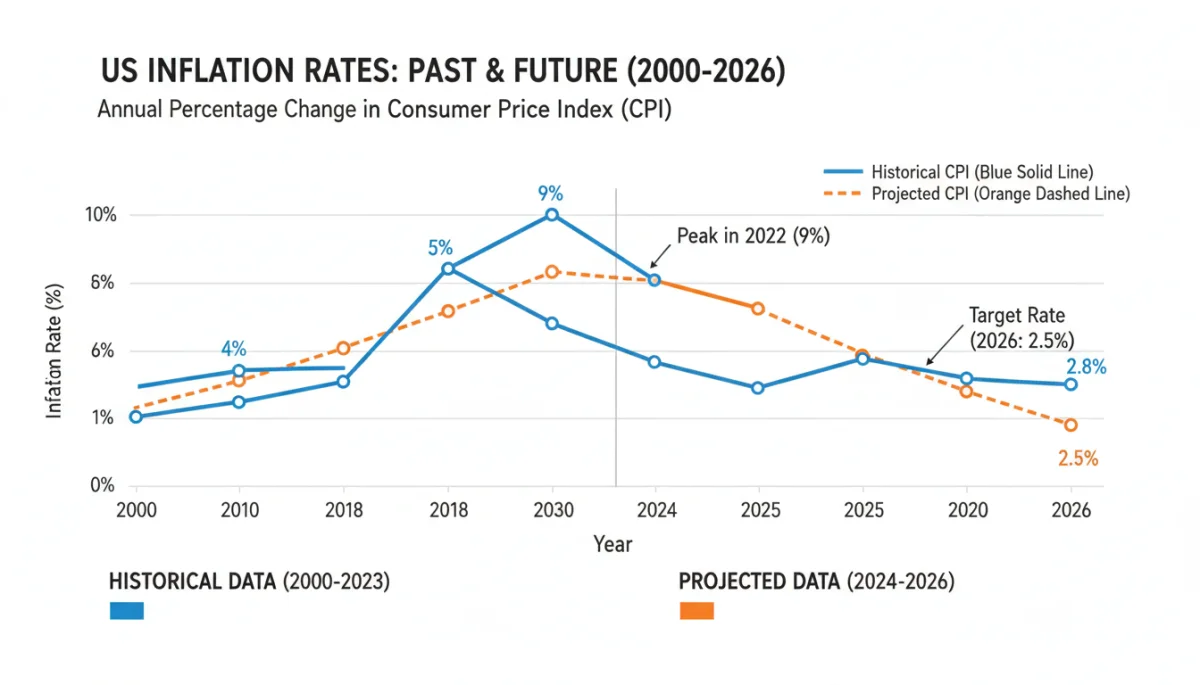
The economic forecast for 2026 suggests a complex environment where inflation, while potentially moderating from recent peaks, will likely remain a significant factor for investors. Several global and domestic elements continue to influence price stability, making it crucial to analyze these trends carefully. Understanding these underlying forces is the first step in building a resilient financial plan.
Factors such as supply chain adjustments, geopolitical tensions, and evolving consumer demand patterns are all contributing to the projected inflation trajectory. The Federal Reserve’s monetary policy decisions will also play a critical role, as interest rate adjustments aim to balance economic growth with price stability. For individuals, this means staying informed and adaptable.
Key Drivers of Inflation in 2026
- Supply Chain Resilience: Ongoing efforts to diversify supply chains and onshore production could reduce vulnerability to external shocks, but also potentially increase initial production costs.
- Labor Market Dynamics: A tight labor market, characterized by low unemployment and rising wages, can exert upward pressure on prices as businesses pass on higher labor costs to consumers.
- Energy Prices: Global energy markets remain volatile, with any significant disruptions having the potential to fuel inflationary spikes across various sectors.
- Fiscal Policy: Government spending and taxation policies can influence aggregate demand, impacting the overall price level in the economy.
The confluence of these factors creates an intricate picture for the inflation outlook 2026. While a return to pre-pandemic inflation levels might not be immediate, a sustained period of elevated prices, even if lower than recent highs, still demands strategic consideration for your savings. Investors should prepare for an environment where maintaining purchasing power requires active management rather than passive reliance on traditional savings accounts.
The Erosion of Purchasing Power: Why Inflation Matters
Inflation is often described as a silent thief, gradually eroding the purchasing power of your money over time. While a modest level of inflation is considered healthy for an economy, sustained high inflation can significantly diminish the real value of your savings, making it harder to achieve long-term financial goals. This is why understanding its impact is so vital for anyone planning their financial future, especially in the context of the inflation outlook 2026.
Consider a scenario where you have $10,000 saved today. If the average inflation rate is 3% per year, in ten years, that same $10,000 will only buy what approximately $7,441 would buy today. This reduction in buying power affects everything from daily necessities to major life purchases like retirement and education. Ignoring inflation is akin to letting your money sit in a leaky bucket.
Real Returns vs. Nominal Returns
It’s crucial to distinguish between nominal returns and real returns. Nominal return is the stated return on an investment before accounting for inflation. Real return, however, is the nominal return minus the inflation rate. For your savings to truly grow, your investments must generate a real return that is positive.
- Nominal Return: The percentage increase in the value of an investment over a period.
- Inflation Rate: The rate at which the general level of prices for goods and services is rising.
- Real Return: The actual increase in purchasing power after accounting for inflation (Nominal Return – Inflation Rate).
Many traditional savings vehicles, such as standard bank accounts or low-yield bonds, often struggle to keep pace with inflation, leading to negative real returns. This means that while the numerical value of your savings might increase slightly, their actual ability to purchase goods and services diminishes. Protecting against this erosion is the core challenge addressed by effective investment strategies in an inflationary environment.
Investment Vehicle 1: Real Estate and REITs
Real estate has historically been considered a strong hedge against inflation, and its role in the inflation outlook 2026 remains significant. As the cost of living rises, property values and rental incomes often tend to increase, providing a natural buffer against inflationary pressures. Investing in physical property or Real Estate Investment Trusts (REITs) can be a strategic move for long-term wealth preservation.
When inflation is high, the cost of building new properties also increases, which can drive up the value of existing real estate. Rental income, which often adjusts with inflation, provides a steady stream of income that can also keep pace with rising costs. This dual benefit of appreciating asset value and increasing income makes real estate an attractive option.
Direct Real Estate Investment
Direct ownership of residential or commercial properties offers tangible assets that can appreciate in value. However, it also comes with responsibilities like property management, maintenance, and the need for significant capital. It’s a hands-on approach that can yield substantial returns but requires careful consideration of location, market trends, and personal commitment.
- Residential Properties: Can provide rental income and capital appreciation, especially in growing urban areas.
- Commercial Properties: Often involve longer lease terms with built-in rent escalations, offering predictable income streams.
- Land: Raw land can appreciate significantly over time, but typically offers no income until developed or sold.
For those seeking exposure to real estate without the direct management burden, REITs offer a compelling alternative. REITs are companies that own, operate, or finance income-producing real estate across a range of property sectors. They are publicly traded, making them liquid and accessible to a broader range of investors.
Investment Vehicle 2: Commodities (Gold and Silver)
In times of economic uncertainty and inflationary concerns, commodities, particularly precious metals like gold and silver, have traditionally served as reliable stores of value. Their intrinsic worth and limited supply often make them resilient against currency devaluation, positioning them as key components in an investment strategy focused on the inflation outlook 2026. Many investors turn to these assets as a safe haven when paper currencies lose their purchasing power.
Gold, in particular, has a long history as an inflation hedge. Its value is not tied to any single government or company, making it less susceptible to the same economic forces that can devalue traditional financial assets. Silver, while more volatile than gold due to its industrial uses, also offers similar protective qualities against inflation and economic instability.
Why Precious Metals Excel During Inflation
- Scarcity: Unlike fiat currency, gold and silver cannot be printed at will, maintaining their value through limited supply.
- Tangible Asset: These are physical assets, offering a sense of security that digital or paper assets may not provide.
- Global Demand: Gold and silver are universally recognized and desired, ensuring a broad market for trade.
Investing in commodities can take several forms, from buying physical bullion to investing in commodity-focused exchange-traded funds (ETFs) or futures contracts. Each method carries its own set of risks and rewards, and investors should choose the approach that best aligns with their risk tolerance and financial goals. Physical ownership offers direct control but requires secure storage, while ETFs provide liquidity and diversification.
While commodities can be volatile in the short term, their role as a long-term hedge against inflation and economic instability makes them a valuable addition to a diversified portfolio. For those concerned about the erosion of savings, a strategic allocation to precious metals can help preserve wealth in an environment of rising prices.
Investment Vehicle 3: Inflation-Protected Securities (TIPS)
For investors specifically looking to counter the effects of inflation, Treasury Inflation-Protected Securities (TIPS) stand out as a direct and effective tool. These government-issued bonds are designed to protect investors from rising prices, making them an excellent choice when considering the inflation outlook 2026. TIPS offer a unique mechanism that adjusts their principal value in response to changes in the Consumer Price Index (CPI).
When inflation rises, the principal value of a TIPS bond increases, and conversely, it decreases with deflation. The interest payments you receive are then based on this adjusted principal, ensuring that your investment income keeps pace with the cost of living. This built-in protection provides a level of security that few other investments can match in an inflationary environment.
How TIPS Protect Your Capital
The mechanics of TIPS are relatively straightforward but highly effective. The principal value of a TIPS bond is adjusted semi-annually based on the change in the CPI. This adjustment means that your investment’s purchasing power is maintained, even as prices for goods and services increase.
- Principal Adjustment: The face value of the bond increases with inflation, ensuring your initial investment’s real value is preserved.
- Interest Payments: Interest is paid on the adjusted principal, meaning your interest income also grows with inflation.
- Maturity Value: At maturity, you receive either the adjusted principal or the original principal, whichever is greater, guaranteeing protection against deflation as well.
TIPS are backed by the full faith and credit of the U.S. government, making them one of the safest investments available. While their yields might be lower than other, riskier bonds during periods of low inflation, their protective features become invaluable when inflation is a concern. They are particularly suitable for conservative investors or those nearing retirement who prioritize capital preservation and stable income.
Diversification and Strategic Planning for 2026
While each of the three investment vehicles discussed (real estate/REITs, commodities, and TIPS) offers distinct advantages in combating inflation, a truly robust strategy for the inflation outlook 2026 hinges on diversification and thoughtful financial planning. Relying on a single asset class, no matter how promising, can expose your portfolio to unnecessary risks. The goal is to create a balanced portfolio that can withstand various economic conditions.
Diversification involves spreading your investments across different asset classes, industries, and geographic regions. This approach helps to mitigate risk because if one part of your portfolio underperforms, other parts may perform well, offsetting potential losses. For inflation protection, this means combining assets that historically perform well during inflationary periods with other assets that offer growth potential or stability.
Building a Resilient Portfolio
Consider a portfolio that includes a mix of inflation-hedging assets alongside traditional investments. For example, while TIPS provide direct inflation protection, they might not offer the same growth potential as equities. Real estate can offer both income and appreciation, but it can be illiquid. Gold provides a safe haven but does not generate income.
- Asset Allocation: Determine the appropriate percentage of your portfolio to allocate to each asset class based on your risk tolerance, time horizon, and financial goals.
- Regular Rebalancing: Periodically adjust your portfolio to maintain your desired asset allocation, ensuring you stay on track with your long-term strategy.
- Professional Advice: Consult with a financial advisor to tailor a plan that fits your specific circumstances and helps navigate the complexities of the market.
A well-diversified portfolio is not just about reducing risk; it’s also about optimizing returns. By carefully selecting and balancing your investments, you can aim to achieve your financial objectives while effectively protecting your savings from the anticipated inflationary environment of 2026. Proactive planning and continuous monitoring are key to success.
| Key Investment | Inflation Protection Benefit |
|---|---|
| Real Estate/REITs | Property values and rents often rise with inflation, preserving capital and income. |
| Commodities (Gold/Silver) | Act as a store of value, maintaining purchasing power when currencies devalue. |
| TIPS (Treasury Inflation-Protected Securities) | Principal value adjusts with CPI, directly protecting against inflation. |
| Diversification | Spreads risk across asset classes, enhancing overall portfolio resilience. |
Frequently Asked Questions About 2026 Inflation and Investments
The main concern for the 2026 inflation outlook is the potential for persistent, albeit moderating, price pressures. This could continue to erode purchasing power if savings are not strategically invested in assets designed to keep pace with or outperform inflation, impacting long-term financial stability for individuals and households.
REITs protect against inflation because their underlying assets (real estate) tend to appreciate in value during inflationary periods. Additionally, rental income generated by REIT properties often increases with rising costs, providing a growing stream of income that helps maintain or boost real returns for investors.
Yes, gold and silver remain highly relevant as inflation hedges. Historically, these precious metals have served as reliable stores of value during periods of economic uncertainty and currency devaluation. Their scarcity and intrinsic value help preserve purchasing power when traditional financial assets may struggle against rising prices.
TIPS (Treasury Inflation-Protected Securities) are unique because their principal value is directly adjusted by changes in the Consumer Price Index (CPI). This mechanism ensures that both the bond’s value and its interest payments automatically increase with inflation, offering direct and guaranteed protection against rising prices for investors.
Diversification is crucial for inflation protection in 2026 because no single investment guarantees absolute safety or growth. By spreading investments across various asset classes like real estate, commodities, and TIPS, investors can mitigate risks, enhance overall portfolio resilience, and increase the likelihood of preserving and growing wealth across different economic scenarios.
Conclusion
Navigating the inflation outlook 2026 requires a proactive and informed approach to personal finance. The erosion of purchasing power is a real threat, but by strategically allocating your savings into proven investment vehicles such as real estate (including REITs), commodities like gold and silver, and inflation-protected securities (TIPS), you can build a robust defense. Diversification remains the cornerstone of a resilient portfolio, ensuring that your wealth is not only protected but also positioned for growth, allowing you to confidently face the economic challenges and opportunities that lie ahead.