REITs in 2025: US Market Analysis for Income Generation

Real Estate Investment Trusts (REITs) in 2025 present a compelling opportunity for income generation within the US market, driven by evolving economic conditions and specific sector demands.
Considering the dynamic shifts in the global economy, understanding the potential of Real Estate Investment Trusts (REITs) in 2025: A US Market Analysis for Income Generation is more crucial than ever. These unique investment vehicles offer a pathway to participate in the real estate market without the complexities of direct property ownership, promising attractive dividends.
Understanding the REIT Landscape in 2025
As we look towards 2025, the US REIT market continues to evolve, shaped by macroeconomic factors, technological advancements, and shifting consumer behaviors. Investors are keenly observing how inflation, interest rates, and employment figures will influence property valuations and rental income, which are the lifeblood of REIT distributions.
The appeal of REITs lies in their structure: they are companies that own, operate, or finance income-producing real estate across a range of property sectors. By law, they must distribute at least 90% of their taxable income to shareholders annually in the form of dividends, making them a cornerstone for income-focused portfolios. In 2025, this income-generating characteristic remains a primary draw, especially for those seeking alternatives to traditional fixed-income investments.
Key Economic Drivers for REITs
Several economic indicators will play a pivotal role in shaping the REIT market in 2025. Interest rate policies from the Federal Reserve, for instance, directly impact borrowing costs for REITs and the attractiveness of their dividend yields compared to other assets. A stable or declining interest rate environment could provide tailwinds for property values and borrowing capacity, fostering growth.
- Interest Rates: The trajectory of the Fed funds rate will influence REIT debt servicing costs and investor demand for yield.
- Inflation: While high inflation can erode purchasing power, certain REIT sectors, like apartments and self-storage, can often adjust rents quickly to offset rising costs.
- Economic Growth: A robust economy generally translates to higher demand for commercial and residential spaces, benefiting occupancy rates and rental growth.
- Employment: Strong job markets boost consumer spending and housing demand, positively impacting retail, office, and residential REITs.
In conclusion, a comprehensive understanding of these underlying economic drivers is essential for any investor considering US REITs in 2025. The interplay of these factors will dictate the performance of different REIT sectors and the overall market stability, providing both challenges and opportunities for income generation.
Sector-Specific Performance Outlook
The US REIT market is not monolithic; it comprises various sectors, each with its own dynamics and sensitivities to economic shifts. In 2025, a nuanced understanding of these sector-specific outlooks is critical for optimizing income generation and mitigating risks.
Some sectors are poised for continued growth due to long-term trends, while others may face headwinds or offer opportunities for contrarian investors. The performance of a REIT is heavily dependent on the health of the underlying property types it owns and operates.
Emerging and Resilient Sectors
Several sectors are anticipated to demonstrate resilience and growth in 2025. Data centers, for instance, continue to benefit from the insatiable demand for digital infrastructure, cloud computing, and artificial intelligence. Industrial REITs, driven by e-commerce expansion and supply chain modernization, are also expected to maintain strong fundamentals.
- Data Center REITs: High demand for digital storage and processing capacity fuels consistent rental growth and expansion opportunities.
- Industrial REITs: E-commerce logistics and onshoring trends bolster demand for warehouses and distribution centers.
- Residential REITs: Despite potential affordability challenges, demand for housing, particularly in growing urban and suburban areas, remains robust.
- Self-Storage REITs: Offers stability due to lower operating costs and the ability to adjust rental rates frequently.
Conversely, traditional office REITs may continue to grapple with evolving work-from-home trends, though premium, amenity-rich spaces in desirable locations could still perform well. Retail REITs are also undergoing a transformation, with a focus on experiential retail and mixed-use developments adapting to changing consumer habits.
Analyzing the specific strengths and weaknesses of each sector is paramount. Investors should consider diversification across sectors to balance risk and capture diverse income streams, ensuring a more stable and robust portfolio of US REITs in 2025.
Dividend Yields and Income Potential
For many investors, the primary allure of US REITs in 2025 is their potential for attractive dividend yields and consistent income generation. Unlike many growth stocks, REITs are legally obligated to distribute a significant portion of their earnings, making them a reliable source of cash flow.
Dividend yields can vary significantly across different REIT sectors and individual companies, influenced by factors such as property type, geographic location, debt levels, and management effectiveness. It is crucial to look beyond just the headline yield and delve into the sustainability of these payouts.
Analyzing Dividend Sustainability
A high dividend yield is only valuable if it is sustainable. Investors should scrutinize several metrics to assess a REIT’s ability to maintain and grow its dividends. Funds From Operations (FFO) and Adjusted Funds From Operations (AFFO) are key performance indicators for REITs, providing a clearer picture of their operational cash flow than traditional earnings per share.
- FFO/AFFO Payout Ratios: A lower payout ratio suggests more room for dividend growth and a buffer against economic downturns.
- Lease Durations: Longer lease terms, especially with credit-worthy tenants, provide more predictable income streams.
- Debt Levels: High debt can strain a REIT’s finances, potentially impacting its ability to pay dividends.
- Growth Prospects: REITs with strong development pipelines or acquisition strategies have the potential to increase FFO and, consequently, dividends.
In 2025, investors should prioritize REITs with a proven track record of consistent dividend payments and a clear strategy for future growth. While market volatility can impact share prices, the underlying income stream from well-managed REITs can offer stability and a compelling return for income-focused portfolios. This careful analysis ensures that the income generated is not only attractive but also dependable.
Risk Factors and Mitigation Strategies
While US REITs offer compelling opportunities for income generation in 2025, they are not without risks. A prudent investor understands these potential pitfalls and implements strategies to mitigate them, safeguarding their investment and ensuring the stability of their income stream.
Market fluctuations, interest rate changes, and specific property sector challenges can all impact REIT performance. Identifying and preparing for these risks is a critical component of successful REIT investing.
Common REIT Risks and How to Address Them
One of the primary risks for REITs is interest rate sensitivity. As interest rates rise, the cost of borrowing for REITs increases, potentially impacting profitability. Additionally, higher interest rates can make other income-generating investments, such as bonds, more attractive, drawing capital away from REITs.
- Interest Rate Risk: Diversify across REITs with varying debt structures or consider those with shorter debt maturities.
- Economic Downturns: Invest in defensive sectors like healthcare or self-storage, which tend to be less sensitive to economic cycles.
- Tenant Concentration: Avoid REITs overly reliant on a single tenant or a small number of tenants; diversification reduces this specific risk.
- Geographic Concentration: Spread investments across different regions to avoid localized economic downturns or natural disasters.
- Valuation Risk: Avoid overpaying for REITs by carefully analyzing their FFO multiples and comparing them to historical averages and peers.
Another significant risk is property-specific. Vacancy rates, tenant defaults, and property damage can all directly affect a REIT’s income. Due diligence on a REIT’s portfolio quality, tenant base, and management team is therefore essential. For US REITs in 2025, a diversified approach across different sectors and geographies can significantly reduce overall portfolio risk, allowing investors to capture income potential with greater confidence.
Strategic Investment Approaches for 2025
Navigating the US REIT market in 2025 requires a strategic approach tailored to individual investment goals and risk tolerance. Whether an investor prioritizes high current income, long-term capital appreciation, or a balance of both, there are various strategies to consider.
The key is to align investment choices with a thorough understanding of market trends, individual REIT fundamentals, and personal financial objectives. A thoughtful strategy can help maximize returns and manage potential volatility.
Implementing Effective REIT Strategies
For income-focused investors, a core strategy might involve focusing on established REITs with a history of stable dividend payments and reasonable payout ratios. These are often found in mature sectors like residential or healthcare, which tend to have more predictable cash flows.
- Dividend Reinvestment: Reinvesting dividends can significantly compound returns over the long term, enhancing overall portfolio growth.
- Sector Rotation: Periodically re-evaluating sector performance and rotating investments into outperforming sectors can optimize returns.
- Geographic Diversification: While focusing on the US, consider REITs with diversified property holdings across different states or metropolitan areas to mitigate regional economic risks.
- Active vs. Passive Management: Decide whether to actively select individual REITs or opt for REIT ETFs/mutual funds for broader market exposure and diversification.
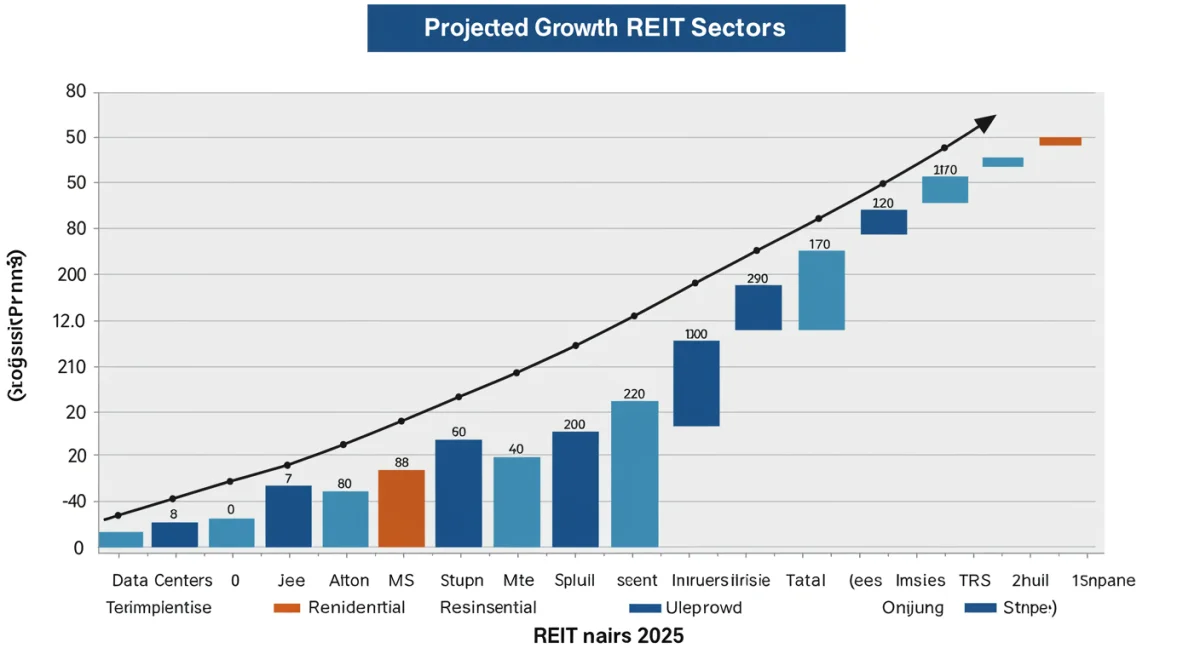
Growth-oriented investors, on the other hand, might seek out REITs in emerging sectors or those undergoing significant expansion, such as data centers or specialized industrial facilities. These REITs might offer lower initial dividend yields but possess higher potential for capital appreciation and future dividend growth. Regardless of the chosen strategy, continuous monitoring and adjustment based on market conditions will be crucial for success with US REITs in 2025.
Regulatory and Tax Considerations for US REITs in 2025
Investing in US REITs in 2025 also necessitates a clear understanding of the regulatory landscape and the tax implications of these investments. The unique structure of REITs, particularly their dividend distribution requirements, has specific tax consequences for investors that differ from those of traditional stock investments.
Staying informed about potential changes in tax laws or regulatory frameworks is vital, as these can directly impact the net returns from REIT investments. Both individual and institutional investors need to consider these factors when integrating REITs into their portfolios.
Navigating Tax Implications
The most significant tax consideration for REIT investors is how their dividends are taxed. Unlike qualified dividends from many corporations, which are often taxed at lower capital gains rates, REIT dividends are typically taxed as ordinary income. This is because REITs avoid corporate income tax by distributing most of their earnings, passing the tax burden directly to shareholders.
- Ordinary Income Tax: Most REIT dividends are taxed at an investor’s marginal ordinary income tax rate.
- Qualified Business Income (QBI) Deduction: Some REIT dividends may qualify for the 20% QBI deduction, reducing the effective tax rate for eligible investors.
- Tax-Advantaged Accounts: Holding REITs in retirement accounts like IRAs or 401(k)s can defer or eliminate annual tax on dividends and capital gains.
- State and Local Taxes: Be aware of potential state and local tax implications, which can vary by jurisdiction.
Beyond taxation, regulatory changes related to real estate, environmental standards, or zoning laws can also affect REIT operations and profitability. For instance, stricter environmental regulations could increase operating costs for certain property types. Understanding these nuances and consulting with a tax advisor can help investors optimize their holdings of US REITs in 2025, ensuring that the income generated is retained efficiently and in compliance with all relevant laws.
| Key Aspect | Brief Description |
|---|---|
| Market Outlook 2025 | US REITs influenced by interest rates, inflation, and economic growth; focus on income generation. |
| Key Growth Sectors | Data centers, industrial, and residential REITs show strong growth potential. |
| Risk Mitigation | Diversification across sectors and geographies, careful dividend sustainability analysis. |
| Tax Considerations | REIT dividends generally taxed as ordinary income; consider QBI deduction and tax-advantaged accounts. |
Frequently Asked Questions About US REITs in 2025
US REITs offer a unique way to gain exposure to real estate without direct ownership, providing attractive dividend yields due to their requirement to distribute 90% of taxable income to shareholders. This makes them a strong choice for income-focused portfolios, potentially offering diversification and inflation hedge benefits.
Interest rates significantly influence REITs. Higher rates can increase borrowing costs for REITs and make their dividend yields less attractive compared to bonds. Conversely, stable or declining rates can be favorable, reducing debt service expenses and boosting property valuations, potentially enhancing REIT performance and income.
In 2025, sectors like data centers and industrial REITs are anticipated to show strong performance due to continued demand from digital transformation and e-commerce. Residential REITs may also remain resilient. Investors should conduct thorough research as market conditions can swiftly alter sector outlooks.
Most REIT dividends are taxed as ordinary income, unlike qualified dividends from other corporations. However, some may qualify for the 20% Qualified Business Income (QBI) deduction. Holding REITs in tax-advantaged accounts like IRAs can help manage these tax liabilities more efficiently, deferring or minimizing taxes.
Key strategies include diversifying across different REIT sectors and geographical regions to spread risk. Investors should also assess a REIT’s debt levels, tenant quality, and dividend payout ratios to ensure sustainability. Regular portfolio review and alignment with personal financial goals are crucial for effective risk management.
Conclusion
The landscape for US REITs in 2025 presents a complex yet compelling arena for income-focused investors. With careful consideration of economic indicators, sector-specific dynamics, and an understanding of inherent risks, REITs can continue to serve as a cornerstone for generating stable income. Strategic diversification, thorough due diligence on dividend sustainability, and an awareness of tax implications are paramount for maximizing returns and navigating potential market fluctuations. As the real estate market continues its evolution, well-positioned REITs offer a robust pathway to participate in the growth and income potential of the US property sector.