Long-Term Care Benefits in 2025: Your Future Planning Guide

Understanding long-term care benefits in 2025 is essential for proactive financial and health planning, offering crucial support for future needs and protecting assets against rising care costs in the United States.
Navigating the complexities of future healthcare can be daunting, but understanding long-term care benefits in 2025 is a fundamental step toward securing peace of mind. This guide will help you unpack the evolving landscape of long-term care, offering insights into how to prepare for potential needs and protect your financial well-being.
understanding long-term care in 2025
Long-term care encompasses a wide range of medical and non-medical services for individuals who have a chronic illness or disability. These conditions prevent them from performing daily activities independently. As we approach 2025, the demand for these services continues to grow, driven by an aging population and increased life expectancies. Planning for long-term care is no longer a luxury but a necessity for many American families.
The cost of long-term care can be substantial, often depleting savings and impacting family finances if not adequately planned for. Understanding what services are covered, how they are financed, and what options are available is crucial. This proactive approach allows individuals to make informed decisions that align with their personal and financial goals, ensuring dignity and quality of life in later years.
what defines long-term care?
Long-term care is not typically medical care, but rather assistance with basic personal care tasks, also known as Activities of Daily Living (ADLs). These activities include bathing, dressing, eating, toileting, continence, and transferring (moving in and out of a bed or chair). When an individual requires assistance with two or more ADLs, they are generally considered to need long-term care.
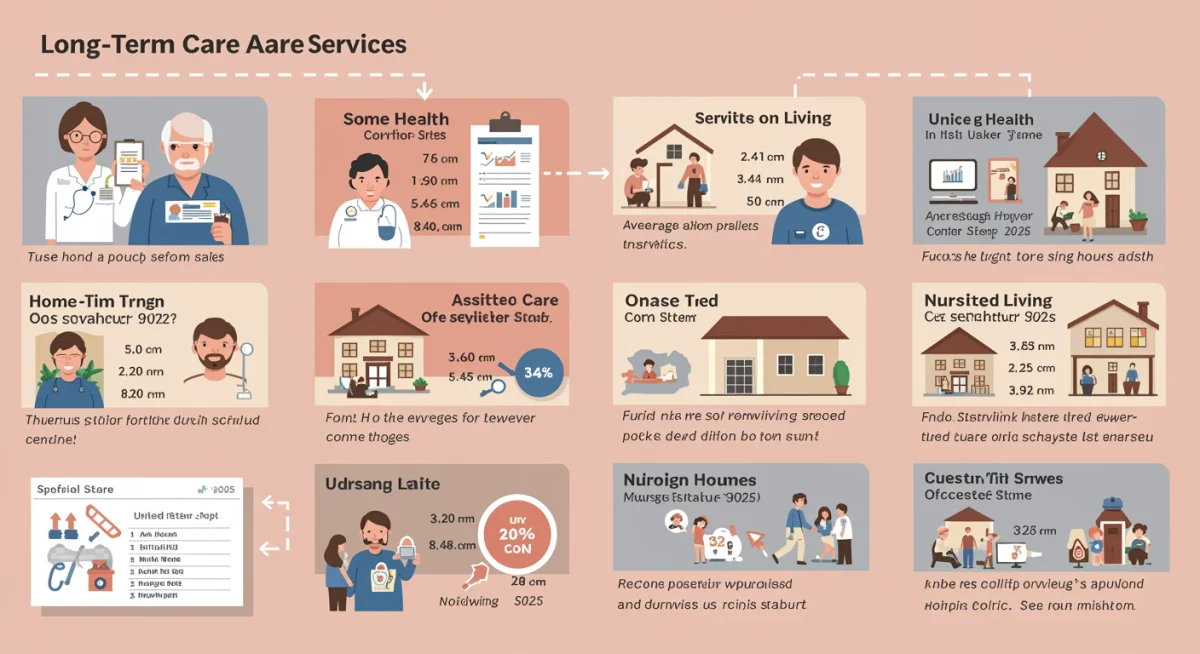
- Home health care: Services provided at home, including skilled nursing, therapy, and personal care assistance.
- Assisted living facilities: Residential settings offering personal care and support services for those who need some assistance but not 24-hour medical care.
- Nursing homes: Facilities providing 24-hour skilled nursing care, rehabilitation services, and assistance with daily activities.
- Adult day care: Programs designed for adults who need supervised care during the day, offering social activities and health services.
In conclusion, long-term care in 2025 is about preparing for the potential need for daily assistance due to age, illness, or disability. This preparation involves understanding the types of care available and the financial implications associated with them, which vary significantly based on the level and setting of care.
the rising cost of long-term care
The financial burden of long-term care is a significant concern for many Americans. Costs have been steadily increasing, and projections for 2025 indicate this trend will continue. Without proper planning, these expenses can quickly erode retirement savings, leaving individuals and their families in a precarious financial position. It’s imperative to understand these costs to develop an effective strategy.
Factors contributing to rising costs include inflation, increased demand for services, and a shortage of qualified caregivers. These elements combine to create a challenging environment for those seeking affordable long-term care solutions. Researching average costs in your specific region of the United States can provide a more accurate picture of potential future expenses.
average costs across the united states
The cost of long-term care varies dramatically depending on the type of service and geographic location. For instance, nursing home care in a major metropolitan area will likely be significantly more expensive than home health care in a rural setting. It’s important to look at national averages but also to pinpoint costs relevant to your expected location of care.
- Home health aide: national average around $5,000-$6,000 per month.
- Assisted living facility: national average around $4,500-$5,500 per month.
- Nursing home (private room): national average around $9,000-$10,000 per month.
These figures are estimates and can fluctuate. They highlight the substantial financial commitment involved in long-term care. Many families underestimate these costs, leading to financial strain when care is eventually needed. Proactive research and planning are key to mitigating this risk.
Ultimately, the rising cost of long-term care necessitates early and comprehensive financial planning. Ignoring these potential expenses can have severe consequences for personal wealth and family stability, making it a critical component of any future planning discussion for 2025 and beyond.
medicare, medicaid, and long-term care
Understanding the roles of Medicare and Medicaid in covering long-term care is critical, as these federal programs have specific limitations and eligibility requirements. Many individuals mistakenly believe Medicare will cover extensive long-term care needs, which is generally not the case. Clarifying these distinctions is essential for effective planning for long-term care benefits in 2025.
Medicare primarily covers skilled nursing care or rehabilitative services for a limited period after a hospital stay, not ongoing custodial care. Medicaid, on the other hand, does cover long-term care, but it is a needs-based program, meaning individuals must meet strict income and asset limits to qualify. This often requires individuals to spend down their assets, which can be a significant concern for those wishing to preserve their legacy.
medicare’s limited coverage
Medicare’s coverage for long-term care is very specific and short-term. It focuses on medical necessity rather than assistance with daily living. For example, if you need skilled nursing care after a stroke, Medicare might cover a portion of that care for a limited time. However, if you need help dressing or bathing due to a chronic condition, Medicare will not cover those services.
This distinction is vital for planning. Relying solely on Medicare for future long-term care needs is a common misconception that can lead to significant financial shortfalls. Understanding these limitations allows individuals to explore alternative funding sources, such as private insurance or personal savings.
medicaid’s role and eligibility
Medicaid is the largest payer of long-term care services in the U.S., but qualifying for it can be challenging. Eligibility rules vary by state, but generally involve strict income and asset limits. Many people planning for long-term care consider “Medicaid planning,” which involves strategies to legally arrange assets to meet eligibility requirements while preserving some wealth.
It’s important to consult with an elder law attorney or financial advisor specializing in Medicaid to understand the complex rules and potential implications of asset transfers. Planning for Medicaid eligibility often needs to begin years in advance of needing care to avoid penalties.
In summary, while Medicare and Medicaid play roles in healthcare, their coverage for long-term care is constrained. Medicare offers limited support for skilled care, while Medicaid is a safety net for those with limited financial resources. This makes private planning solutions critically important for most Americans.
long-term care insurance policies in 2025
Long-term care insurance (LTCI) is a private insurance product designed to cover the costs associated with long-term care. As we look towards 2025, LTCI policies continue to evolve, offering various benefits and structures to help individuals finance their future care needs. These policies are a proactive measure to protect personal assets and ensure access to desired care options.
Purchasing LTCI involves careful consideration of policy features, premiums, and the financial strength of the insurer. It’s not a one-size-fits-all solution, and what works for one individual may not be suitable for another. Understanding the different types of policies and their benefits is crucial for making an informed decision about your long-term care benefits in 2025.
traditional long-term care insurance
Traditional LTCI policies are standalone products that cover a range of long-term care services. They typically require regular premium payments, and benefits are paid out when the policyholder meets specific triggers, such as needing assistance with ADLs or cognitive impairment. These policies offer a dedicated pool of funds for care, protecting other assets.
- Daily benefit amount: The maximum amount the policy will pay per day for care.
- Benefit period: The length of time the policy will pay benefits (e.g., 2 years, 5 years, lifetime).
- Elimination period: A waiting period (e.g., 30, 60, or 90 days) before benefits begin paying out.
- Inflation protection: An optional rider that increases the daily benefit amount over time to account for rising care costs.
The key benefit of traditional LTCI is its focus on long-term care, providing substantial coverage once activated. However, premiums can be a concern, especially for older applicants, and there’s a “use it or lose it” aspect if care is never needed.
hybrid long-term care policies
Hybrid policies combine long-term care coverage with life insurance or an annuity. These policies address the “use it or lose it” concern of traditional LTCI by guaranteeing that if long-term care is never needed, the policy will pay a death benefit to beneficiaries or a surrender value. This makes them an attractive option for many.
Hybrid policies often involve a single lump-sum premium or a limited number of payments, which can be appealing compared to ongoing traditional LTCI premiums. They provide flexibility and a guaranteed payout, whether for care or as a legacy to heirs.
In conclusion, exploring long-term care insurance, whether traditional or hybrid, is a vital step in comprehensive future planning. These policies offer a financial safety net, allowing individuals to access quality care without solely relying on government programs or depleting their personal savings.
strategies for funding long-term care
Beyond insurance, there are several other strategies to consider when funding long-term care. A multi-faceted approach often provides the most robust plan, combining personal savings, investment vehicles, and potentially government benefits. Strategizing early for long-term care benefits in 2025 allows for greater flexibility and control over future care decisions.
No single solution fits everyone, so it’s important to assess your personal financial situation, risk tolerance, and preferences for care. Consulting with a financial advisor specializing in retirement and long-term care planning can help you tailor a strategy that best suits your needs and goals.
personal savings and investments
Utilizing personal savings and investments is a common way to fund long-term care. This can include dedicated savings accounts, retirement funds like 401(k)s and IRAs, and other investment portfolios. The advantage of this approach is control and flexibility, but the risk is depleting assets faster than anticipated, especially with rising care costs.
Consider setting aside a specific portion of your retirement savings for potential long-term care expenses. This could involve creating a separate investment account focused on growth or income to help offset future care costs. The earlier you start, the more time your investments have to grow.
reverse mortgages and annuities
For homeowners, a reverse mortgage can be an option to access equity in their home to pay for long-term care without having to sell it. This can provide a valuable source of funds, especially for those who wish to age in place. However, reverse mortgages have their own set of considerations, including fees and interest accumulation.
Annuities can also play a role. Deferred annuities, for example, can be structured to provide a guaranteed income stream later in life, which could then be used to cover long-term care expenses. Certain annuities also offer riders that increase payouts if long-term care is needed.
In summary, funding long-term care can involve a combination of personal savings, strategic investments, and specialized financial products like reverse mortgages or annuities. The key is to explore these options early and integrate them into a comprehensive financial plan.
navigating the application process and future outlook
Once you’ve decided on a long-term care planning strategy, understanding the application process for policies or benefits is the next crucial step. This can involve medical underwriting for insurance, or detailed financial documentation for government programs. Preparing for long-term care benefits in 2025 means being organized and informed about the administrative aspects.
The future outlook for long-term care in the U.S. suggests continued evolution in policy options, care models, and funding mechanisms. Staying updated on these changes will be vital for maintaining an effective long-term care plan. Advocacy for more affordable and accessible care options is also an ongoing conversation at both state and federal levels.
applying for long-term care insurance
Applying for long-term care insurance typically involves a detailed application, a medical questionnaire, and sometimes a cognitive assessment or a review of medical records. Insurers assess your health to determine eligibility and premium rates. It’s generally advisable to apply when you are younger and healthier, as premiums are lower and you are more likely to qualify.
Be prepared to provide comprehensive health information and discuss your medical history. The underwriting process can take several weeks, so factor this into your planning timeline. Working with an experienced insurance broker can simplify this process and help you compare policies from different providers.
future trends and considerations for 2025
Looking ahead to 2025, several trends are likely to shape the long-term care landscape. Technology will play an increasing role, with innovations in remote monitoring, telehealth, and smart home devices enhancing home-based care. There may also be continued efforts to integrate long-term care with broader healthcare systems.
- Technological advancements: Increased use of AI, wearables, and smart devices for monitoring and support.
- Workforce development: Focus on training and retaining skilled caregivers to address shortages.
- Policy innovation: Potential for new state or federal initiatives to expand access or affordability of care.
- Personalized care plans: Greater emphasis on individualized care tailored to specific needs and preferences.
Staying informed about these developments will help you adapt your long-term care plan as needed. The goal is to create a flexible and resilient strategy that can respond to future changes in healthcare and personal circumstances.
In conclusion, navigating the application process requires diligence, and understanding future trends allows for adaptive planning. By staying informed and proactive, individuals can secure the most effective long-term care benefits in 2025 and beyond.
making informed decisions for your future
The journey to secure comprehensive long-term care benefits in 2025 is multifaceted, requiring careful consideration of various factors. From understanding the types of care available to exploring funding options and navigating policy complexities, each step is crucial. Making informed decisions now can significantly impact your quality of life and financial stability in the future.
Proactive planning not only protects your assets but also provides peace of mind, knowing that you have a strategy in place for potential care needs. Engaging with financial advisors, elder law attorneys, and insurance professionals can provide valuable guidance tailored to your unique circumstances, helping you construct a robust plan.
key steps in your planning process
Starting early is perhaps the most important advice when it comes to long-term care planning. The younger and healthier you are, the more options you will have, particularly regarding insurance. Don’t wait until a crisis hits to begin thinking about these critical decisions.
- Assess your needs: Consider your health, family history, and preferences for care.
- Estimate costs: Research average long-term care costs in your area for various services.
- Review financial resources: Evaluate your savings, investments, and retirement accounts.
- Explore insurance options: Compare traditional and hybrid long-term care insurance policies.
- Consult professionals: Seek advice from financial planners, insurance agents, and elder law attorneys.
- Discuss with family: Involve your loved ones in the planning process to ensure everyone is on the same page.
Taking these steps systematically will help you build a comprehensive and effective long-term care plan. It’s an ongoing process that may require periodic review and adjustments as your circumstances or the long-term care landscape changes.
Ultimately, securing your long-term care benefits in 2025 is about empowering yourself with knowledge and making deliberate choices. It’s an investment in your future well-being and a testament to responsible financial stewardship, ensuring that you and your loved ones are prepared for whatever lies ahead.
| Key Aspect | Brief Description |
|---|---|
| Rising Costs | Long-term care expenses are increasing, requiring proactive financial planning to protect assets. |
| Medicare/Medicaid | Medicare offers limited coverage; Medicaid is needs-based and requires strict eligibility. |
| Insurance Options | Traditional and hybrid long-term care insurance policies provide dedicated funding for care. |
| Financial Strategies | Combine savings, investments, and professional advice for a robust funding plan. |
frequently asked questions about long-term care in 2025
Traditional health insurance typically covers medical treatments, doctor visits, and hospital stays. Long-term care, however, focuses on assistance with daily activities like bathing, dressing, and eating, which are generally not covered by standard health insurance or Medicare.
Medicare provides very limited coverage for long-term care, primarily for skilled nursing or rehabilitation after a hospitalization for a short period. It does not cover ongoing custodial care, which is the most common type of long-term care need.
Estimating costs involves researching average rates for different types of care (home health, assisted living, nursing homes) in your specific geographic area. Online cost calculators and financial advisors can provide personalized projections based on your anticipated needs.
Hybrid policies combine long-term care coverage with life insurance or an annuity. They are often considered a good option because they ensure a payout (either for care or as a death benefit) addressing the “use it or lose it” concern of traditional policies.
The best time to start planning for long-term care is as early as possible, ideally in your 40s or 50s. This allows you to explore more affordable insurance options and build sufficient savings, as health conditions can impact eligibility and premiums later in life.
conclusion
Securing long-term care benefits in 2025 is undeniably a critical component of comprehensive future planning. The evolving healthcare landscape, coupled with rising costs and specific limitations of government programs, underscores the necessity of proactive engagement. By understanding the available care options, exploring various funding mechanisms, and consulting with financial experts, individuals can construct a robust plan that ensures dignity, preserves wealth, and provides peace of mind for themselves and their families. Taking these steps today is an investment in a secure and well-prepared tomorrow.