Investing in Renewable Energy 2026: 10% Annual Returns Forecast
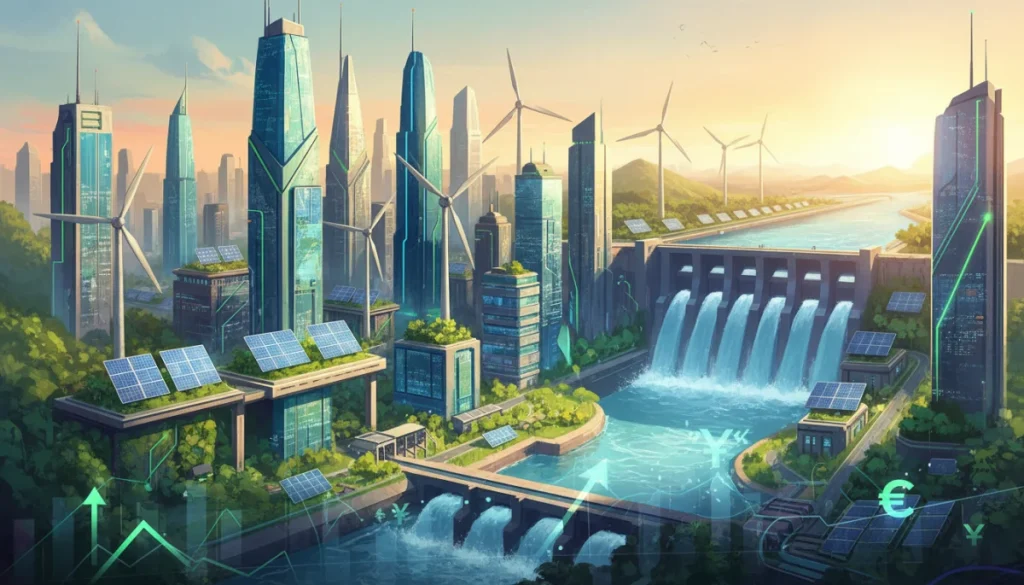
Investing in renewable energy in 2026 offers a compelling financial opportunity, with analysts forecasting an average 10% annual return fueled by innovation and global commitment.
Are you looking for investment avenues that promise both significant financial growth and a positive global impact? Investing in renewable energy in 2026: A Financial Opportunity with Projected 10% Annual Returns stands out as a prime candidate, offering a compelling blend of sustainability and profitability in the evolving global economy.
The global shift towards sustainable energy
The world is undergoing a profound energy transformation. Driven by climate change concerns, technological advancements, and supportive government policies, the transition from fossil fuels to renewable sources is accelerating at an unprecedented pace. This shift isn’t just an environmental imperative; it’s a massive economic realignment, creating fertile ground for investors.
Governments worldwide are implementing ambitious targets and incentives to boost renewable energy deployment. The United States, for instance, continues to bolster initiatives aimed at decarbonizing its energy grid, making it an attractive market for green investments. This regulatory tailwind provides a stable and predictable environment for long-term capital allocation in the sector.
Policy drivers and market dynamics
Understanding the interplay between policy and market dynamics is crucial for any investor considering the renewable energy sector. Policies such as tax credits, grants, and carbon pricing mechanisms significantly enhance the economic viability of renewable projects, reducing risks and increasing potential returns.
- Investment Tax Credits (ITCs): Extend and expand tax credits for solar, wind, and other renewable technologies, making projects more financially attractive.
- Production Tax Credits (PTCs): Offer incentives for electricity generated from renewable sources, ensuring a stable revenue stream for operators.
- Renewable Portfolio Standards (RPS): Mandate utilities to source a certain percentage of their electricity from renewable sources, creating consistent demand.
The market dynamics are equally compelling, with declining costs of renewable technologies making them competitive, and often cheaper, than traditional fossil fuel alternatives. This cost advantage, combined with increasing energy demand, positions renewable energy as a cornerstone of future global energy supply.
In conclusion, the global shift towards sustainable energy is a powerful, irreversible trend. It is supported by strong policy frameworks and favorable market dynamics, creating a robust environment for investments that are not only environmentally responsible but also financially rewarding. This transformation offers a unique window for investors to participate in a sector poised for exponential growth.
Key renewable energy sectors for investment in 2026
When considering investing in renewable energy in 2026, it’s essential to identify the specific sectors within this broad category that offer the most promising returns. While solar and wind power remain dominant, emerging technologies and supportive infrastructure also present significant opportunities for astute investors.
The landscape of renewable energy is constantly evolving, with innovations continually improving efficiency and reducing costs across various technologies. Diversifying investments across these key sectors can mitigate risk and maximize potential gains.
Solar power: continued growth and innovation
Solar energy continues to be a powerhouse in the renewable sector. Advancements in photovoltaic (PV) technology, coupled with decreasing manufacturing costs, have made solar power increasingly accessible and efficient. Large-scale utility projects, distributed generation (rooftop solar), and innovative applications like floating solar farms are all expanding rapidly.
- Utility-scale solar farms: Massive projects often backed by long-term power purchase agreements (PPAs) providing stable revenue.
- Residential and commercial solar: Growing demand for on-site power generation, driven by energy independence and cost savings.
- Solar storage solutions: Integration of battery storage systems to address intermittency, enhancing reliability and grid stability.
The innovation in solar extends beyond traditional panels, with perovskite solar cells and transparent solar technology showing immense promise for future applications, further solidifying solar’s long-term growth trajectory.
Wind energy: onshore and offshore expansion
Wind power, particularly offshore wind, is experiencing a surge in investment and development. Onshore wind farms continue to be cost-effective, while offshore wind projects benefit from stronger, more consistent winds and larger turbine capacities. The U.S. East Coast, for example, is becoming a hub for significant offshore wind development.
Beyond generation, the infrastructure supporting these sectors, such as smart grids, energy storage solutions, and transmission lines, also represents critical investment areas. These components are vital for integrating intermittent renewable sources into the existing energy network and ensuring reliable power delivery.
In summary, the key renewable energy sectors for investment in 2026 offer a diverse range of opportunities. Solar and wind power lead the charge, but smart investors should also consider the crucial supporting infrastructure and emerging technologies to build a resilient and high-performing portfolio.
Financial incentives and government support
The robust growth projections for investing in renewable energy in 2026 are significantly underpinned by a comprehensive suite of financial incentives and unwavering government support. These mechanisms are designed to de-risk investments, accelerate deployment, and ensure the long-term viability of green energy projects.
Governments recognize the strategic importance of transitioning to renewable energy for both environmental sustainability and economic competitiveness. This recognition translates into tangible financial benefits for investors and developers.
Tax credits and grants: catalyzing investment
One of the primary drivers of renewable energy investment in the United States is the availability of federal and state tax credits. These credits directly reduce the tax liability for individuals and corporations investing in renewable energy projects, making them more attractive financially.
- Investment Tax Credit (ITC): A significant federal tax credit for solar and other renewable energy technologies, providing a percentage of the project’s cost back to the investor.
- Production Tax Credit (PTC): Another federal incentive, primarily for wind energy, offering a per-kilowatt-hour credit for electricity produced.
- State-level incentives: Many states offer their own tax credits, rebates, and grant programs that can be stacked with federal incentives, further enhancing project economics.
Beyond tax credits, various government grants are available for research and development, pilot projects, and community-based renewable energy initiatives. These grants often target innovative technologies or projects in underserved areas, fostering broader market adoption.


Regulatory frameworks and long-term stability
Beyond direct financial incentives, supportive regulatory frameworks provide a crucial layer of stability and predictability for renewable energy investments. Policies like Renewable Portfolio Standards (RPS) and clean energy mandates create a guaranteed market for renewable electricity.
These regulations compel utilities to procure a certain percentage of their power from renewable sources, ensuring consistent demand and long-term contracts for renewable energy generators. This regulatory certainty is invaluable for large-scale infrastructure projects that require significant upfront capital and have long operational lifespans.
In essence, the combination of robust financial incentives and strong regulatory support creates a highly favorable environment for investing in renewable energy in 2026. These governmental actions not only accelerate the energy transition but also significantly enhance the risk-adjusted returns for investors in the sector.
Emerging technologies and future growth areas
While established technologies like solar and wind dominate the current renewable energy landscape, investing in renewable energy in 2026 also means looking towards the horizon for emerging technologies that promise significant future growth. These innovations are critical for addressing the intermittency challenges of renewables and expanding their application.
The drive for greater efficiency, lower costs, and enhanced energy storage capabilities is fueling rapid advancements in a variety of promising fields. Identifying these nascent technologies early can offer substantial long-term returns.
Advanced energy storage solutions
Energy storage is perhaps the most critical component for unlocking the full potential of intermittent renewable sources. While lithium-ion batteries are currently prevalent, research and development are pushing the boundaries of what’s possible in energy storage.
- Solid-state batteries: Offer higher energy density, faster charging, and improved safety compared to traditional lithium-ion.
- Flow batteries: Scalable for grid-level storage, with long lifespans and the ability to store energy for extended periods.
- Green hydrogen: Produced by electrolyzing water using renewable electricity, green hydrogen can serve as a clean fuel for transportation, industrial processes, and long-duration energy storage.
Investments in companies developing and deploying these advanced storage solutions are poised for substantial growth as grids become more reliant on renewable energy and demand for reliable power increases.
Next-generation renewables and smart grid technologies
Beyond solar and wind, other renewable energy sources are gaining traction. Geothermal energy, which harnesses the Earth’s internal heat, offers a constant, baseload power source. Advancements in enhanced geothermal systems are making this technology accessible in more regions.
Furthermore, the development of smart grid technologies is crucial for efficiently managing and distributing renewable energy. These technologies include advanced sensors, real-time data analytics, and artificial intelligence to optimize energy flow, predict demand, and enhance grid resilience. Companies specializing in grid modernization and digital energy solutions represent another high-growth area.
In conclusion, the future of renewable energy investment extends beyond today’s dominant technologies. By focusing on advanced energy storage, next-generation renewable sources, and smart grid innovations, investors can tap into the immense potential of the evolving clean energy ecosystem, positioning themselves for significant returns in the years to come.
Risks and considerations for investors
While investing in renewable energy in 2026 presents a compelling financial opportunity, it is crucial for investors to be aware of the inherent risks and considerations. Like any investment, the renewable energy sector is not without its challenges, and a thorough understanding of these factors is essential for informed decision-making.
Prudent investors conduct comprehensive due diligence to evaluate not only the potential for returns but also the various risks that could impact their investments. Navigating these complexities effectively is key to long-term success in the green energy market.
Policy changes and regulatory uncertainty
One significant risk stems from potential shifts in government policy and regulatory frameworks. While current policies are largely supportive, future political changes could lead to a reduction or elimination of incentives, impacting project profitability. Investors must monitor the political landscape closely and consider the long-term stability of supportive policies.
- Changes in tax credits: Alterations to federal or state tax credits (ITC, PTC) could directly affect the financial viability of renewable projects.
- Regulatory hurdles: New environmental regulations or permitting complexities could delay projects and increase costs.
- International trade policies: Tariffs on imported renewable energy components can impact project costs and supply chain stability.
Diversifying investments across different geographical regions and technologies can help mitigate the risk associated with localized policy changes.
Technological obsolescence and market competition
The rapid pace of innovation in the renewable energy sector, while a growth driver, also introduces the risk of technological obsolescence. Newer, more efficient technologies can emerge, potentially devaluing older assets or rendering existing solutions less competitive. Investors need to assess the technological lifecycle and scalability of their chosen investments.
Furthermore, increased market competition, driven by the influx of new players and declining technology costs, can put pressure on profit margins. While beneficial for consumers, intense competition can erode returns for less efficient or poorly managed projects. Staying informed about market trends and technological advancements is vital.
In conclusion, while the prospects for investing in renewable energy in 2026 are bright, investors must approach the sector with a clear understanding of the associated risks. Policy uncertainty, technological obsolescence, and market competition are significant considerations that, when properly managed, can lead to more resilient and successful investment outcomes.
Strategies for successful renewable energy investing
To capitalize on the projected 10% annual returns from investing in renewable energy in 2026, investors need well-defined strategies. A thoughtful approach, balancing risk and reward, can help navigate the complexities of this dynamic sector and optimize financial outcomes.
Successful renewable energy investing often involves a combination of direct and indirect investment vehicles, tailored to an investor’s risk tolerance and financial goals. Diversification and active management are key components of a robust strategy.
Direct vs. indirect investment approaches
Investors have several avenues for engaging with the renewable energy sector. Each approach offers different levels of control, liquidity, and risk exposure.
- Direct investment in projects: This involves investing directly in solar farms, wind parks, or other renewable energy projects, often through private equity funds or specialized infrastructure funds. This approach offers higher control but typically requires significant capital and carries higher liquidity risk.
- Publicly traded companies: Investing in stocks of companies involved in renewable energy development, manufacturing, or operations. This includes utilities with significant renewable portfolios, equipment manufacturers, and green energy technology firms. This offers higher liquidity and diversification.
- Exchange-Traded Funds (ETFs) and mutual funds: These funds provide diversified exposure to the renewable energy sector by holding a basket of relevant stocks or assets. They are ideal for investors seeking broad market exposure with lower individual stock risk.
The choice between direct and indirect investment depends on an investor’s financial capacity, expertise, and desired level of involvement in the sector.
Due diligence and diversification
Regardless of the investment vehicle, thorough due diligence is paramount. This involves researching the financial health of companies, the viability of projects, the regulatory environment, and the management teams involved. For project-level investments, understanding the power purchase agreements (PPAs), technology risks, and operational efficiency is critical.
Diversification is another cornerstone of successful renewable energy investing. Spreading investments across different technologies (solar, wind, geothermal), geographies, and stages of development can mitigate specific risks and enhance overall portfolio resilience. For example, balancing investments in mature utility-scale projects with smaller, innovative technology companies can provide a blend of stability and growth potential.
In conclusion, successful investing in renewable energy in 2026 requires a strategic approach. By carefully considering direct versus indirect investment methods, conducting rigorous due diligence, and practicing smart diversification, investors can position themselves to effectively capture the significant financial opportunities presented by the global energy transition.
The environmental and social impact of green investments
Beyond the compelling financial returns, investing in renewable energy in 2026 offers profound environmental and social benefits. These non-financial returns are increasingly important to investors, contributing to a holistic understanding of investment value and aligning with growing global sustainability goals.
The shift towards green investments is not merely a trend; it’s a fundamental reorientation of capital towards a more sustainable and equitable future. Understanding these broader impacts can enhance an investment’s appeal and contribute to a more resilient portfolio.
Reducing carbon emissions and combating climate change
The most direct and widely recognized environmental benefit of renewable energy investments is the significant reduction in greenhouse gas emissions. By replacing fossil fuel-based power generation with clean sources like solar and wind, these investments directly contribute to mitigating climate change.
- Cleaner air: Reduced reliance on fossil fuels leads to fewer pollutants in the atmosphere, improving air quality and public health.
- Conservation of natural resources: Renewable energy sources do not deplete finite resources like coal, oil, or natural gas.
- Water preservation: Many renewable technologies, particularly solar PV and wind, require significantly less water than traditional power plants for cooling and operation.
These contributions help countries meet their climate targets and build a more sustainable planet for future generations, creating a positive feedback loop for further green investment.
Job creation and economic development
Renewable energy investments are powerful engines for economic development and job creation. The construction, operation, and maintenance of renewable energy projects create a wide range of employment opportunities, from engineers and technicians to project managers and installers.
These jobs often provide stable, well-paying employment in local communities, fostering economic growth and reducing reliance on traditional, often volatile, energy sectors. Furthermore, the development of a domestic renewable energy industry can enhance energy independence and security for nations.
The social impact extends to improved public health due to cleaner environments and increased access to reliable, affordable energy in underserved regions. This holistic benefit makes investing in renewable energy in 2026 not just a financial decision, but a commitment to a better future.
In conclusion, the environmental and social impacts of green investments are as significant as their financial returns. By contributing to climate change mitigation, fostering cleaner environments, and driving economic development, renewable energy investments offer a powerful means to achieve both financial prosperity and a positive global legacy.
| Key Investment Area | Brief Outlook for 2026 |
|---|---|
| Solar Power | Continued cost reduction, efficiency gains, and strong policy support drive expansion. |
| Wind Energy | Offshore wind growth, technological advancements, and increasing capacity. |
| Energy Storage | Crucial for grid stability, rapid innovation in battery and hydrogen technologies. |
| Green Hydrogen | Emerging as a versatile clean fuel and long-duration storage solution. |
Frequently asked questions about renewable energy investing
Analysts project average annual returns of 10% for renewable energy investments in 2026. This forecast is driven by continued technological advancements, decreasing costs, and robust governmental support through various incentives and policies.
Solar and wind power remain leading sectors, with significant growth in both utility-scale and distributed projects. Additionally, energy storage solutions, particularly advanced batteries and green hydrogen, are emerging as high-potential areas due to their critical role in grid stability.
Key incentives include the Investment Tax Credit (ITC) and Production Tax Credit (PTC) at the federal level, alongside various state-specific tax credits, grants, and renewable portfolio standards. These policies reduce financial risk and enhance project profitability for investors.
Primary risks include potential changes in government policies and regulations, which could impact incentives. Other considerations involve technological obsolescence due to rapid innovation and increased market competition, which may affect profit margins.
Investors can start by researching publicly traded companies in the sector, investing in renewable energy ETFs or mutual funds for diversification, or exploring direct project investments through specialized funds. Thorough due diligence and diversification are crucial for a successful strategy.
Conclusion
Investing in renewable energy in 2026 offers a confluence of significant financial opportunity and impactful contributions to global sustainability. With projected annual returns of 10%, driven by robust technological advancements, supportive government policies, and increasing global demand for clean energy, the sector stands as a beacon for forward-thinking investors. While navigating risks such as policy shifts and technological evolution requires careful consideration, the overarching narrative is one of undeniable growth and positive change. By strategically allocating capital to key sectors like solar, wind, and emerging storage solutions, investors can not only achieve their financial objectives but also play a pivotal role in shaping a greener, more resilient future.