Education Technology 2026: 3 Tools Every Classroom Needs
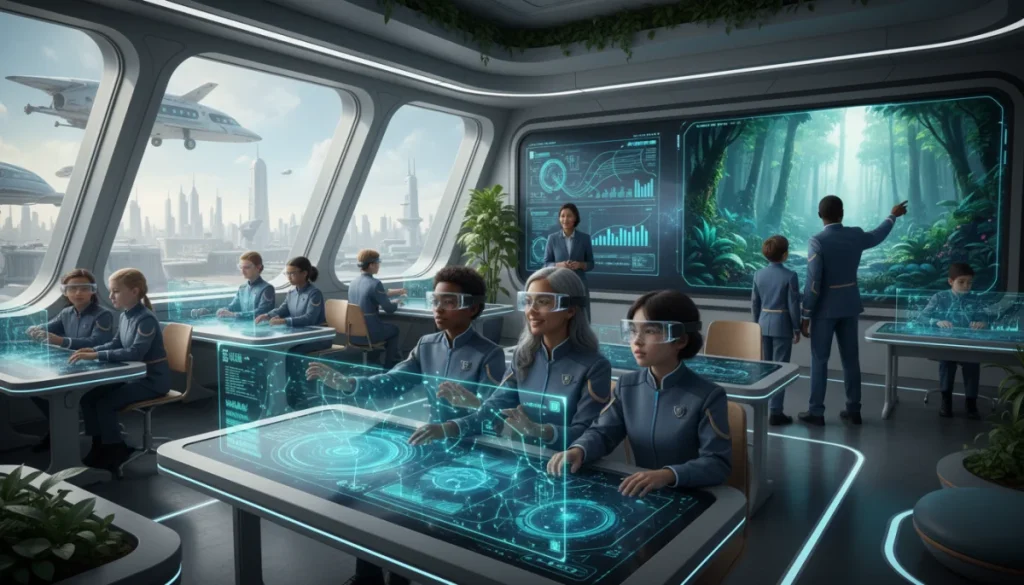
The latest in education technology for 2026 is poised to revolutionize learning environments with sophisticated AI-driven adaptive platforms, immersive augmented reality experiences, and collaborative virtual learning spaces, making education more personalized and engaging for every student.
As we navigate towards 2026, the integration of technology into education is not just an option but a necessity. The landscape of learning is transforming at an unprecedented pace, demanding innovative approaches to engage students and equip them with future-ready skills. This article explores the latest in education technology for 2026: 3 tools every classroom needs to foster a dynamic, inclusive, and effective learning environment.
The Rise of AI-Powered Adaptive Learning Platforms
Artificial Intelligence (AI) is no longer a futuristic concept; it’s a present-day reality profoundly impacting various sectors, including education. AI-powered adaptive learning platforms are at the forefront of this revolution, offering personalized educational experiences that cater to individual student needs and learning styles.
These platforms leverage sophisticated algorithms to analyze student performance, identify knowledge gaps, and recommend tailored content and activities. This personalized approach ensures that each student progresses at their own pace, receiving support where needed and advanced challenges when ready. The goal is to move away from a one-size-fits-all model towards a truly individualized learning journey.
Personalized Learning Paths
One of the most significant benefits of AI in education is its ability to create personalized learning paths. Traditional classrooms often struggle to address the diverse learning needs within a single group of students. AI, however, can adapt dynamically.
- Diagnostic Assessments: AI platforms begin with initial assessments to gauge a student’s current understanding.
- Content Curation: Based on the assessment, the AI curates relevant learning materials, from videos and articles to interactive simulations.
- Progress Tracking: Continuous monitoring of student progress allows the platform to adjust the difficulty and type of content in real-time.
- Targeted Interventions: When a student struggles with a concept, the AI provides additional resources or different explanations.
Automated Feedback and Assessment
Beyond personalization, AI-powered platforms excel in providing immediate and constructive feedback. This instant feedback loop is crucial for student learning, allowing them to understand their mistakes and correct them without delay. Furthermore, automated assessment reduces the grading burden on teachers, freeing them to focus more on instruction and individual student support.
The integration of AI in adaptive learning platforms represents a monumental shift in how education is delivered and consumed. It promises to make learning more efficient, effective, and equitable for students across all demographics. This technology is becoming an indispensable tool for any classroom aiming to thrive in 2026 and beyond.
Immersive Augmented Reality (AR) Experiences
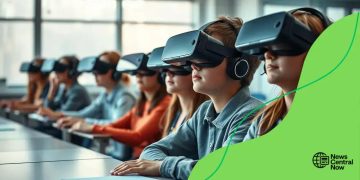
Imagine dissecting a frog without a scalpel, exploring ancient Rome from your desk, or visualizing complex molecular structures in 3D. Augmented Reality (AR) makes these scenarios not only possible but increasingly commonplace in educational settings. AR overlays digital information onto the real world, creating immersive and interactive learning experiences that go far beyond traditional textbooks and lectures.
AR technology enhances understanding by providing contextual and visual learning opportunities. It transforms abstract concepts into tangible, explorable realities, making learning more engaging and memorable. For 2026, AR is set to become a cornerstone of innovative classroom instruction.
Bringing Lessons to Life
AR has the power to bring static lessons to vibrant life. Instead of just reading about historical events or scientific phenomena, students can experience them. This level of engagement can significantly improve retention and foster a deeper understanding of subjects.
- Virtual Field Trips: Students can visit historical sites, natural wonders, or even other planets without leaving the classroom.
- Interactive Models: Complex machinery, human anatomy, or geographical features can be explored in 3D, allowing for manipulation and detailed examination.
- Gamified Learning: AR applications often incorporate game-like elements, turning learning into an exciting challenge.
- Skill-Based Training: Vocational and technical subjects can benefit from AR simulations for hands-on practice in a safe environment.
Enhancing Collaboration and Creativity
AR also fosters collaborative learning. Students can share AR experiences, discussing what they see and working together to solve problems within the augmented environment. This promotes teamwork and critical thinking, essential skills for the modern world.
The accessibility of AR through smartphones and tablets means that classrooms do not necessarily need expensive, specialized equipment to begin integrating this powerful tool. As AR technology continues to evolve and become more affordable, its presence in classrooms will undoubtedly grow, making it one of the three essential education technology tools for 2026.
Collaborative Virtual Learning Environments (VLEs)
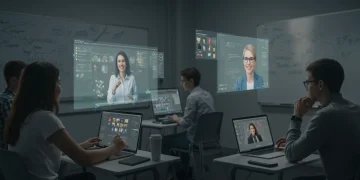
The concept of a classroom is no longer confined to four walls. Collaborative Virtual Learning Environments (VLEs) are extending educational spaces into dynamic online platforms where students and teachers can interact, share resources, and collaborate on projects regardless of their physical location. These environments are becoming increasingly sophisticated, offering rich features that mirror and often enhance traditional classroom interactions.
VLEs are crucial for fostering 21st-century skills such as digital literacy, communication, and teamwork. In an increasingly connected world, the ability to collaborate effectively in virtual spaces is paramount, and these platforms provide the ideal training ground.
Seamless Communication and Resource Sharing
Modern VLEs offer a suite of tools designed to facilitate seamless communication and efficient resource sharing. This ensures that all participants in a learning community have access to the information and support they need, whenever they need it.
- Integrated Communication Tools: Features like discussion forums, chat functions, and video conferencing allow for real-time and asynchronous communication.
- Centralized Resource Hub: All course materials, assignments, and supplementary resources are stored in one accessible location.
- Document Collaboration: Students can work together on documents, presentations, and projects in real-time, tracking changes and providing feedback.
- Personalized Dashboards: Students and teachers have customized views of their progress, upcoming assignments, and important announcements.
Fostering Global Connections
One of the most exciting aspects of collaborative VLEs is their potential to connect classrooms globally. Students can collaborate with peers from different cultures and backgrounds, broadening their perspectives and developing a global understanding. This kind of cross-cultural interaction is invaluable in preparing students for a diverse and interconnected world.
The evolution of VLEs from simple file-sharing platforms to comprehensive, interactive learning hubs marks them as an indispensable tool for education technology in 2026. They are not merely substitutes for physical classrooms but powerful extensions that unlock new possibilities for learning and collaboration.
Integrating Technology for Holistic Learning
The true power of these education technology tools for 2026 lies not just in their individual capabilities but in their synergistic integration. When AI-powered adaptive learning, immersive AR experiences, and collaborative VLEs are used in conjunction, they create a holistic and highly effective learning ecosystem. This integrated approach ensures that students receive personalized instruction, engage with content in meaningful ways, and develop essential collaborative skills.
Consider a scenario where an AI platform identifies a student’s difficulty with a particular scientific concept. It then recommends an AR experience that allows the student to visualize and interact with that concept in 3D. Subsequently, the student might join a collaborative VLE project to apply their newfound understanding with peers, receiving real-time feedback from both the platform and their teacher. This seamless flow between technologies maximizes learning outcomes.
Teacher as Facilitator
In this technologically rich environment, the role of the teacher evolves from a primary knowledge dispenser to a facilitator and guide. Teachers can leverage these tools to understand student progress at a deeper level, pinpoint areas where intervention is most needed, and design more engaging and effective lessons. The technology supports the teacher, allowing them to focus on mentoring, inspiring, and fostering critical thinking.
- Data-Driven Insights: AI platforms provide teachers with valuable data on student performance, enabling informed instructional decisions.
- Enhanced Lesson Planning: AR tools offer new ways to present complex information and create interactive activities.
- Global Collaboration Management: VLEs allow teachers to manage and monitor group projects, even those involving students from different schools or countries.
- Professional Development: These tools also open avenues for teachers to continuously learn and adapt their pedagogical approaches.
Addressing Challenges and Ensuring Equity
While the benefits are clear, the successful integration of these technologies also requires addressing challenges such as digital divide, teacher training, and cybersecurity. Ensuring equitable access to these tools and providing adequate support for educators are paramount to realizing their full potential. The focus must be on creating inclusive environments where every student can benefit from these advancements, regardless of their socioeconomic background.
By thoughtfully integrating these technologies, educational institutions can prepare students not just for academic success, but for life in a rapidly changing, technologically driven world. The holistic approach to education technology is the key to unlocking its transformative power in 2026.
Preparing for the Future of Learning
The rapid pace of technological innovation means that educational institutions must be proactive in preparing for the future of learning. Adopting and effectively integrating technologies like AI-powered adaptive learning platforms, immersive AR experiences, and collaborative VLEs is not merely about staying current; it’s about fundamentally reshaping how we educate the next generation. These tools are not just enhancements but foundational elements for a dynamic and responsive educational system.
Investing in robust infrastructure, providing ongoing professional development for educators, and fostering a culture of innovation are critical steps. The goal is to create environments where technology serves as a powerful enabler, empowering both students and teachers to achieve their full potential. This forward-looking approach ensures that classrooms are not just keeping up with technological advancements, but actively leveraging them to create superior learning outcomes.
Strategic Implementation and Support
Successful technology integration requires more than just acquiring new tools; it demands a strategic implementation plan and continuous support. This includes planning for scalability, ensuring compatibility with existing systems, and providing technical assistance when needed. A well-executed strategy ensures that technology becomes an asset, not a burden, for educators and students alike.
- Infrastructure Upgrades: Ensuring reliable internet access and adequate hardware for all students and staff.
- Teacher Training Programs: Offering comprehensive training on how to effectively use and integrate new technologies into curriculum.
- Pilot Programs: Testing new tools on a smaller scale before widespread implementation to identify and address potential issues.
- Community Engagement: Involving parents and the wider community in understanding the benefits and changes brought by new technologies.
Cultivating Digital Citizenship
As technology becomes more pervasive in education, it’s equally important to cultivate strong digital citizenship among students. This involves teaching them about online safety, responsible use of digital tools, critical evaluation of information, and ethical behavior in virtual environments. These skills are as crucial as academic knowledge in preparing students for life in the digital age.
By focusing on these strategic areas, educational leaders can ensure that the classrooms of 2026 are not only equipped with the latest in education technology but are also fostering a generation of digitally literate, collaborative, and critical thinkers ready to tackle the challenges of tomorrow.
Impact on Student Engagement and Outcomes
The ultimate measure of any educational innovation is its impact on student engagement and learning outcomes. The three key education technology tools for 2026 – AI-powered adaptive learning, immersive AR experiences, and collaborative VLEs – are specifically designed to enhance both. By making learning more personalized, interactive, and collaborative, these technologies address some of the most persistent challenges in education, leading to more motivated students and demonstrably better results.
When students are actively engaged, they are more likely to retain information, develop deeper understanding, and cultivate a lifelong love for learning. These technologies provide the means to create such an environment, moving beyond passive consumption of information to active participation and creation.
Measurable Improvements in Learning
Studies and pilot programs consistently show that technology, when effectively integrated, can lead to measurable improvements in various learning metrics.
- Increased Test Scores: Personalized learning paths often result in better comprehension and higher achievement.
- Enhanced Problem-Solving Skills: Interactive and immersive environments encourage critical thinking and practical application of knowledge.
- Improved Retention Rates: Engaging content and active learning methods lead to better memory recall.
- Greater Equity: Adaptive tools can help bridge learning gaps for diverse student populations.
Fostering 21st-Century Skills
Beyond academic performance, these technologies are instrumental in developing essential 21st-century skills. The modern workforce demands adaptability, creativity, collaboration, and critical thinking – qualities that are actively nurtured within technologically advanced learning environments. Students who regularly interact with these tools are better prepared for higher education and future careers.
The positive impact of the latest in education technology for 2026 on student engagement and outcomes cannot be overstated. These tools are not just about modernizing classrooms; they are about fundamentally enhancing the learning experience and preparing students for a future that is constantly evolving.
| Key Technology | Primary Benefit for Classrooms |
|---|---|
| AI Adaptive Learning | Personalized learning paths and immediate feedback for students. |
| Augmented Reality (AR) | Immersive, interactive experiences that bring abstract concepts to life. |
| Virtual Learning Environments | Facilitates seamless collaboration and global connections among students. |
| Integrated Approach | Creates a holistic, dynamic, and highly effective learning ecosystem. |
Frequently Asked Questions About Education Technology in 2026
The most significant benefit of AI in education for 2026 is its ability to provide highly personalized learning paths. This allows each student to progress at their own optimal pace, receiving tailored content and immediate feedback, which addresses individual learning styles and knowledge gaps effectively.
AR enhances classroom learning by creating immersive and interactive experiences. It brings abstract concepts to life through 3D models and virtual environments, allowing students to visualize, explore, and manipulate digital content overlaid onto the real world, leading to deeper engagement and understanding.
VLEs play a crucial role by providing collaborative online platforms for students and teachers to interact, share resources, and work on projects irrespective of physical location. They foster 21st-century skills like digital literacy and teamwork, expanding the traditional classroom into a dynamic, connected space.
Ensuring accessibility and equity is a key challenge. While these technologies offer immense potential, efforts must be made to bridge the digital divide. This involves providing adequate infrastructure, affordable devices, and inclusive design principles to ensure all students, regardless of socioeconomic background, can benefit.
These technologies transform the teacher’s role from a primary knowledge dispenser to a facilitator and guide. Teachers leverage these tools for data-driven insights, enhanced lesson planning, and managing collaborative projects, allowing them to focus more on mentoring, inspiring, and fostering critical thinking skills in students.
Conclusion
The journey towards 2026 marks a pivotal moment for education, with technology leading the charge in redefining how we teach and learn. The integration of AI-powered adaptive learning platforms, immersive Augmented Reality experiences, and robust collaborative Virtual Learning Environments are not merely trends; they are foundational shifts that promise to make education more personalized, engaging, and effective. By embracing these essential tools, classrooms can move beyond traditional boundaries, empowering students with the skills and knowledge necessary to thrive in an increasingly complex and interconnected world. The future of learning is here, and it is dynamic, inclusive, and technologically advanced.