2026 Mortgage Market: Interest Rate Forecasts & Refinancing

The 2026 mortgage market is expected to feature a dynamic interplay of interest rate fluctuations and significant refinancing opportunities, driven by global economic shifts and domestic financial policies.
Are you wondering what the future holds for your home financing? The landscape of 2026 mortgage market is poised for significant shifts, presenting both challenges and promising opportunities for homeowners and prospective buyers alike.
understanding the economic climate influencing 2026 mortgage rates
The trajectory of mortgage interest rates in 2026 will be largely dictated by a confluence of macroeconomic factors. Understanding these underlying economic forces is paramount for anyone looking to enter the housing market or optimize their existing mortgage.
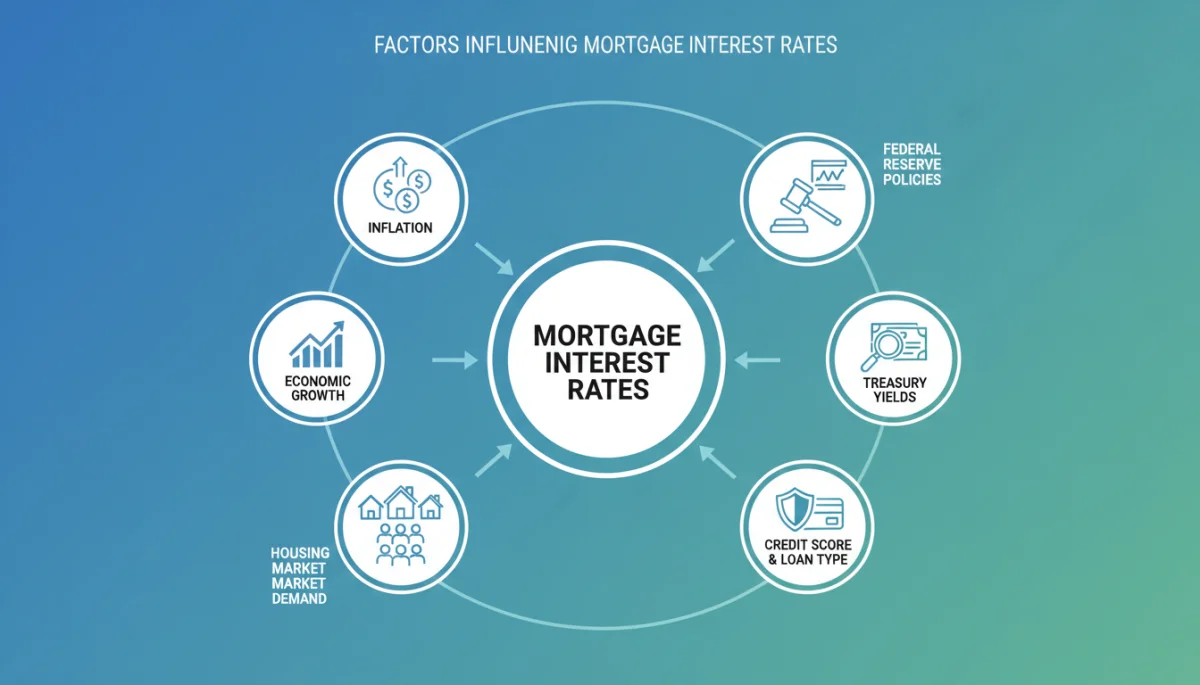
Central banks, particularly the Federal Reserve in the United States, play a pivotal role. Their monetary policy decisions, often influenced by inflation targets and employment data, directly impact the federal funds rate, which in turn trickles down to consumer lending rates, including mortgages. Geopolitical events and global economic growth also contribute to this intricate web, adding layers of complexity to rate predictions.
the federal reserve’s influence and inflation outlook
The Federal Reserve’s stance on inflation will be a primary driver. If inflation remains elevated or shows signs of resurgence, the Fed might maintain a hawkish position, leading to higher short-term rates. Conversely, a sustained decline in inflation could prompt a more dovish approach, potentially easing rates. This delicate balance is constantly monitored by market participants.
- Inflationary Pressures: Ongoing supply chain dynamics, energy prices, and wage growth will be key indicators.
- Employment Data: A strong labor market might give the Fed more leeway to keep rates higher to curb inflation.
- Global Economic Health: International economic stability or instability can influence capital flows and, consequently, domestic interest rates.
Furthermore, government fiscal policies, including spending and taxation, can also impact the bond market, which is closely tied to mortgage rates. A large federal deficit, for instance, might lead to increased bond issuance, potentially pushing yields and mortgage rates upward. Analyzing these factors provides a clearer picture of potential rate movements in the upcoming year.
forecasting mortgage interest rates for 2026
Predicting mortgage interest rates with absolute certainty is impossible, but expert analyses and historical trends offer valuable insights into what 2026 might bring. Most forecasts suggest a period of stabilization, though with potential for slight fluctuations based on economic performance.
Many economists anticipate that the aggressive rate hikes seen in previous years will likely have plateaued by 2026. However, this does not necessarily mean a return to historically low rates. Instead, the market might settle into a new normal, potentially slightly higher than the pre-pandemic era but more predictable than recent years.
factors shaping rate predictions
Several critical elements contribute to these forecasts:
- Economic Growth Projections: Robust GDP growth could support a higher rate environment, while a slowdown might necessitate lower rates to stimulate the economy.
- Housing Market Dynamics: The balance between housing supply and demand, coupled with home price appreciation, can indirectly influence lender sentiment and rate offerings.
- Investor Demand for Mortgage-Backed Securities: The appetite of investors for these securities directly affects the rates lenders can offer.
Analysts are closely watching for any signs of recession, which would almost certainly lead to a decrease in interest rates as central banks attempt to stimulate economic activity. Conversely, a surprisingly strong economic rebound could push rates up. Homebuyers and owners should prepare for a potentially stable but vigilant market.
refinancing opportunities: when to consider a new mortgage
For many homeowners, 2026 could present opportune moments for refinancing. Refinancing allows borrowers to replace their existing mortgage with a new one, ideally with more favorable terms. The decision to refinance is often driven by a desire to lower monthly payments, reduce the loan term, or tap into home equity.
The key to successful refinancing lies in timing. If interest rates trend downwards or stabilize at a level significantly lower than a homeowner’s current rate, it could be an ideal time to lock in a new, more affordable mortgage. Even a small reduction in the interest rate can lead to substantial savings over the life of a loan.
evaluating your current mortgage situation
Before jumping into refinancing, homeowners should carefully assess their current mortgage terms and financial goals. Consider factors such as:
- Current Interest Rate: Compare it to prevailing market rates in 2026.
- Remaining Loan Term: Refinancing to a shorter term can save interest but increase monthly payments.
- Closing Costs: These fees can be substantial and need to be weighed against potential savings.
Understanding the break-even point—how long it will take for the savings from a lower interest rate to offset the refinancing costs—is crucial. A homeowner planning to sell their property in the near future might find that the costs outweigh the benefits. Conversely, those intending to stay in their home for many years could benefit significantly from a lower rate.
strategies for prospective homebuyers in 2026
Prospective homebuyers entering the 2026 mortgage market will need a well-thought-out strategy to navigate potential rate fluctuations and housing inventory. Preparation is key to securing favorable mortgage terms and finding the right home.
One fundamental strategy is to get pre-approved for a mortgage early in the process. Pre-approval not only provides a clear understanding of what you can afford but also signals to sellers that you are a serious and qualified buyer. This can be a significant advantage in a competitive market.
preparing for homeownership
Several steps can help prepare you for homeownership in 2026:
- Boost Your Credit Score: A higher credit score translates to better interest rates and more favorable loan terms.
- Save for a Down Payment: A larger down payment can reduce your loan amount, lower your monthly payments, and potentially eliminate the need for private mortgage insurance (PMI).
- Research Loan Options: Explore various mortgage products, such as fixed-rate, adjustable-rate, FHA, VA, and conventional loans, to find the best fit for your financial situation.
Staying informed about local housing market trends—including inventory levels, average home prices, and competition—is also vital. Working with an experienced real estate agent and mortgage broker can provide invaluable guidance and expertise throughout the homebuying journey. They can help you understand market nuances and identify opportunities.
impact of technological advancements on mortgage processes
The mortgage industry is continually evolving, with technological advancements playing a significant role in streamlining processes and enhancing efficiency. By 2026, these innovations are expected to further transform how mortgages are applied for, processed, and managed.
Digitalization is at the forefront, with more lenders adopting online application portals, electronic document signing, and virtual closing options. This shift aims to reduce paperwork, accelerate approval times, and improve the overall borrower experience. Artificial intelligence (AI) and machine learning are also being integrated to automate underwriting, assess risk more accurately, and personalize product offerings.
key technological trends
Anticipated technological trends include:
- AI-Powered Underwriting: Faster and more precise evaluation of loan applications.
- Blockchain for Secure Transactions: Enhanced security and transparency in recording property and loan data.
- Advanced Data Analytics: Better insights into market trends and borrower behavior, leading to more tailored mortgage products.
These technological shifts not only benefit borrowers by making the process more convenient but also assist lenders in reducing operational costs and managing risk more effectively. Understanding these advancements can empower consumers to leverage new tools and resources when navigating the 2026 mortgage market.
long-term financial planning with 2026 mortgage insights
Integrating insights from the 2026 mortgage market into your long-term financial planning is crucial for building lasting wealth and stability. Whether you are a first-time homebuyer or a seasoned investor, understanding future trends helps in making informed decisions.
Consider how potential interest rate movements might affect your budget and investment strategies. If rates are expected to remain stable or increase, locking in a favorable fixed rate now could provide predictability. Conversely, if a downturn in rates is anticipated, an adjustable-rate mortgage (ARM) might be considered, though with careful risk assessment.
building a robust financial future
Key aspects of long-term planning include:
- Debt Management: Prioritize paying down high-interest debt to improve your financial health and borrowing capacity.
- Emergency Fund: Maintain a robust emergency fund to cover unexpected expenses, especially those related to homeownership.
- Diversified Investments: Balance your real estate investments with other asset classes to mitigate risk.
Regularly reviewing your financial plan and adjusting it based on evolving market conditions is essential. Consulting with financial advisors and mortgage professionals can provide personalized guidance, helping you align your mortgage strategy with your broader financial goals and ensure you are well-prepared for whatever the future holds.
| Key Point | Brief Description |
|---|---|
| Rate Forecasts | Anticipate stabilization with potential for minor fluctuations, influenced by inflation and Fed policy. |
| Refinancing | Evaluate current rates against 2026 market to potentially lower payments or adjust loan terms. |
| Homebuyer Strategy | Focus on credit score, down payment, and market research for optimal purchase conditions. |
| Technological Impact | Digitalization and AI will streamline mortgage applications and risk assessment. |
frequently asked questions about the 2026 mortgage market
Key factors include the Federal Reserve’s monetary policy, inflation trends, employment data, and global economic stability. These elements collectively shape bond yields, which directly impact mortgage interest rates for consumers.
2026 could offer good refinancing opportunities, particularly if rates stabilize or slightly decrease from current levels. Homeowners should compare their existing rates to market offerings and consider closing costs to determine potential savings.
First-time homebuyers should focus on improving their credit score, saving for a substantial down payment, and getting pre-approved for a mortgage. Researching different loan options and local market trends is also crucial.
Technological advancements, including AI-powered underwriting, blockchain for secure transactions, and enhanced data analytics, are expected to streamline applications, improve risk assessment, and make the mortgage process more efficient and transparent.
The choice between a fixed-rate and adjustable-rate mortgage depends on your risk tolerance and rate forecasts. Fixed rates offer stability if rates are expected to rise, while ARMs might be appealing if a significant rate decrease is anticipated, though they carry more risk.
conclusion
The 2026 mortgage market is shaping up to be a period of significant evolution, influenced by global economic shifts, central bank policies, and technological advancements. For both current homeowners and prospective buyers, understanding these dynamics is paramount. By staying informed about interest rate forecasts, strategically evaluating refinancing opportunities, and preparing diligently for homeownership, individuals can navigate this complex landscape effectively. Long-term financial planning, supported by professional advice, will be key to leveraging the market’s potential and securing a stable financial future.